 Image 1 of 4
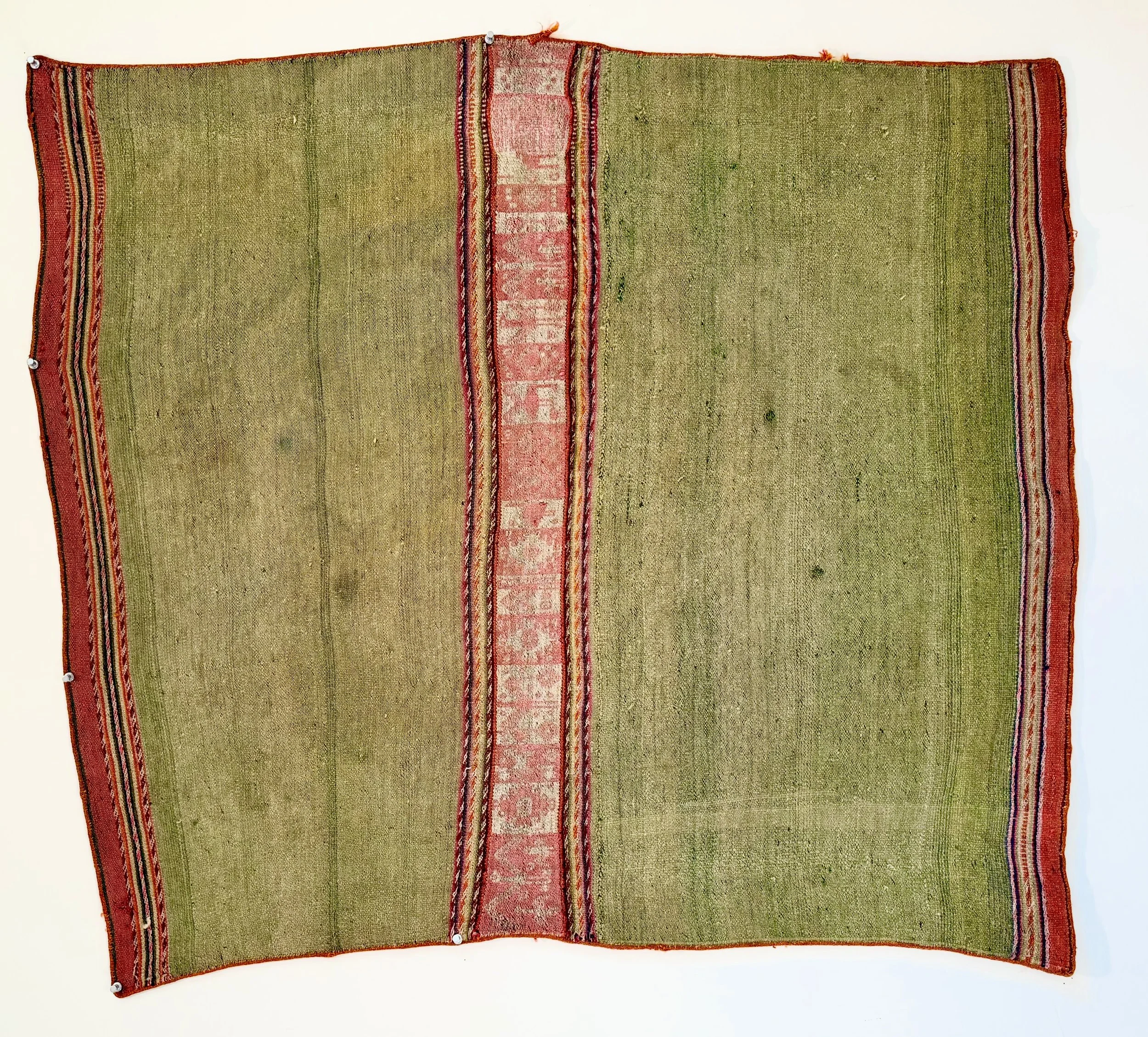 Image 2 of 4
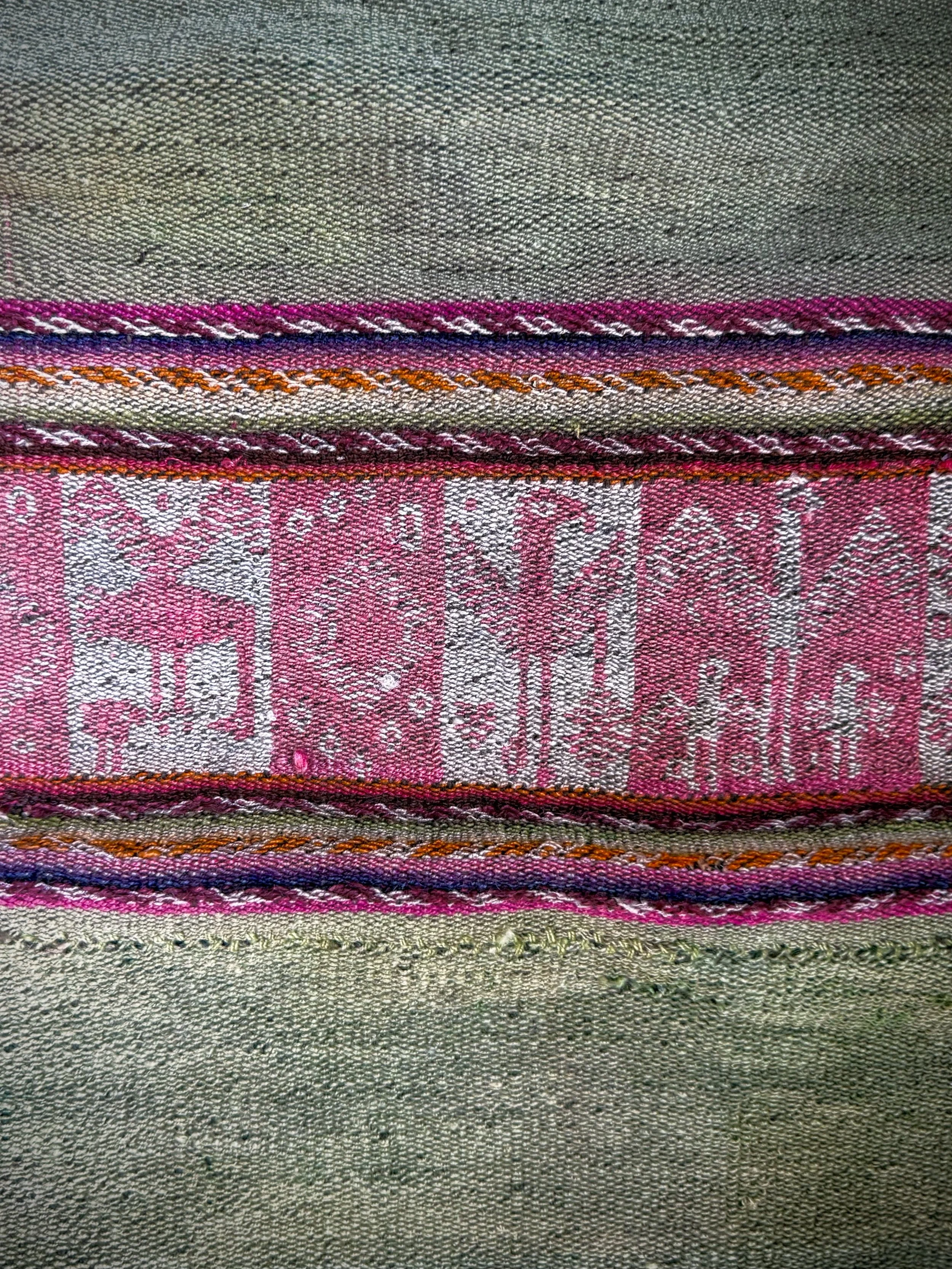 Image 3 of 4
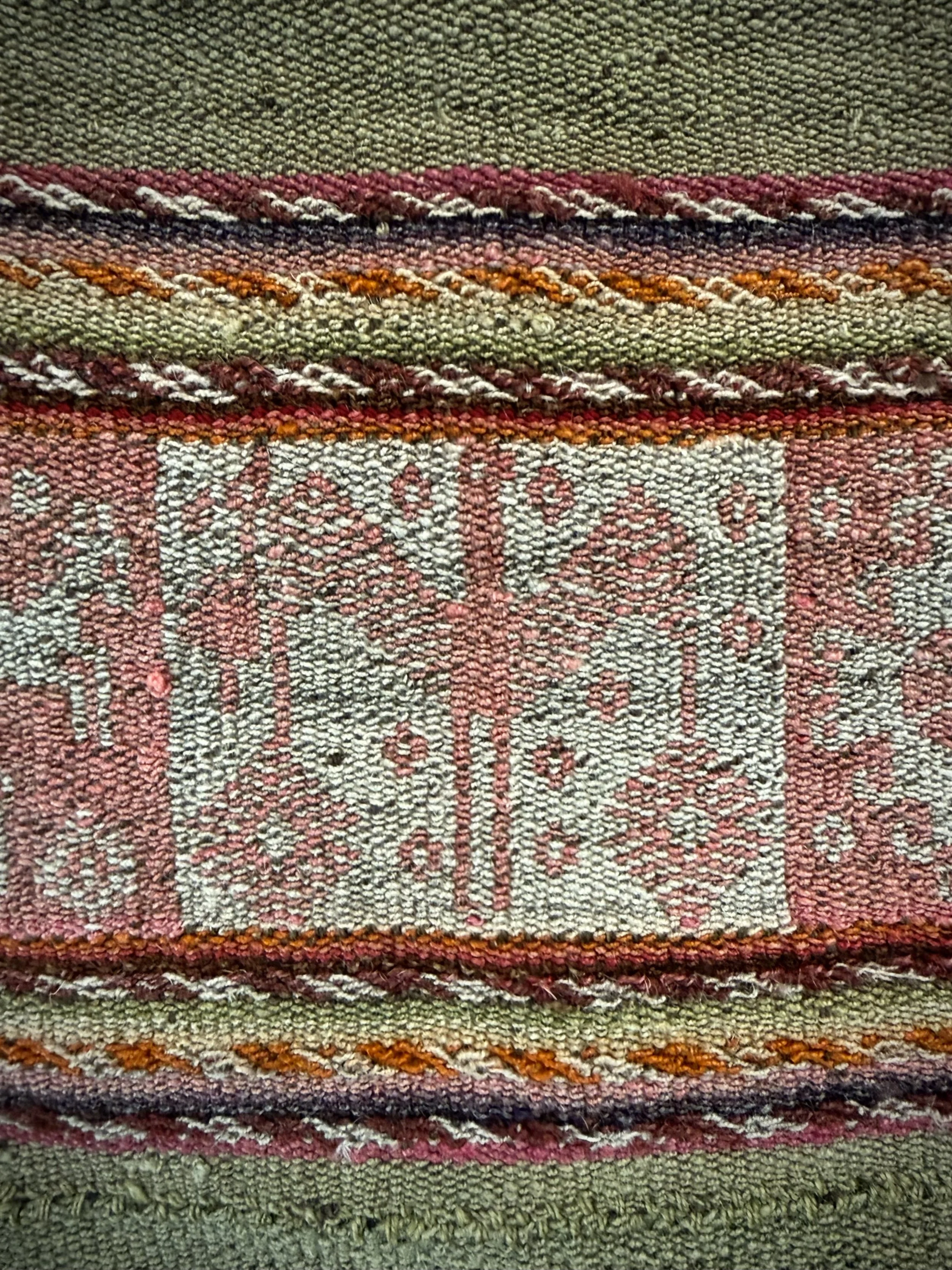 Image 4 of 4
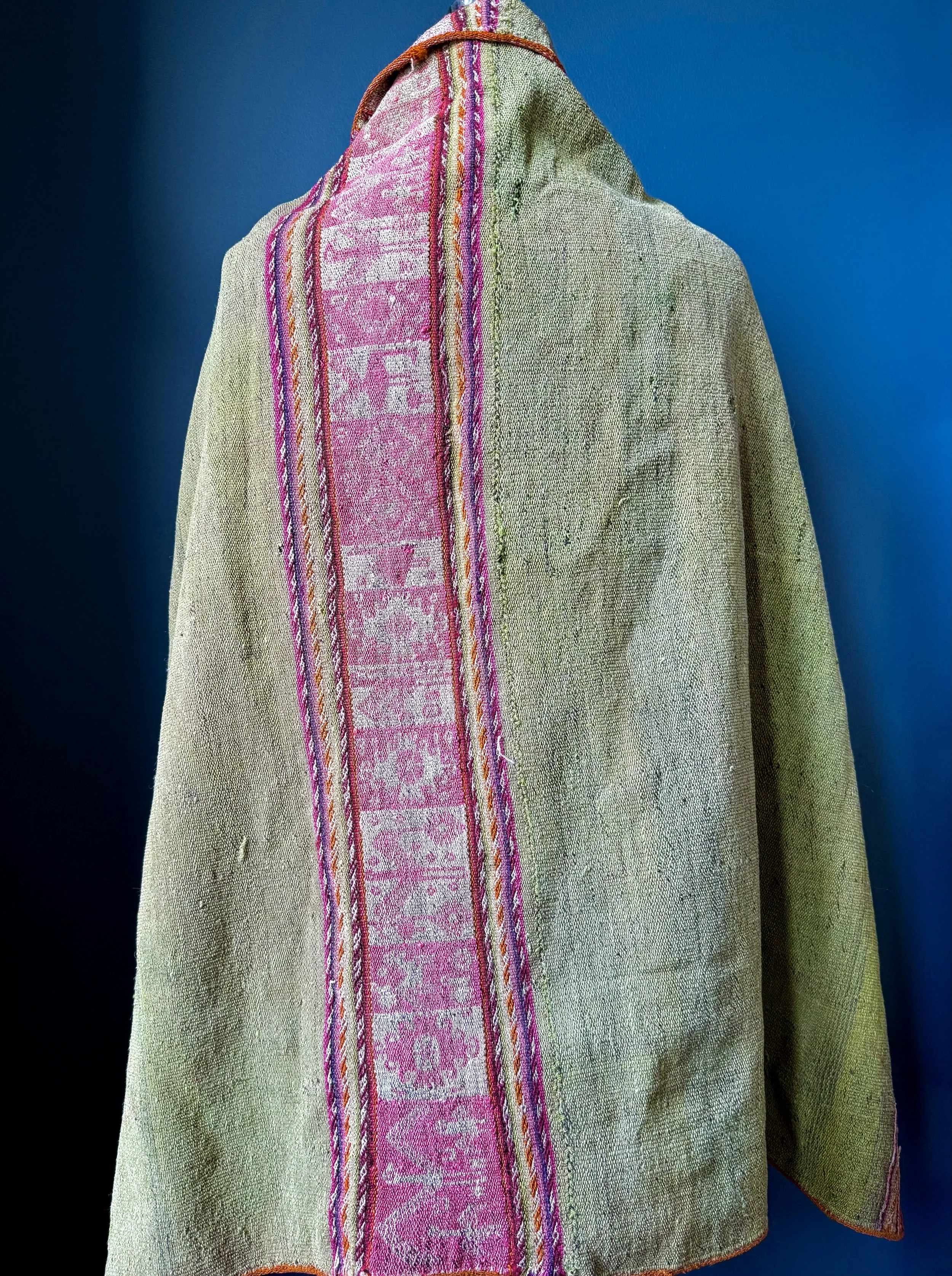
The ubiquitous, small blanket of the Andes, known in Spanish as a manta and in Quechua/Aymara as a lliklla or aguayo. The manta can be used to carry babies or cargo, spread on the ground like a picnic blanket, wrapped around the shoulders as a shawl, or perforated for use as a poncho. This example, from the 19th or early 20th century, was woven by the Aymara, denizens of the high-elevation Altiplano region of western Bolivia and southern Peru. It is finely-woven of sheep and llama (or alpaca) wool, and dyed with natural vegetable dyes.
The plain fields (pampa) are a lovely moss green, represening the vast expanse of the Altiplano. The figural band in the center (palla) utilizes a "complementary-warp weave," in which two opposing colors of warp thread are paired together. As the weaver lifts one color to form a motif on the front, the contrasting color drops to the back, creating a reversible textile with inverted colors on the underside. In this case, one of the patterns chosen was the condor, a messenger between the earthly world (Kay Pacha) and the upper or celestial realm (Hanan Pacha). Weaving the condor into a manta symbolizes strength, freedom, and spiritual protection for the wearer and their family.
41" X 37" (104 cm × 94 cm), approximately.