 Image 1 of 2
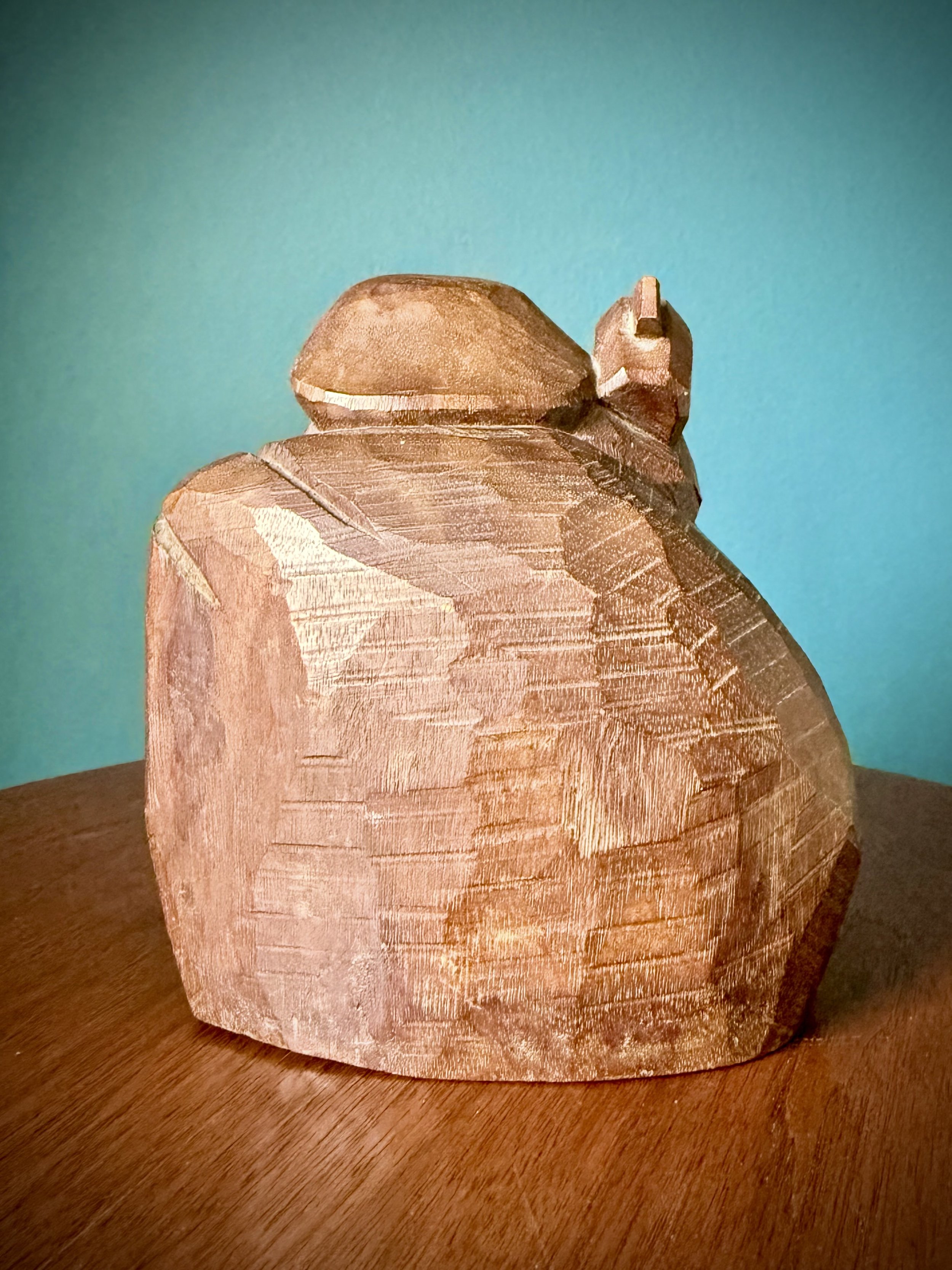 Image 2 of 2
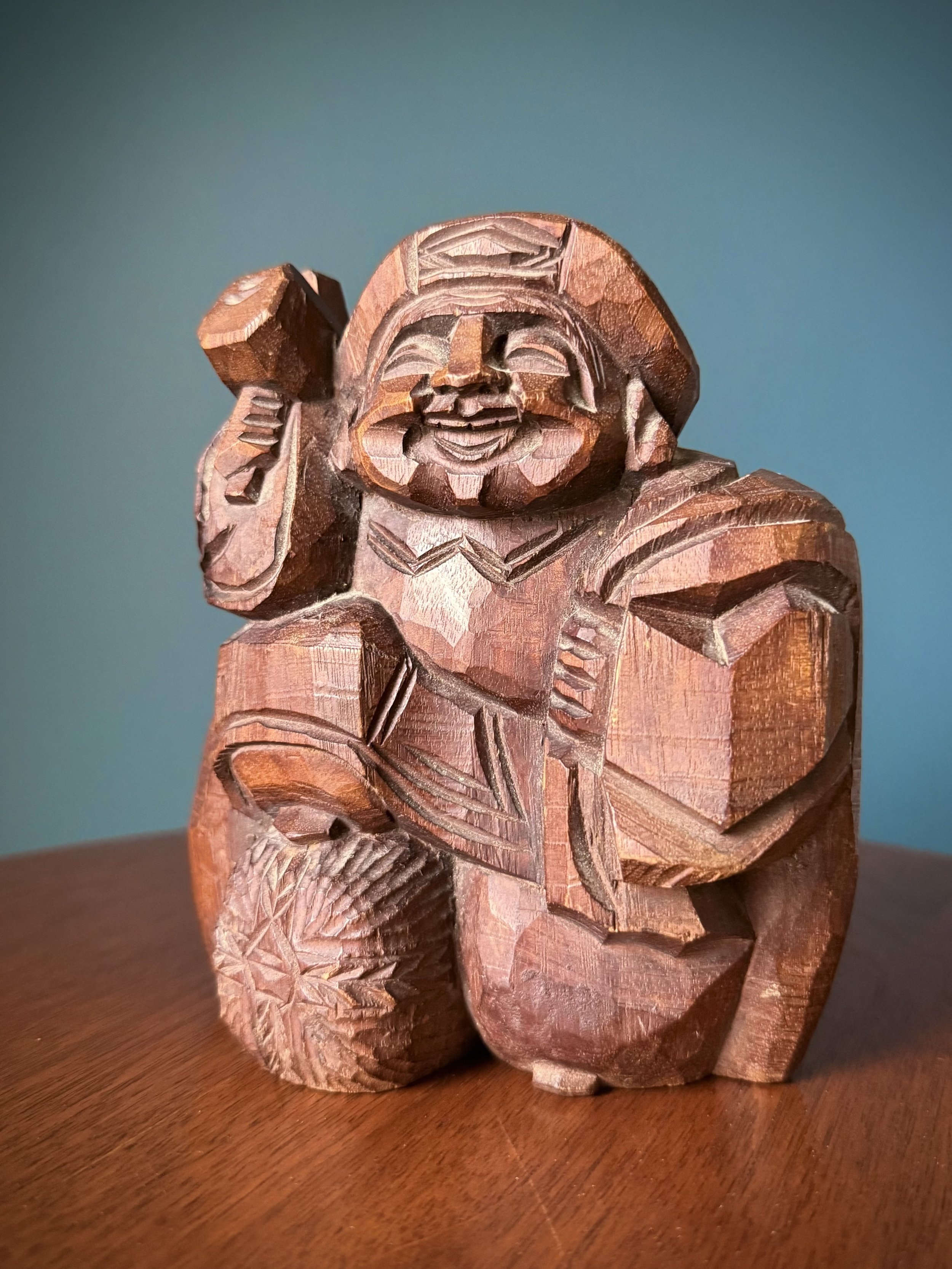
An okimono (decorative figurine) representing Daikokuten (also, Daikoku), one of the Seven Lucky Gods (Shichifukujin) of Japanese folk culture. Daikokuten is a syncretic mashup of the Indian Buddhist deity Mahākāla (god of Compassionate Wrath), and the native Shinto kami Ōkuninushi. Daikokuten is associated with good fortune, wealth, and general abundance. Statues and figurines of the god are frequently displayed in Japanese shops, restaurants, and homes to invite good luck and prosperity. Daikokuten is traditionally portrayed with a big smile, sitting or standing on bales of rice (tawara), which represent an abundant harvest and food security. In his right hand he holdes a magical mallet (uchide no kozuchi), used to grant wishes. Flung over his left shoulder a treasure sack, filled with infinite prosperity.
An okimono (decorative figurine) representing Daikokuten (also, Daikoku), one of the Seven Lucky Gods (Shichifukujin) of Japanese folk culture. Daikokuten is a syncretic mashup of the Indian Buddhist deity Mahākāla (god of Compassionate Wrath), and the native Shinto kami Ōkuninushi. Daikokuten is associated with good fortune, wealth, and general abundance. Statues and figurines of the god are frequently displayed in Japanese shops, restaurants, and homes to invite good luck and prosperity. Daikokuten is traditionally portrayed with a big smile, sitting or standing on bales of rice (tawara), which represent an abundant harvest and food security. In his right hand he holdes a magical mallet (uchide no kozuchi), used to grant wishes. Flung over his left shoulder a treasure sack, filled with infinite prosperity.