 Image 1 of 4
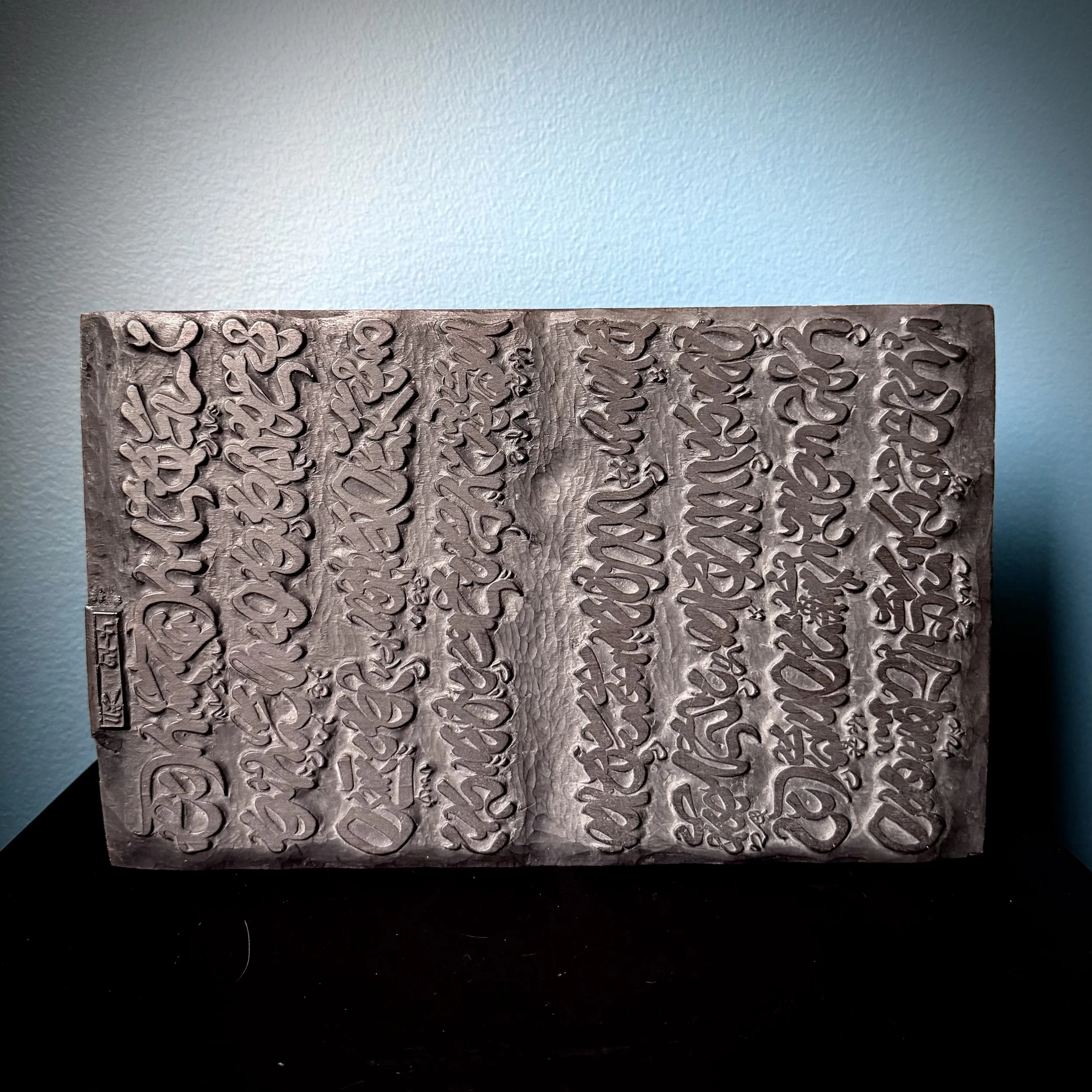 Image 2 of 4
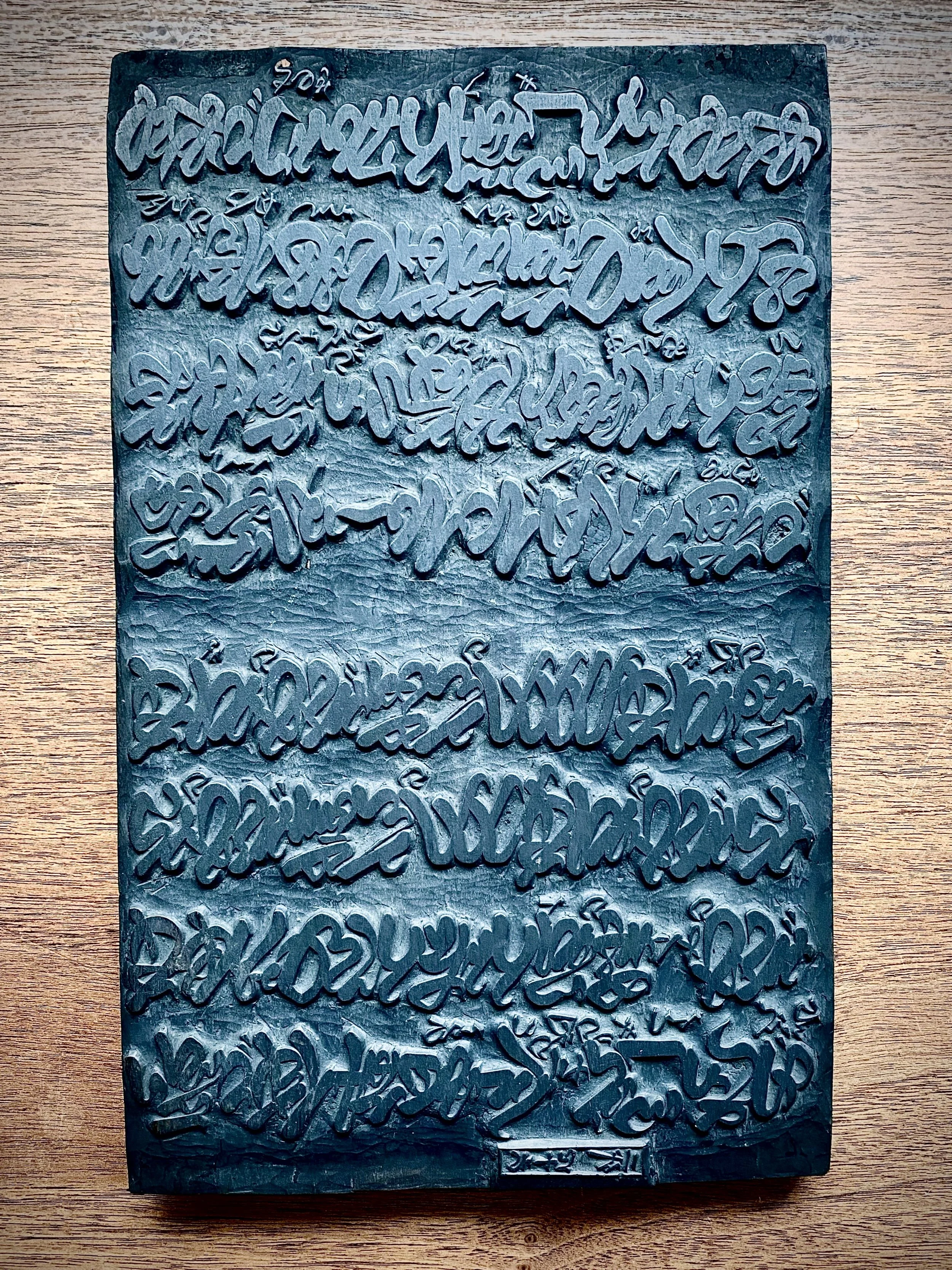 Image 3 of 4
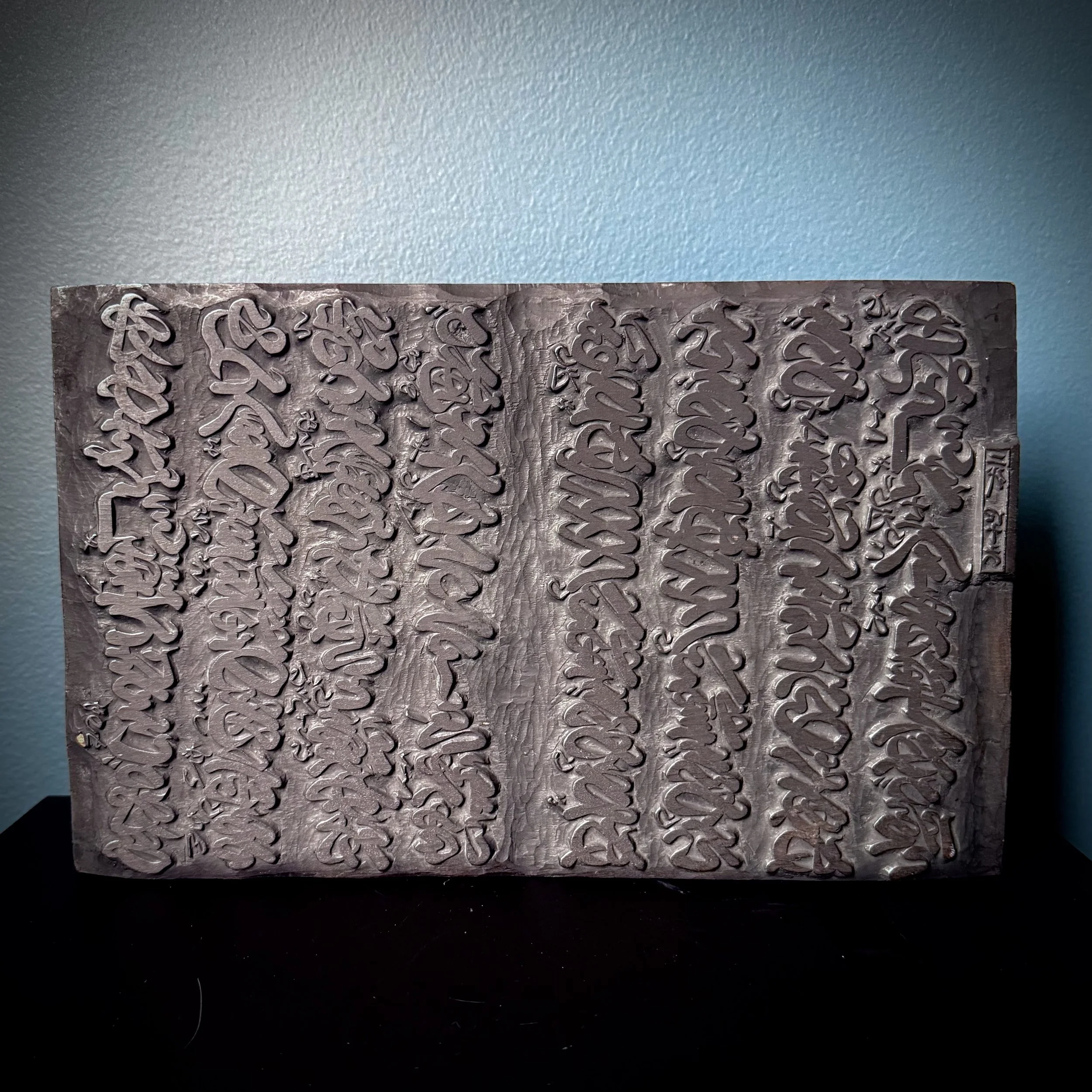 Image 4 of 4
The concept of printing books using carved woodblocks was introduced to Japan from China, where sutras and other religious texts were being printed by the Tang dynasty (618-907 CE). Soon, Buddhist temples in Japan were producing printed books of their own. The Hyakumantōdarani, a scroll commissioned by the Empress Shōtoku around 765, is one of the oldest block-printed texts surviving— unsurprisingly, as the Empress ordered one million of the scrolls to be distributed!
The Japanese were well-aware of the movable-type revolution that swept through Europe after 1450. Several attempts were made to popularize the technology in the islands, notably by the Shogun Tokugawa Ieyasu. However, the use of a finite set of letters was better suited to Western languages. The Japanese ideogrammatic script required thousands of characters, and was best served by carving out entire, unique pages of text on woodblocks (hanpongi). This was especially true for the calligraphic handwriting style (kuzushiji) preferred by readers. It also enabled images to be easily included in the text.
So, by the 1640s, Japan had mostly abandoned movable type, returning to woodblock printing (mokuhanga) for the rest of the Edo period (1603–1868). Books were still mass-produced however! Literacy spread rapidly during this time, greatly increasing demand. Hundreds of thousands of books were printed in Japan between 1710-1875, and commercial publishing became established as an important profession.
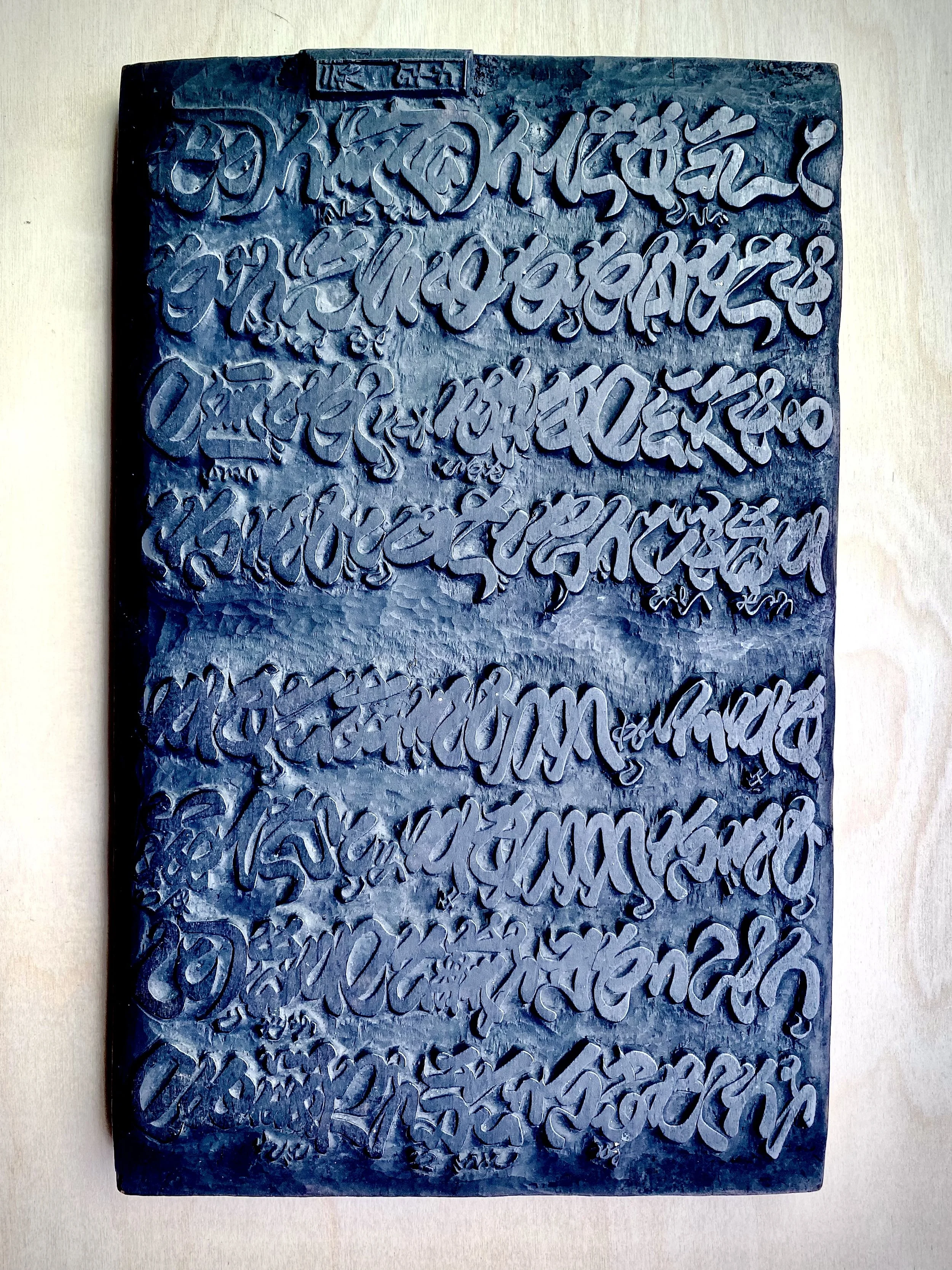
This is an excellent example of an Edo hanpongi, with two pages of finely-carved kuzushiji lettering filling each side of the dense, wild cherry woodblock. We believe that it is of portion of a libretto for ta Joruri performance, but bette-informed opinions are invited! A wonderful specimen of printing history.
The concept of printing books using carved woodblocks was introduced to Japan from China, where sutras and other religious texts were being printed by the Tang dynasty (618-907 CE). Soon, Buddhist temples in Japan were producing printed books of their own. The Hyakumantōdarani, a scroll commissioned by the Empress Shōtoku around 765, is one of the oldest block-printed texts surviving— unsurprisingly, as the Empress ordered one million of the scrolls to be distributed!
The Japanese were well-aware of the movable-type revolution that swept through Europe after 1450. Several attempts were made to popularize the technology in the islands, notably by the Shogun Tokugawa Ieyasu. However, the use of a finite set of letters was better suited to Western languages. The Japanese ideogrammatic script required thousands of characters, and was best served by carving out entire, unique pages of text on woodblocks (hanpongi). This was especially true for the calligraphic handwriting style (kuzushiji) preferred by readers. It also enabled images to be easily included in the text.
So, by the 1640s, Japan had mostly abandoned movable type, returning to woodblock printing (mokuhanga) for the rest of the Edo period (1603–1868). Books were still mass-produced however! Literacy spread rapidly during this time, greatly increasing demand. Hundreds of thousands of books were printed in Japan between 1710-1875, and commercial publishing became established as an important profession.
This is an excellent example of an Edo hanpongi, with two pages of finely-carved kuzushiji lettering filling each side of the dense, wild cherry woodblock. We believe that it is of portion of a libretto for ta Joruri performance, but bette-informed opinions are invited! A wonderful specimen of printing history.