A gorgeous little book illustrating 99 Ikebana arrangements by Koshu Tsujii (1883–1956). Tsujii was is best known as a Grand Master of the Saga School of Ikebana (Saga-ryū), one of Japan’s oldest and most prestigious Ikebana schools, associated with Daikaku-ji Temple in Kyoto. He was also an important proponent of the Mishi-go-ryū school, based in Osaka.
The Saga-ryū school of ikebana traces its philosophy back to the Heian Period, over 1,200 years ago. The Emperor Saga developed the practice at his palace in Kyoto, (now the Daikaku-ji Temple). Saga-ryū blends floral composition with Buddhist practices. Arrangers often recite a Buddhist sutra (Hannya Shingyo) before work, to calm the mind. They also keep in mind the "Philosophy of Three:" Arrangements often have a roughly tripartite structure, intended to balance elements representing Earth, heaven, and humanity.
Tsujii played a huge role in popularizing ikebana in the 20th century, introducing it to an international audience. Following WWII, he taught ikebana to the wives of American military personnel stationed in Japan. This led him to touring America as a founding member of Ikebana International.
The title is very difficult to translate, but it seems to be something to the effect of "Elegant Overall: Modern Flowers Born from Nature." Our reading of the publication information is "Publisher Kamishio-cho, Tennoji-ku, Osaka City, November 5, 1945." However, a description of the only other copy of this book we have seen states that it was published in 1959. This seems more likely, since it's hard to imagine that a book on ikebana was published in Japan just a few months after the end of the war.
A gorgeous little book illustrating 99 Ikebana arrangements by Koshu Tsujii (1883–1956). Tsujii was is best known as a Grand Master of the Saga School of Ikebana (Saga-ryū), one of Japan’s oldest and most prestigious Ikebana schools, associated with Daikaku-ji Temple in Kyoto. He was also an important proponent of the Mishi-go-ryū school, based in Osaka.
The Saga-ryū school of ikebana traces its philosophy back to the Heian Period, over 1,200 years ago. The Emperor Saga developed the practice at his palace in Kyoto, (now the Daikaku-ji Temple). Saga-ryū blends floral composition with Buddhist practices. Arrangers often recite a Buddhist sutra (Hannya Shingyo) before work, to calm the mind. They also keep in mind the "Philosophy of Three:" Arrangements often have a roughly tripartite structure, intended to balance elements representing Earth, heaven, and humanity.
Tsujii played a huge role in popularizing ikebana in the 20th century, introducing it to an international audience. Following WWII, he taught ikebana to the wives of American military personnel stationed in Japan. This led him to touring America as a founding member of Ikebana International.
The title is very difficult to translate, but it seems to be something to the effect of "Elegant Overall: Modern Flowers Born from Nature." Our reading of the publication information is "Publisher Kamishio-cho, Tennoji-ku, Osaka City, November 5, 1945." However, a description of the only other copy of this book we have seen states that it was published in 1959. This seems more likely, since it's hard to imagine that a book on ikebana was published in Japan just a few months after the end of the war.
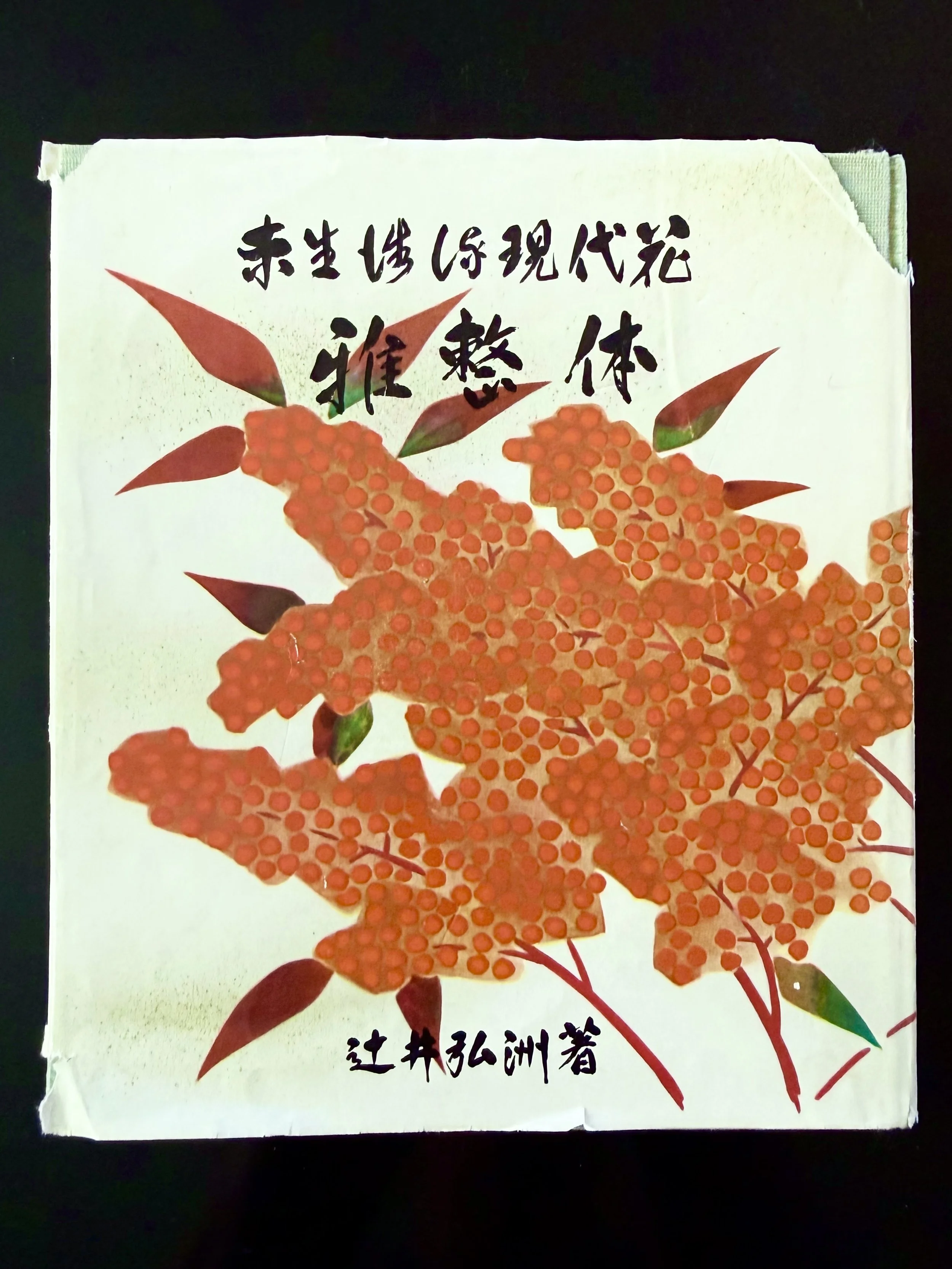 Image 1 of 12
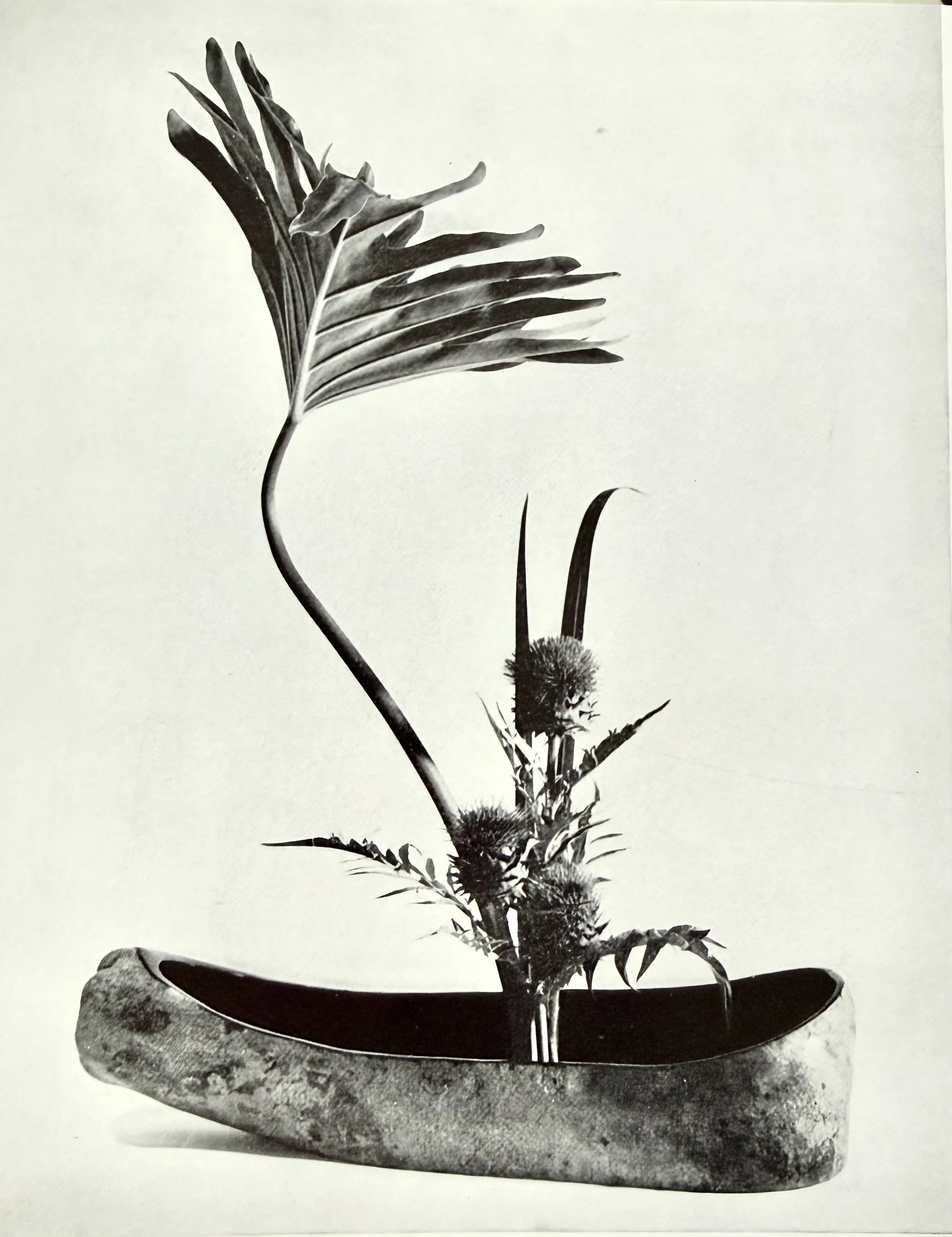 Image 2 of 12
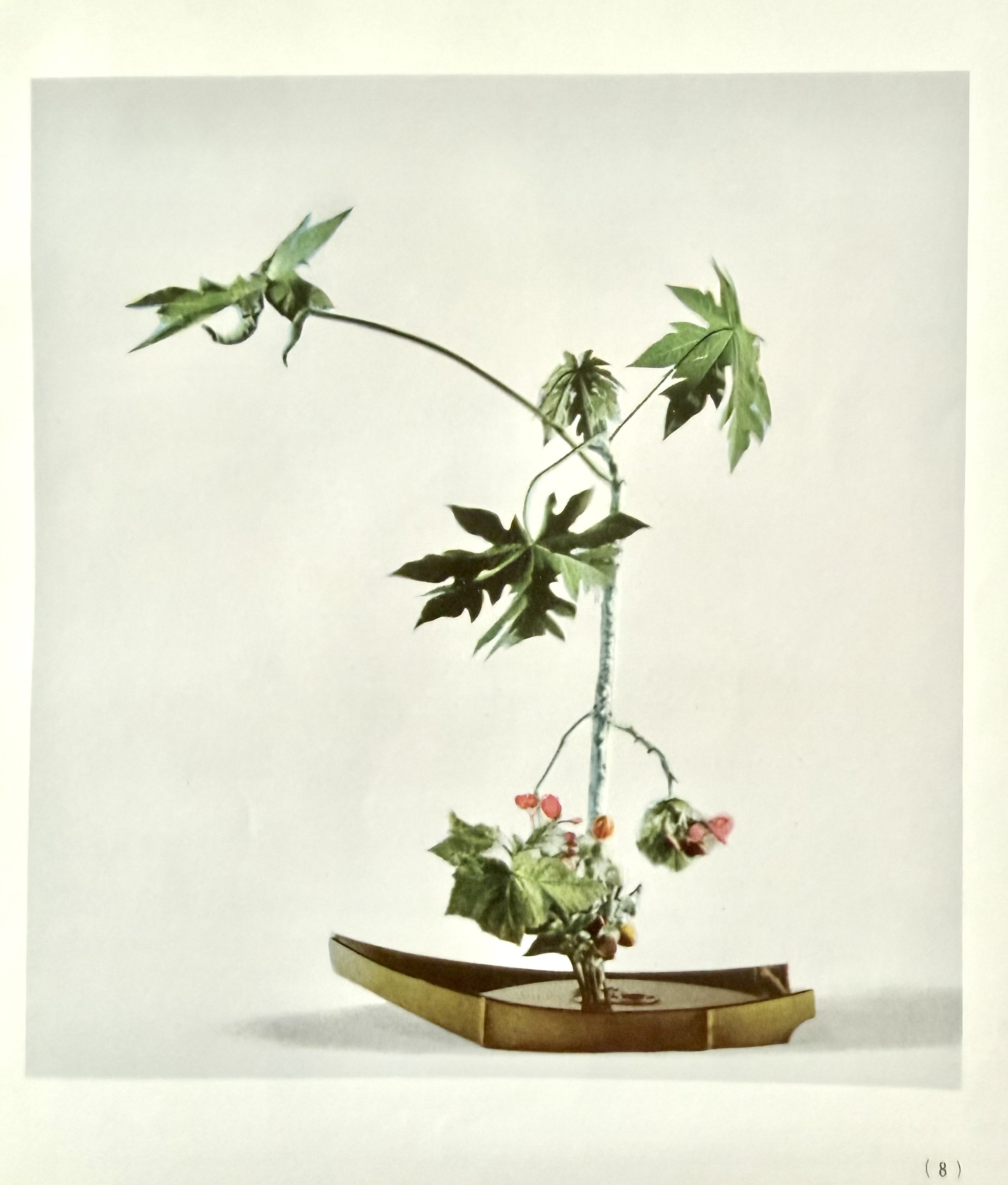 Image 3 of 12
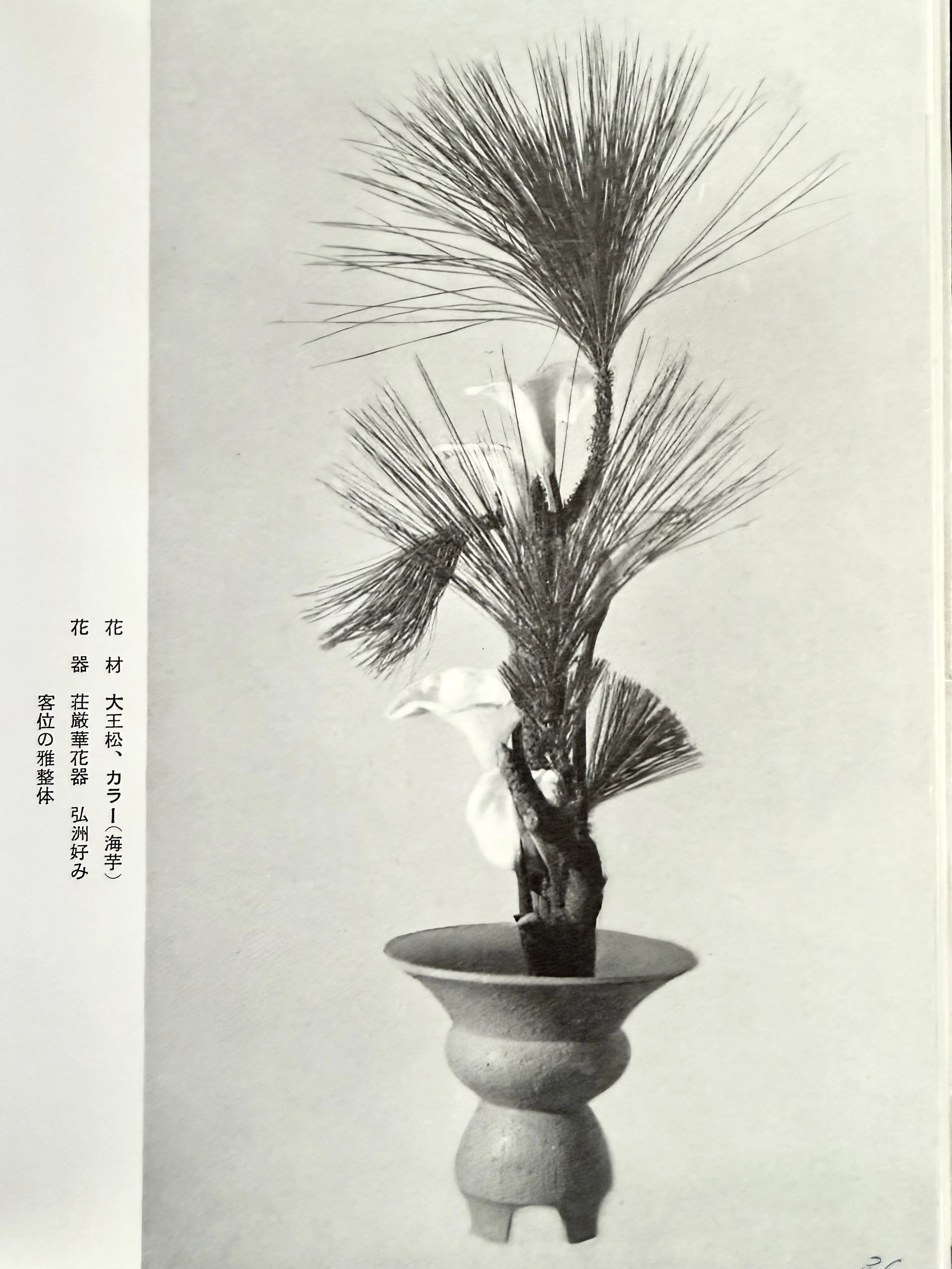 Image 4 of 12
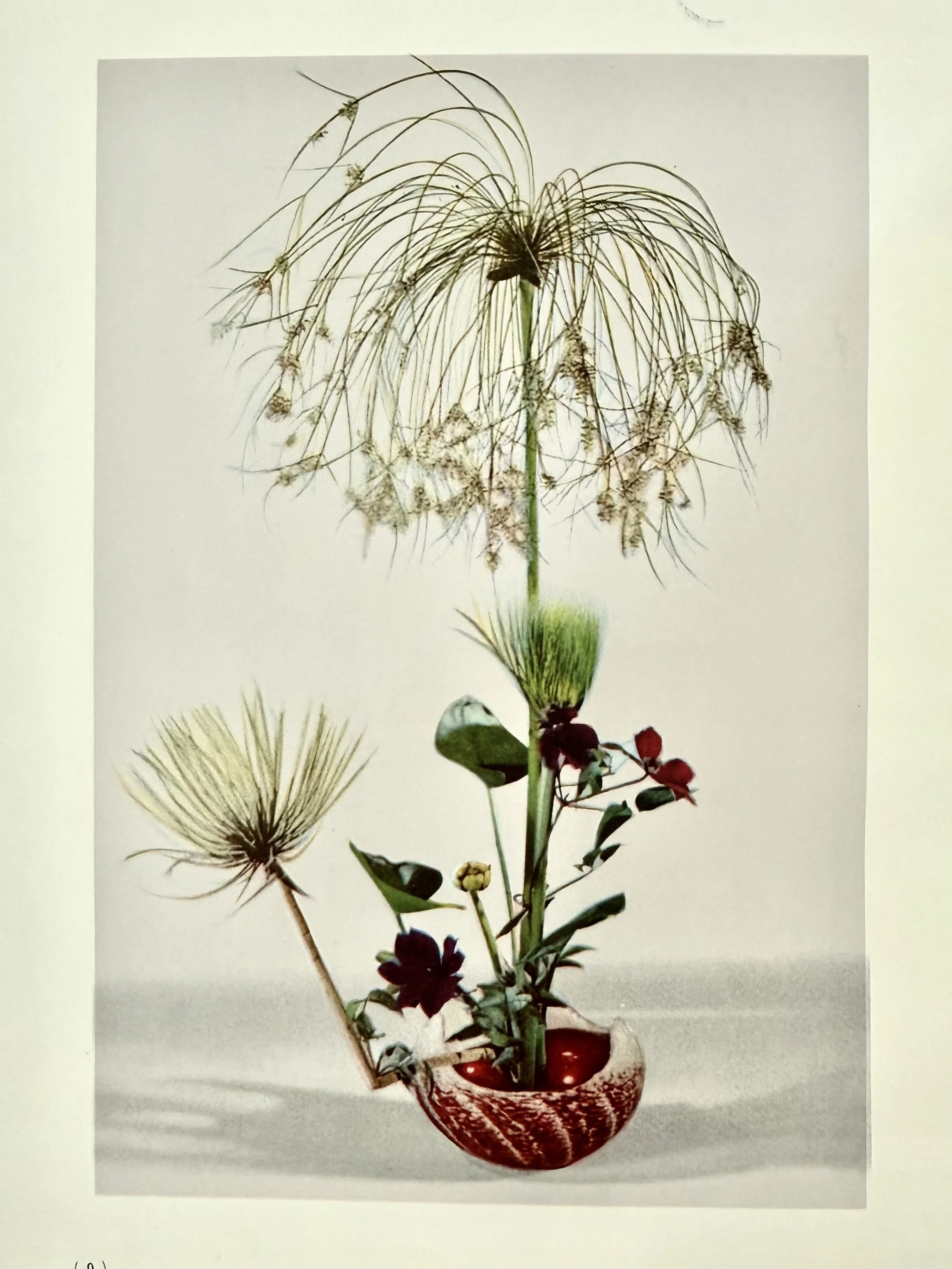 Image 5 of 12
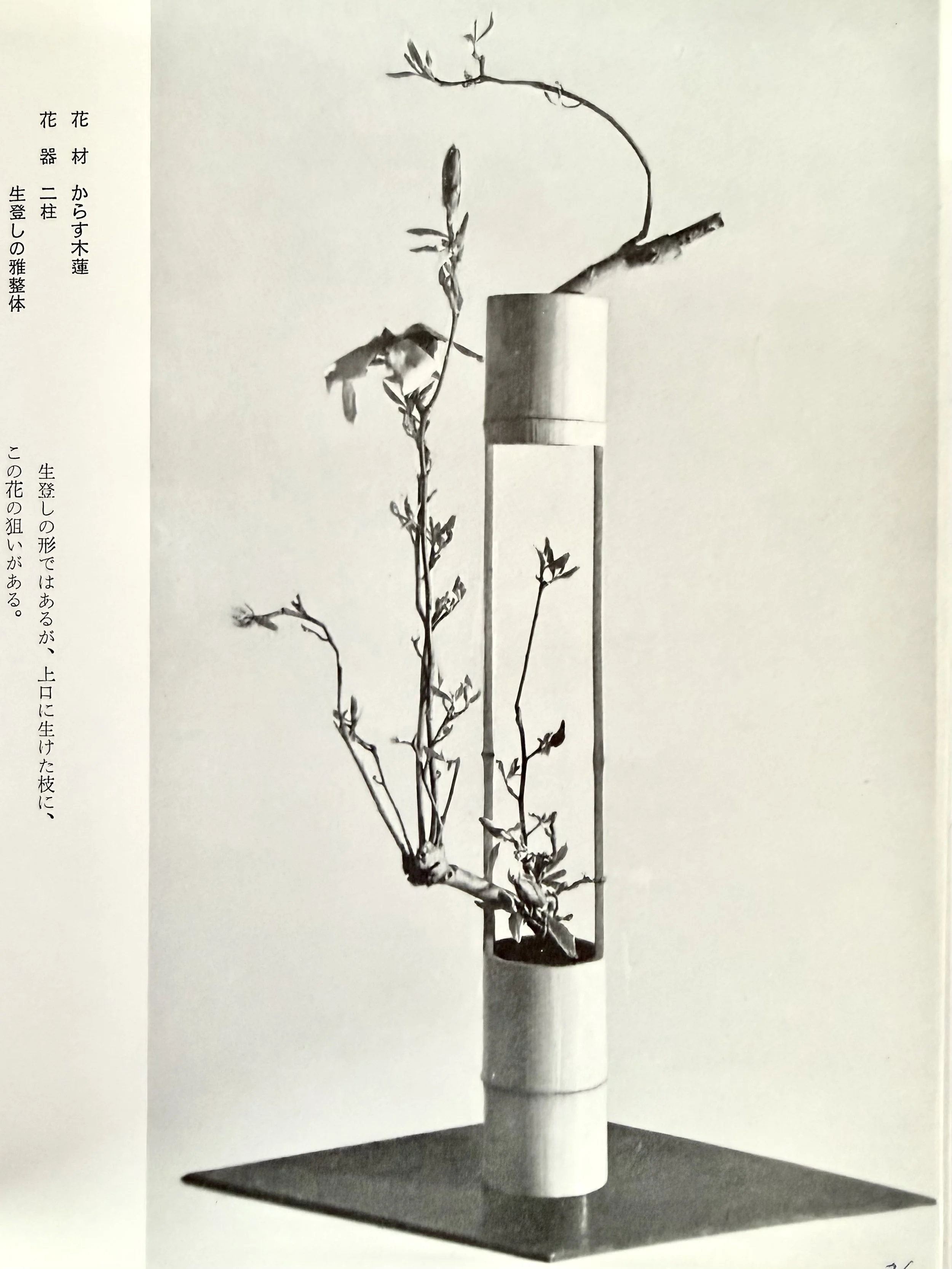 Image 6 of 12
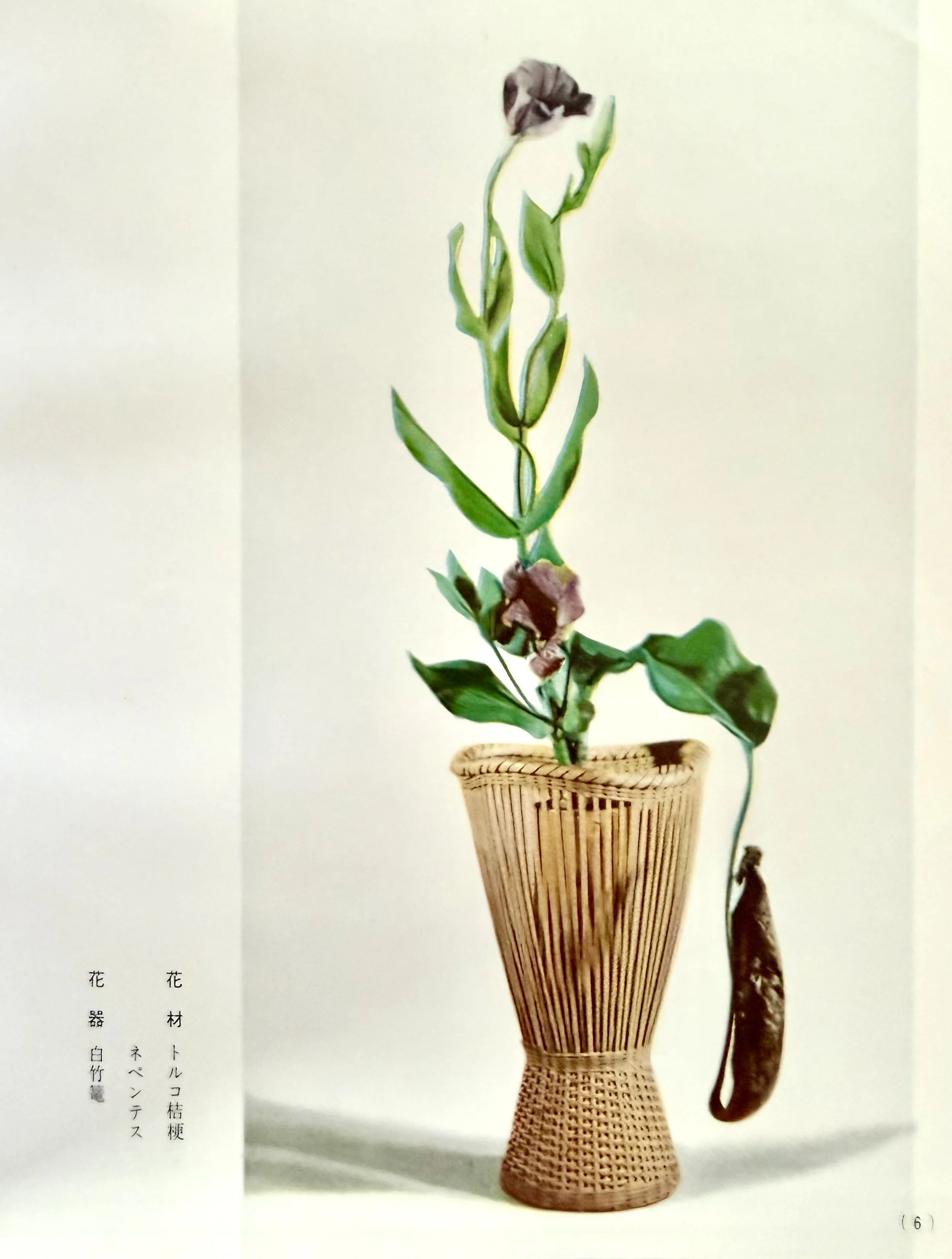 Image 7 of 12
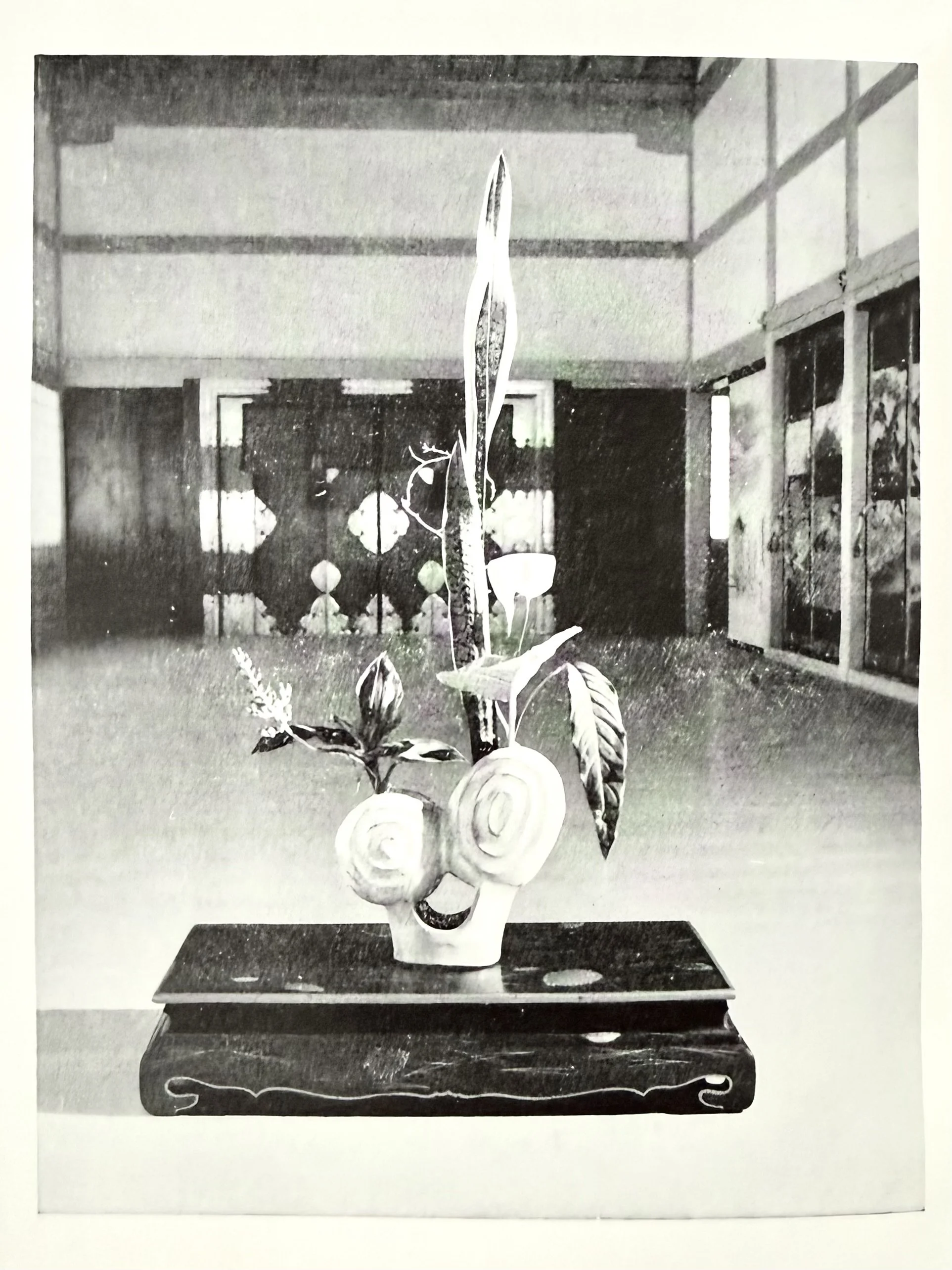 Image 8 of 12
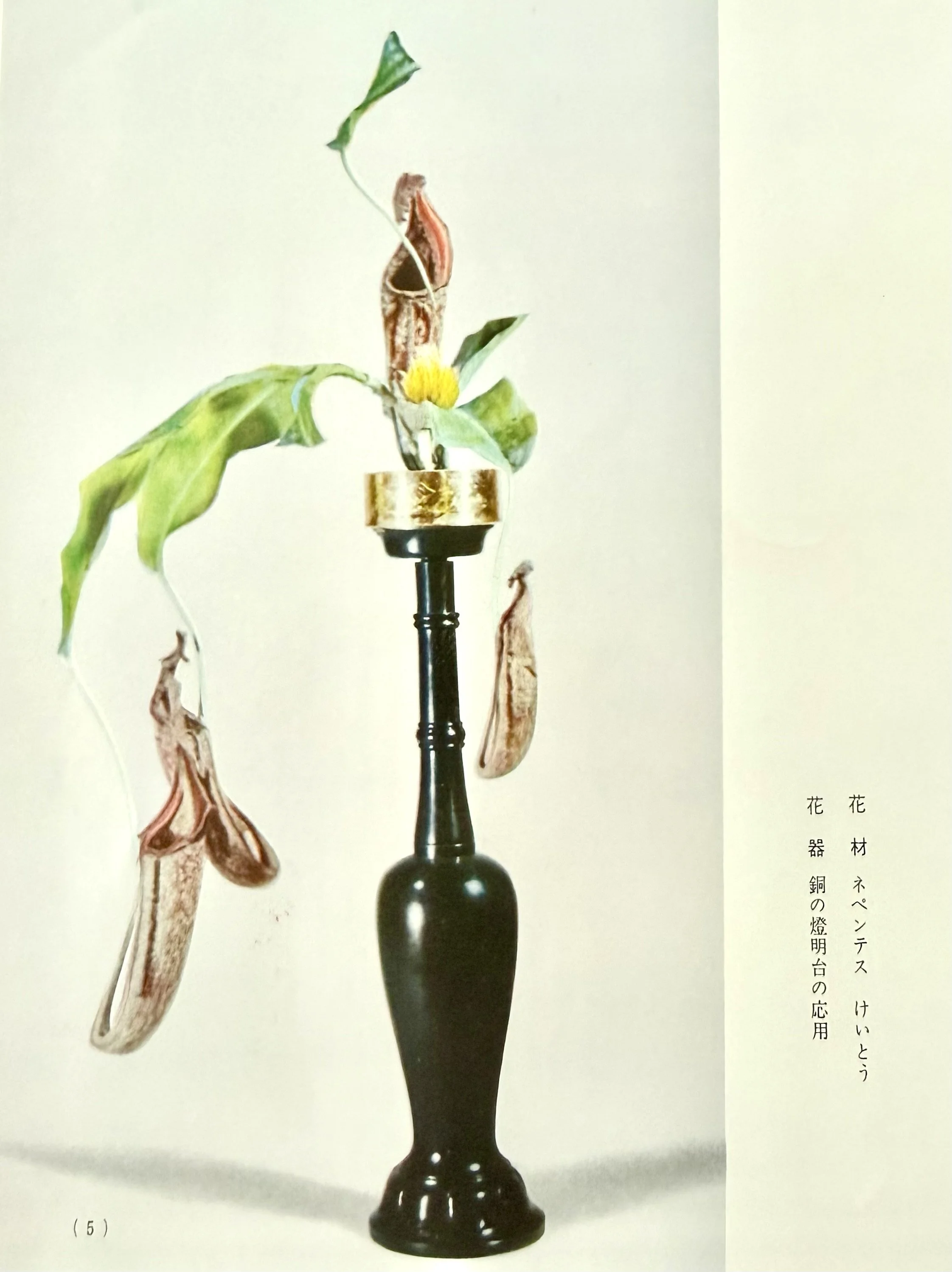 Image 9 of 12
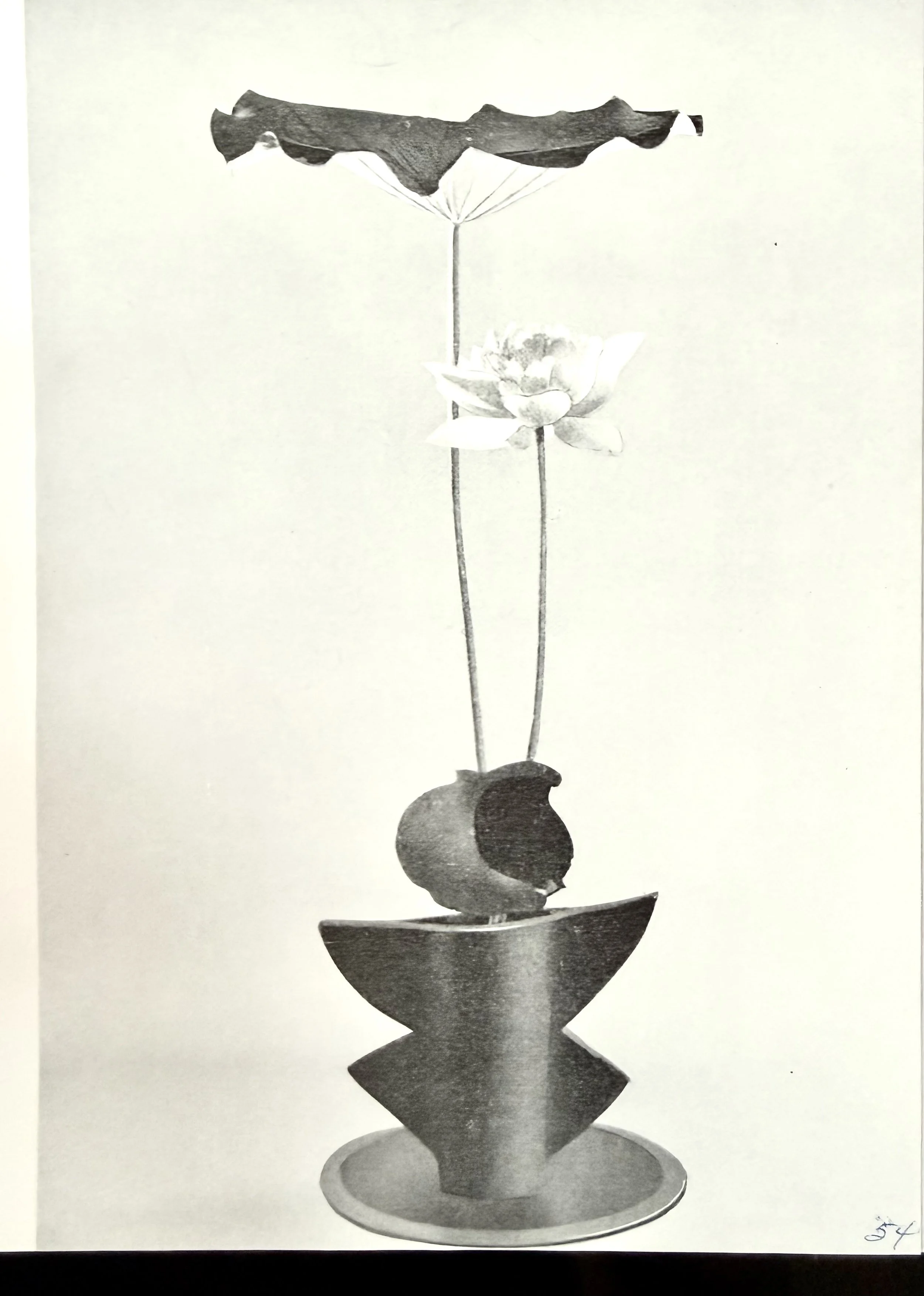 Image 10 of 12
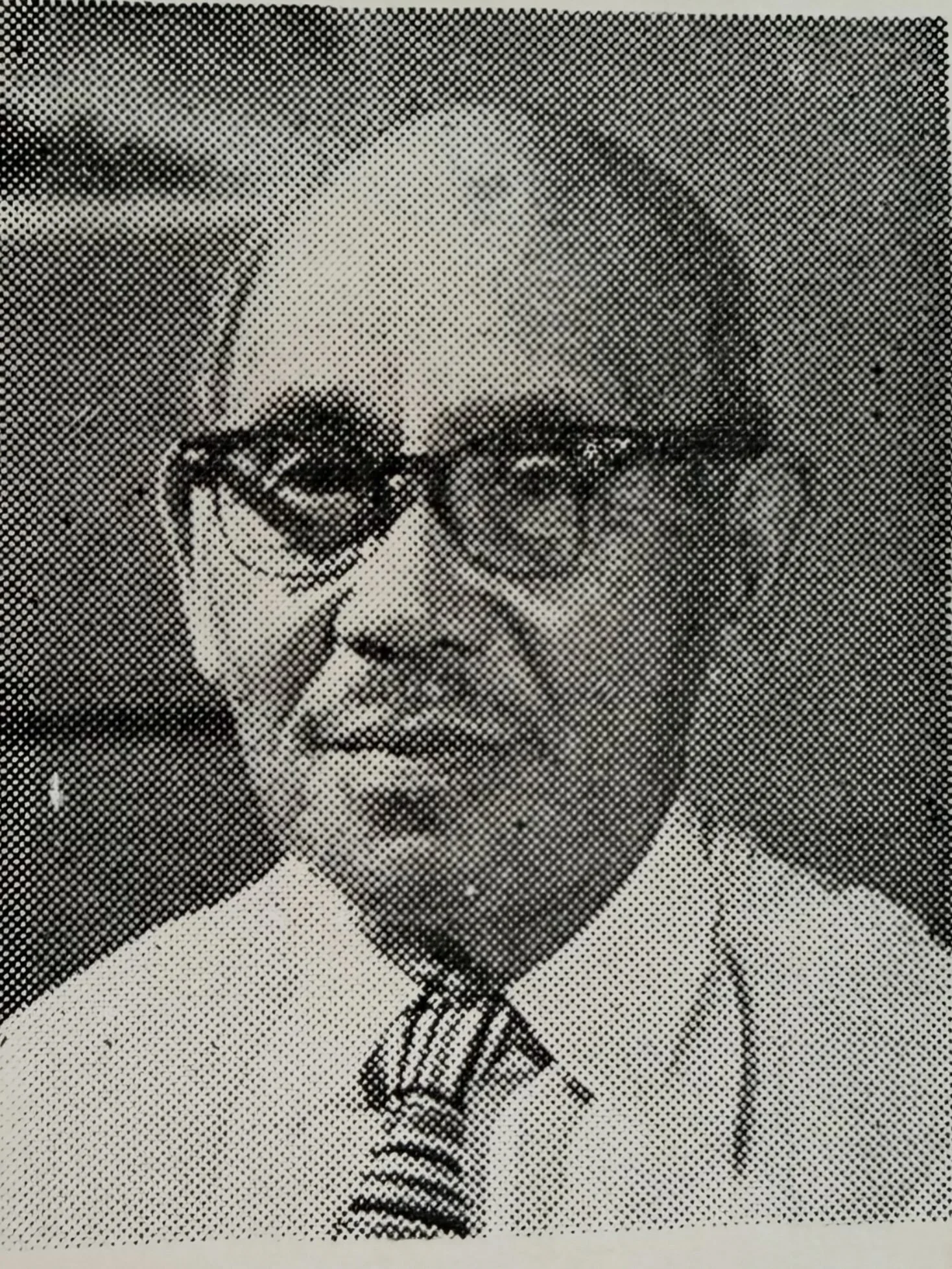 Image 11 of 12
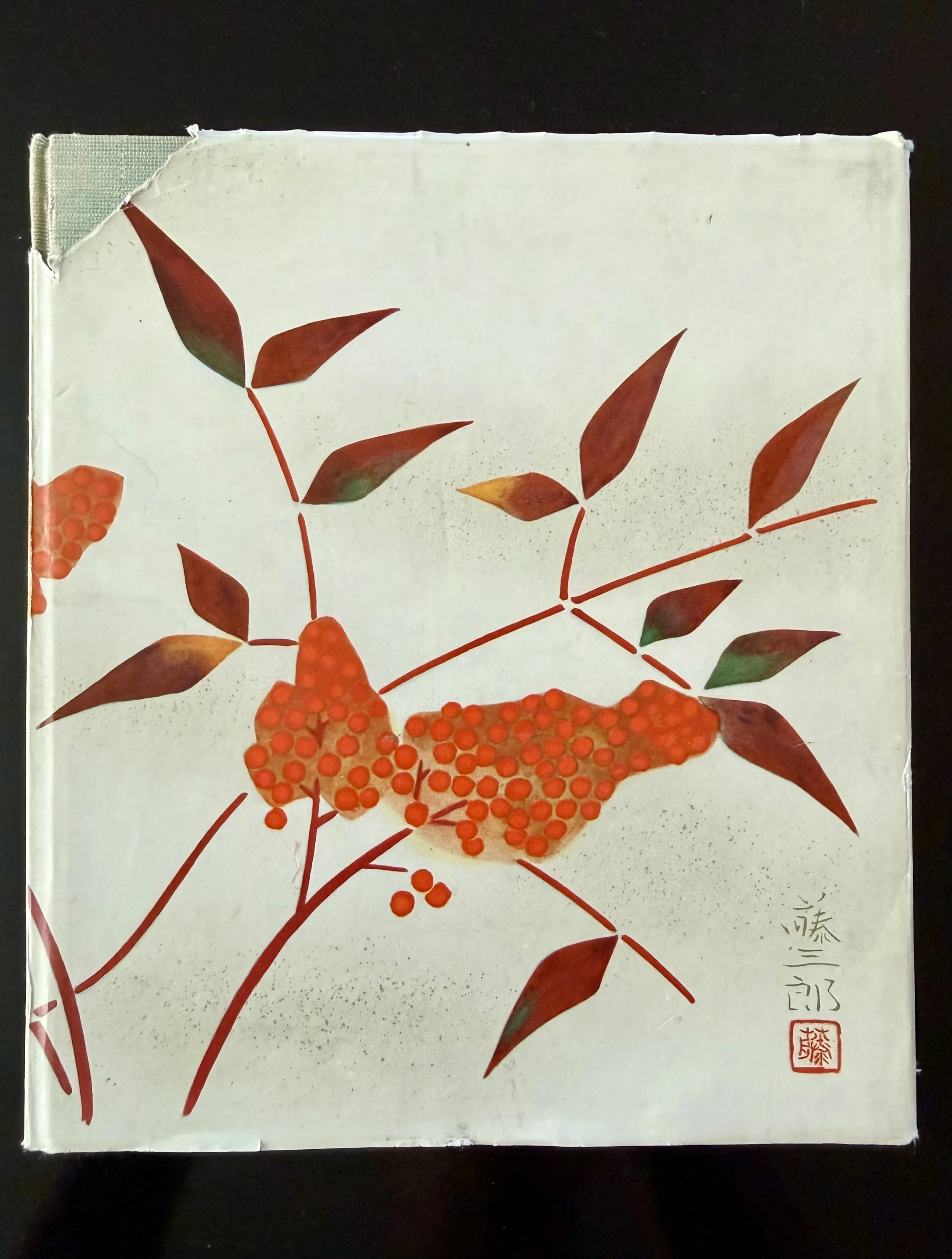 Image 12 of 12