 Image 1 of 2
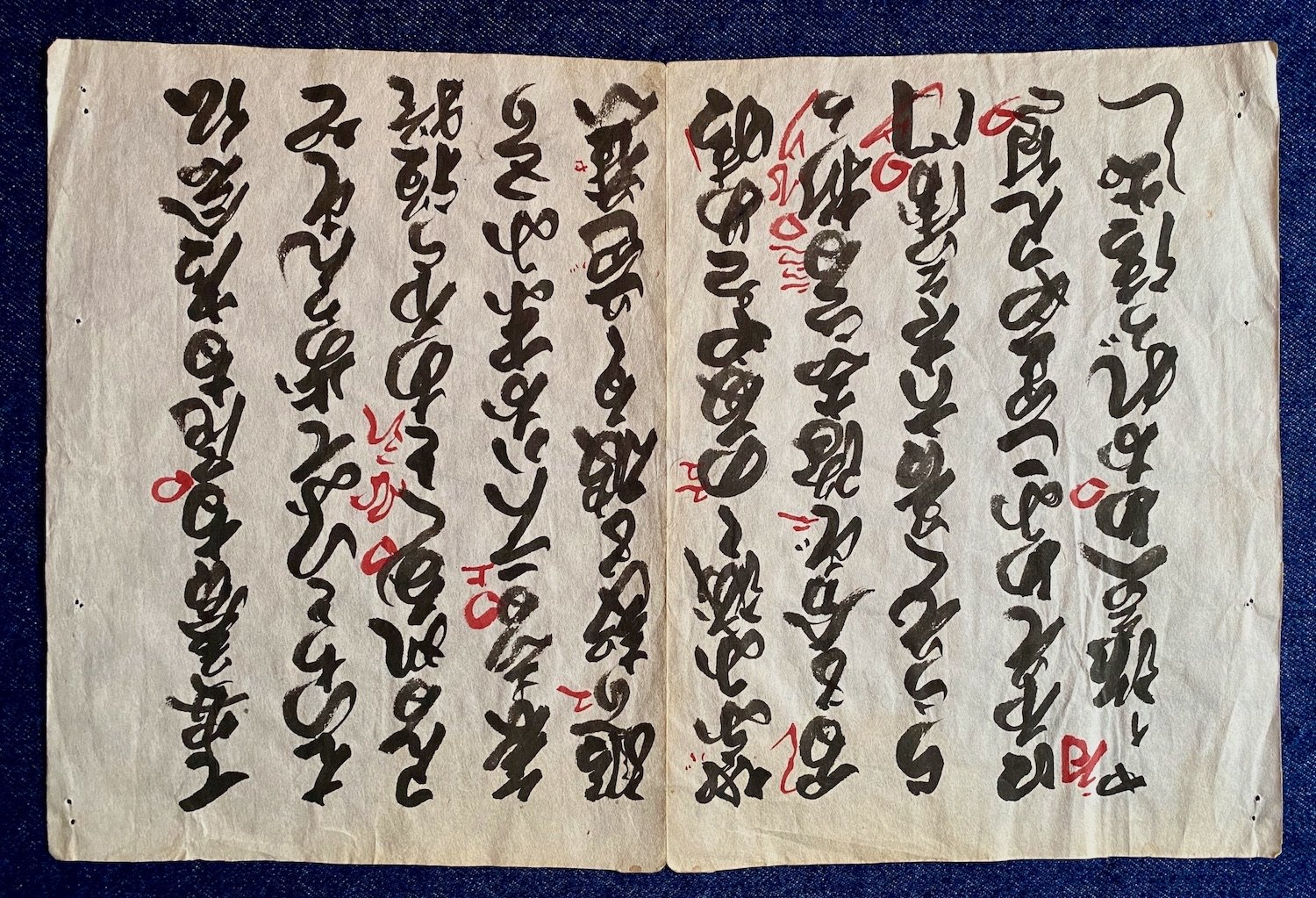 Image 2 of 2
Jōruri is a traditional form of dramatic musical storytelling in Japan. The art form dates from the 15th century, developing into its modern theatrical form during the Edo period (1603–1867). In a Jōruri performance, a narrator (the Tayū) sits on a revolving platform to the side of the stage and recounts the entire play, reading from a lectern. They provide all scene descriptions, and voice every character, seamlessly switching between different voices, ages, and genders. The Tayū's chanting is accompanied by the rhythmic, expressive tones of a three-stringed instrument called the shamisen, its notes carefully timed to underscore the dramatic storyline. Jōruri is best known as part of the traditional Bunraku puppet theater. A Bunraku performance combines the above elements with the movements of large, intricately-crafted puppets, manipulated by puppeteers who are fully visible to the audience. As they act out the story, the puppeteers synchronize their movements perfectly to make the puppets appear lifelike.
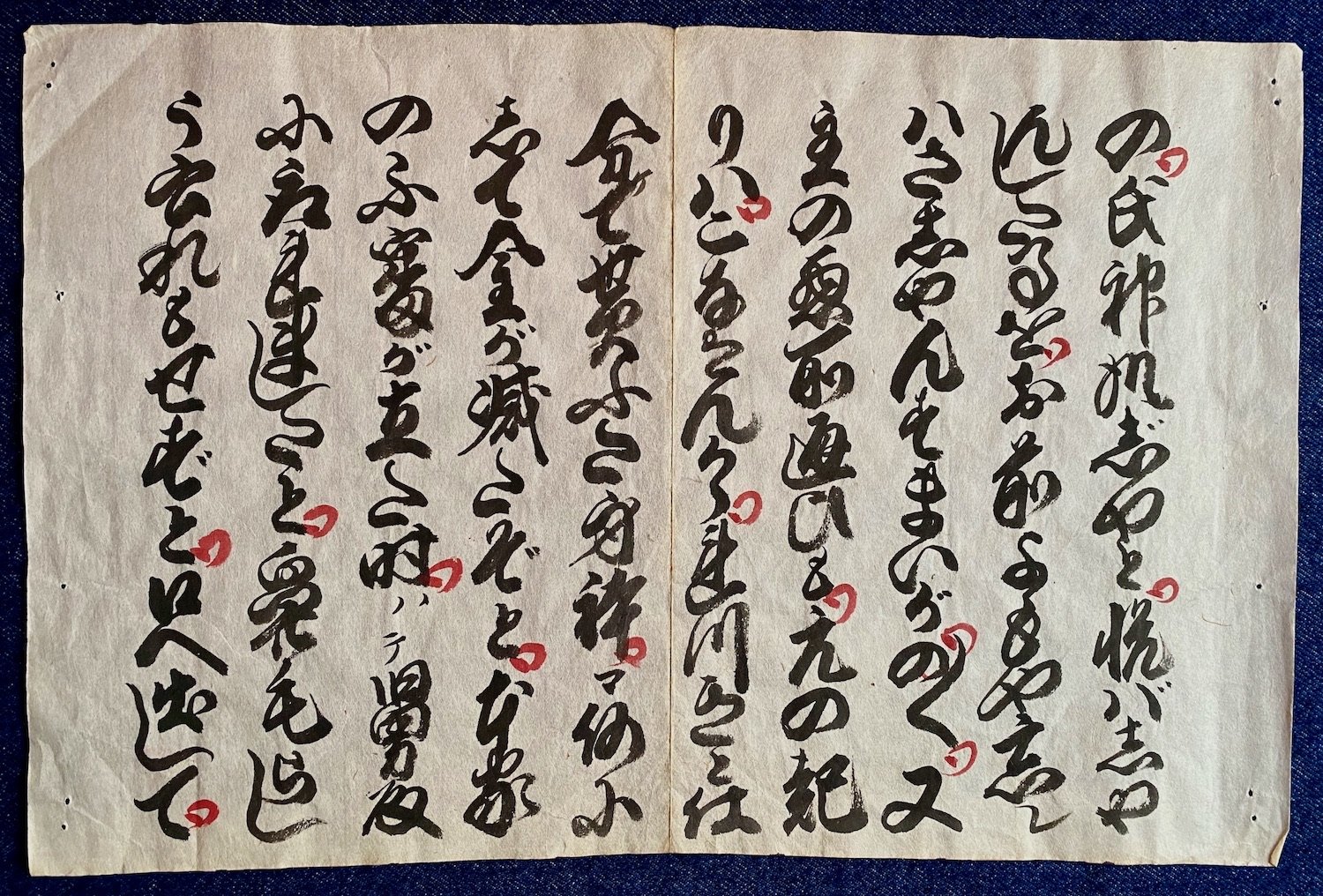
Found in Kyoto, Japan. The characters, in black sumi ink, are enhanced by bright red marks; presumably this is where emphasis is required, musical or otherwise. A wonderful example of the written word in one of its most dynamic forms. Multiple sheets available.
10.25” x 15.25”
Jōruri is a traditional form of dramatic musical storytelling in Japan. The art form dates from the 15th century, developing into its modern theatrical form during the Edo period (1603–1867). In a Jōruri performance, a narrator (the Tayū) sits on a revolving platform to the side of the stage and recounts the entire play, reading from a lectern. They provide all scene descriptions, and voice every character, seamlessly switching between different voices, ages, and genders. The Tayū's chanting is accompanied by the rhythmic, expressive tones of a three-stringed instrument called the shamisen, its notes carefully timed to underscore the dramatic storyline. Jōruri is best known as part of the traditional Bunraku puppet theater. A Bunraku performance combines the above elements with the movements of large, intricately-crafted puppets, manipulated by puppeteers who are fully visible to the audience. As they act out the story, the puppeteers synchronize their movements perfectly to make the puppets appear lifelike.
Found in Kyoto, Japan. The characters, in black sumi ink, are enhanced by bright red marks; presumably this is where emphasis is required, musical or otherwise. A wonderful example of the written word in one of its most dynamic forms. Multiple sheets available.
10.25” x 15.25”