 Image 1 of 3
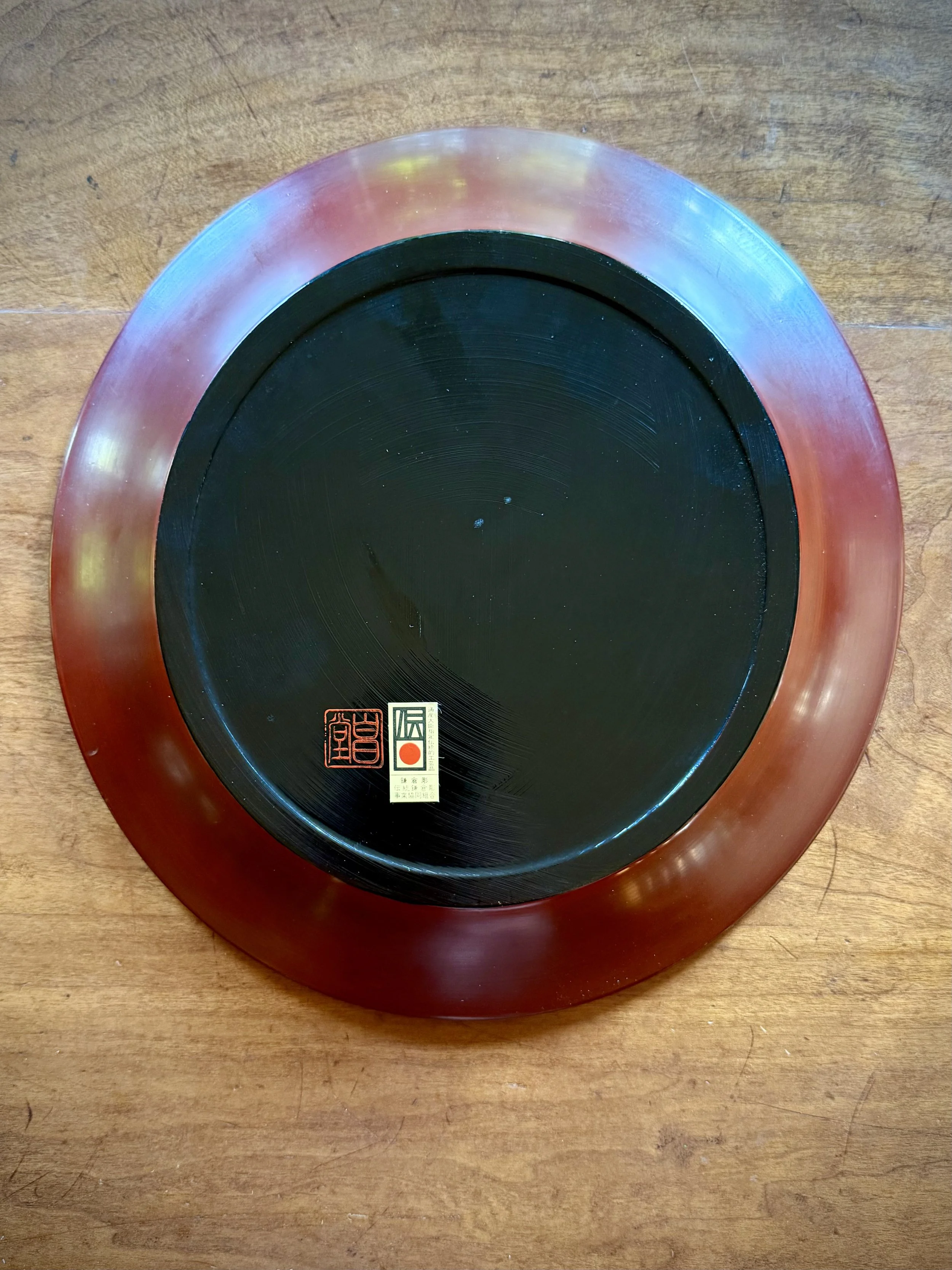 Image 2 of 3
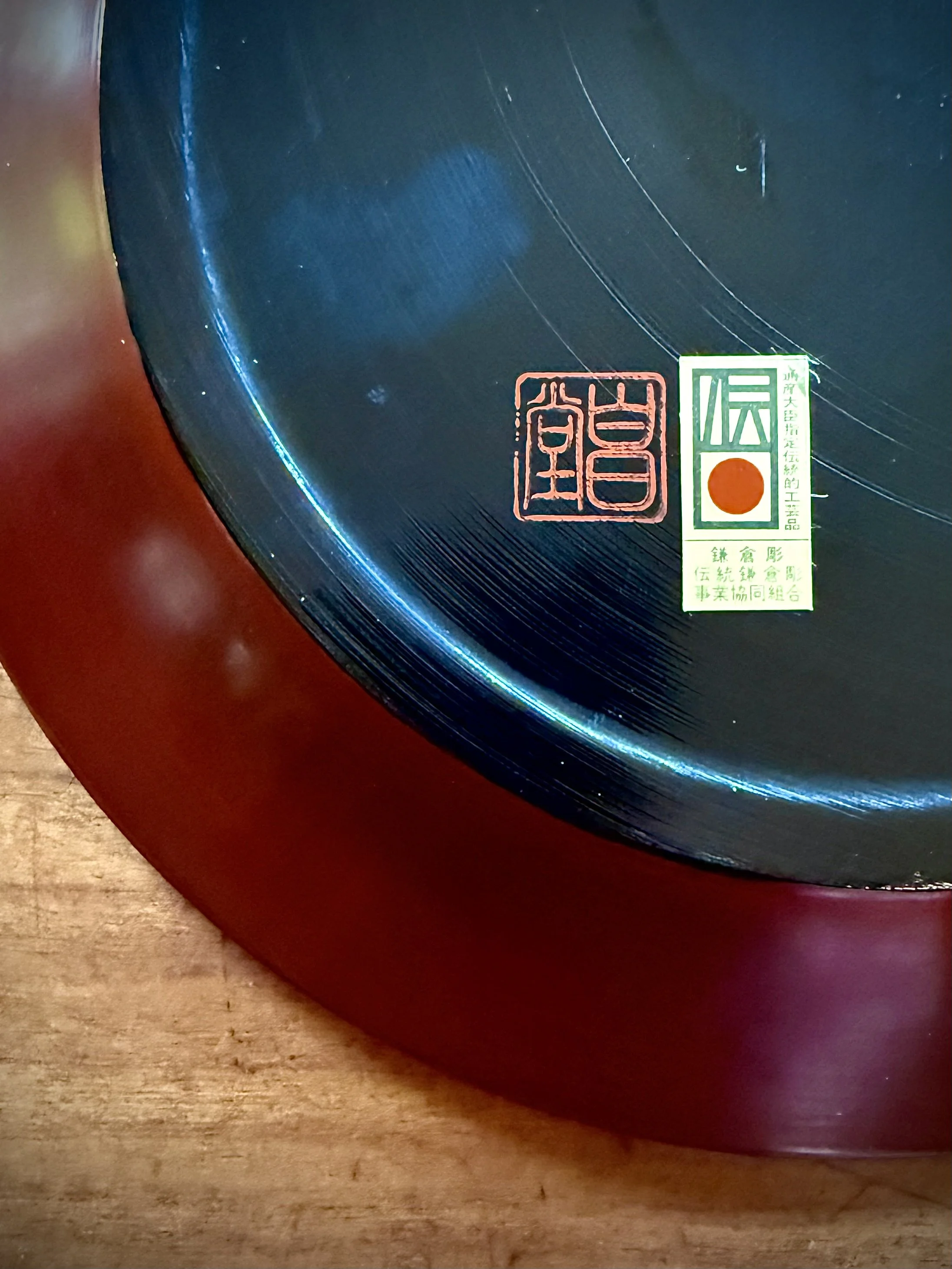 Image 3 of 3
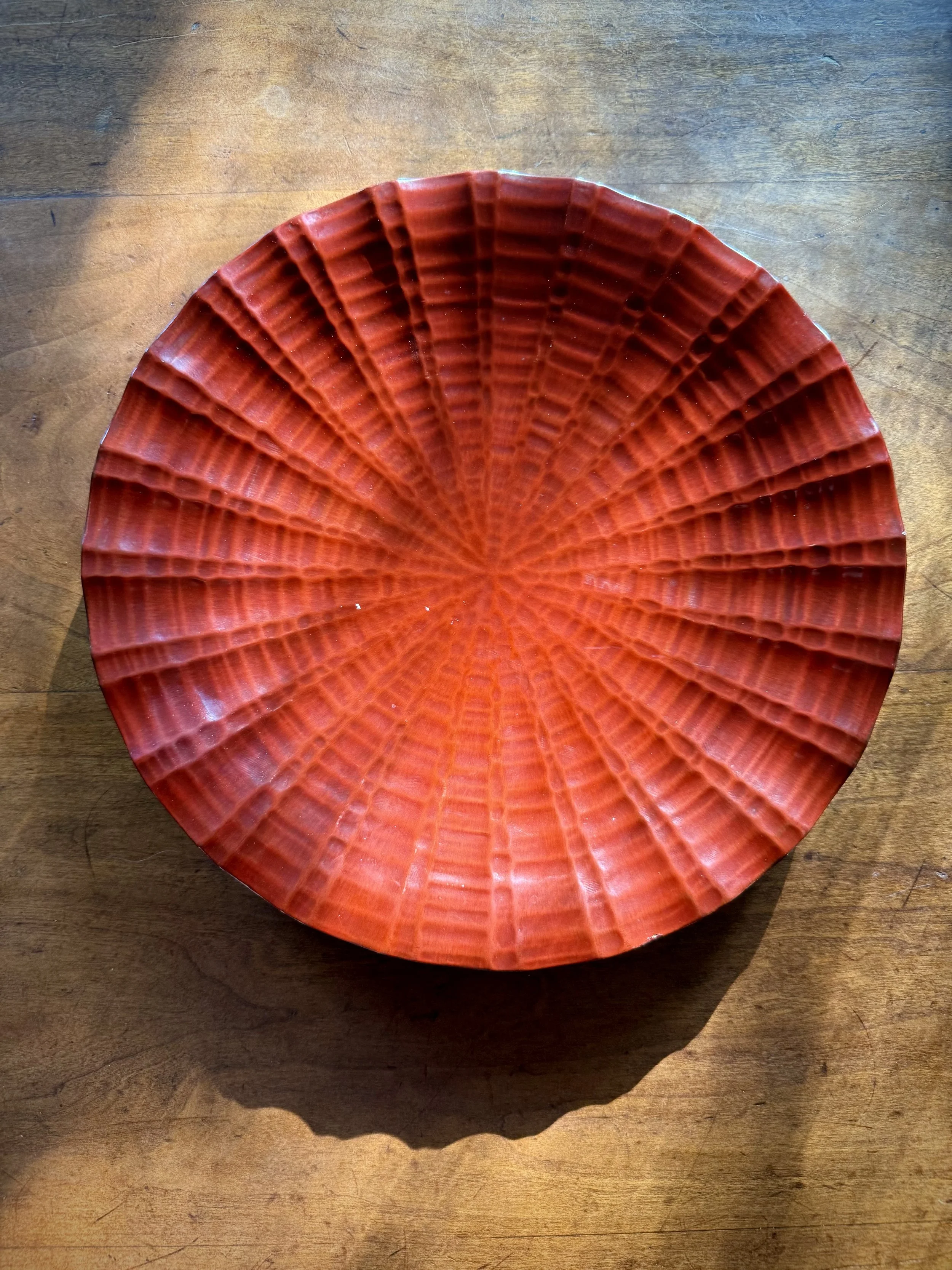
An exquisite, contemporary Kamakura-bori platter. This traditional Japanese lacquerware technique is characterized by exaggerated carving, finished with multiple layers of highly-polished lacquer. The tradition dates back to the Kamakura period (1185-1333) when heavily-carved and lacquered Buddhist religious objects were first imported from China. Japanese craftsman reinterpreted the Chinese technique, accentuating the wood, and giving it a more mingei (folk art) vibe.
The wood used for Kamakura-bori is usually from the beautiful Katsura (or Japanese Judas tree, Cercidiphyllum japonicum), which is related to the North American Redbud.
An exquisite, contemporary Kamakura-bori platter. This traditional Japanese lacquerware technique is characterized by exaggerated carving, finished with multiple layers of highly-polished lacquer. The tradition dates back to the Kamakura period (1185-1333) when heavily-carved and lacquered Buddhist religious objects were first imported from China. Japanese craftsman reinterpreted the Chinese technique, accentuating the wood, and giving it a more mingei (folk art) vibe.
The wood used for Kamakura-bori is usually from the beautiful Katsura (or Japanese Judas tree, Cercidiphyllum japonicum), which is related to the North American Redbud.