 Image 1 of 4
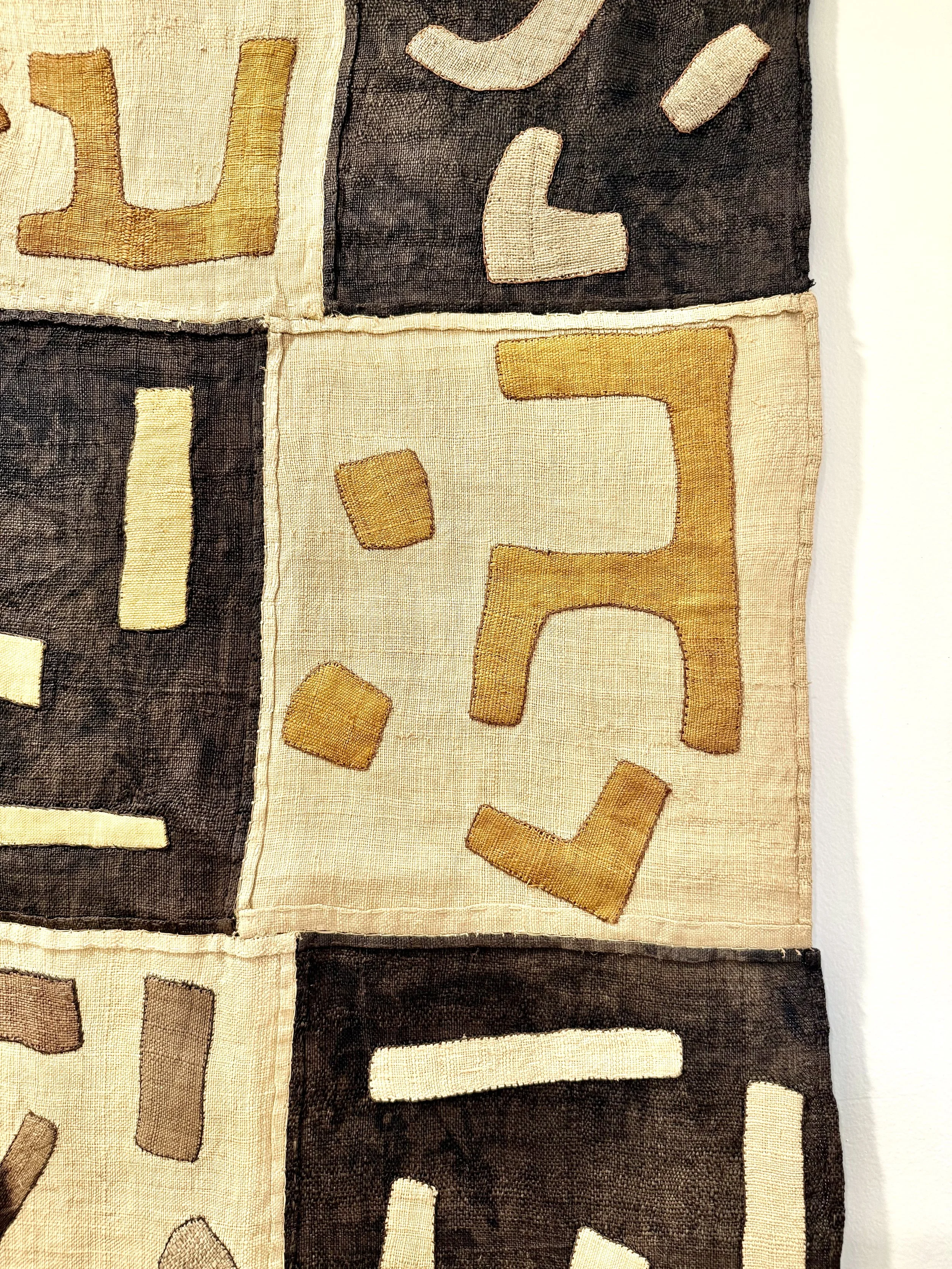 Image 2 of 4
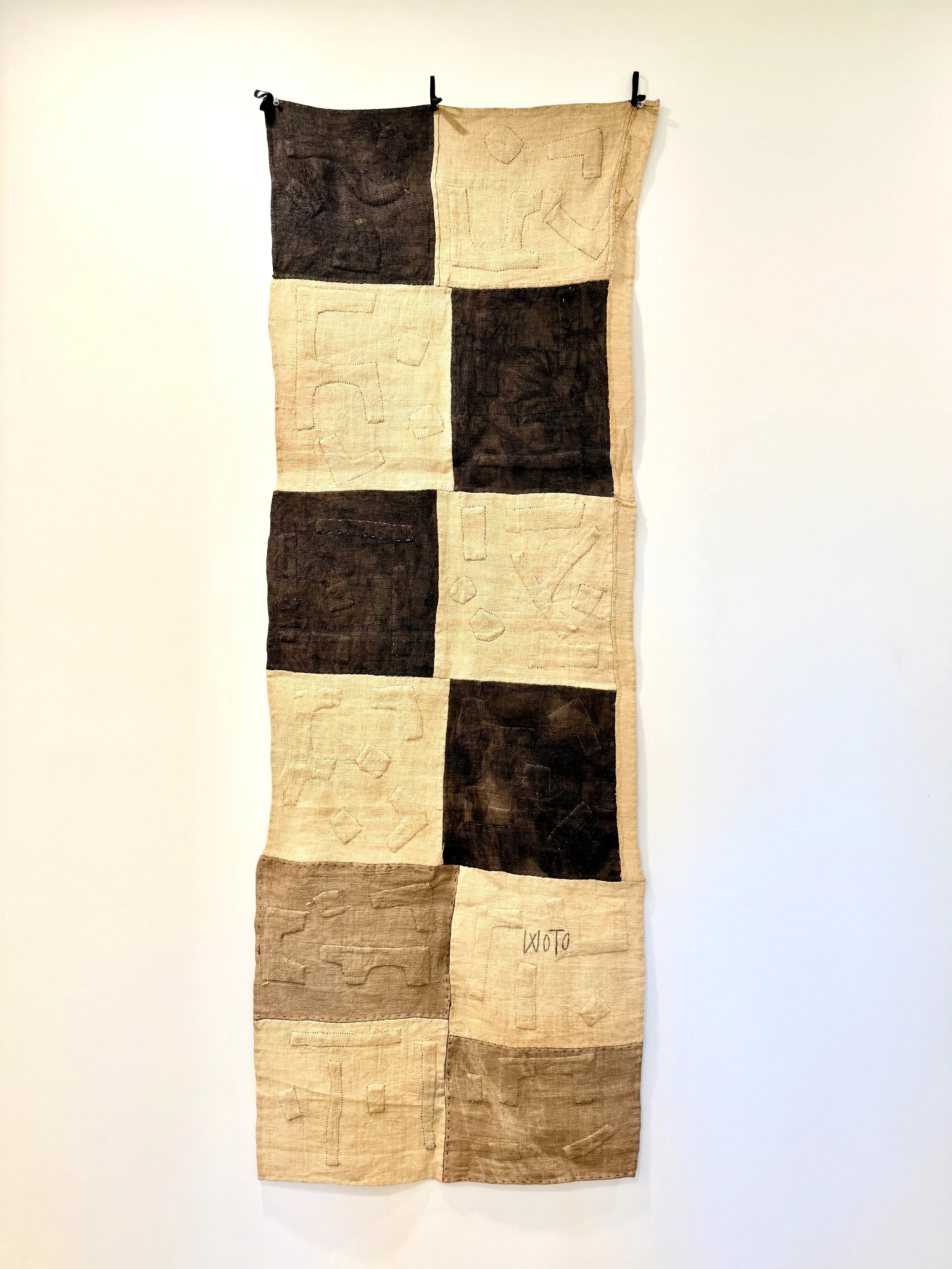 Image 3 of 4
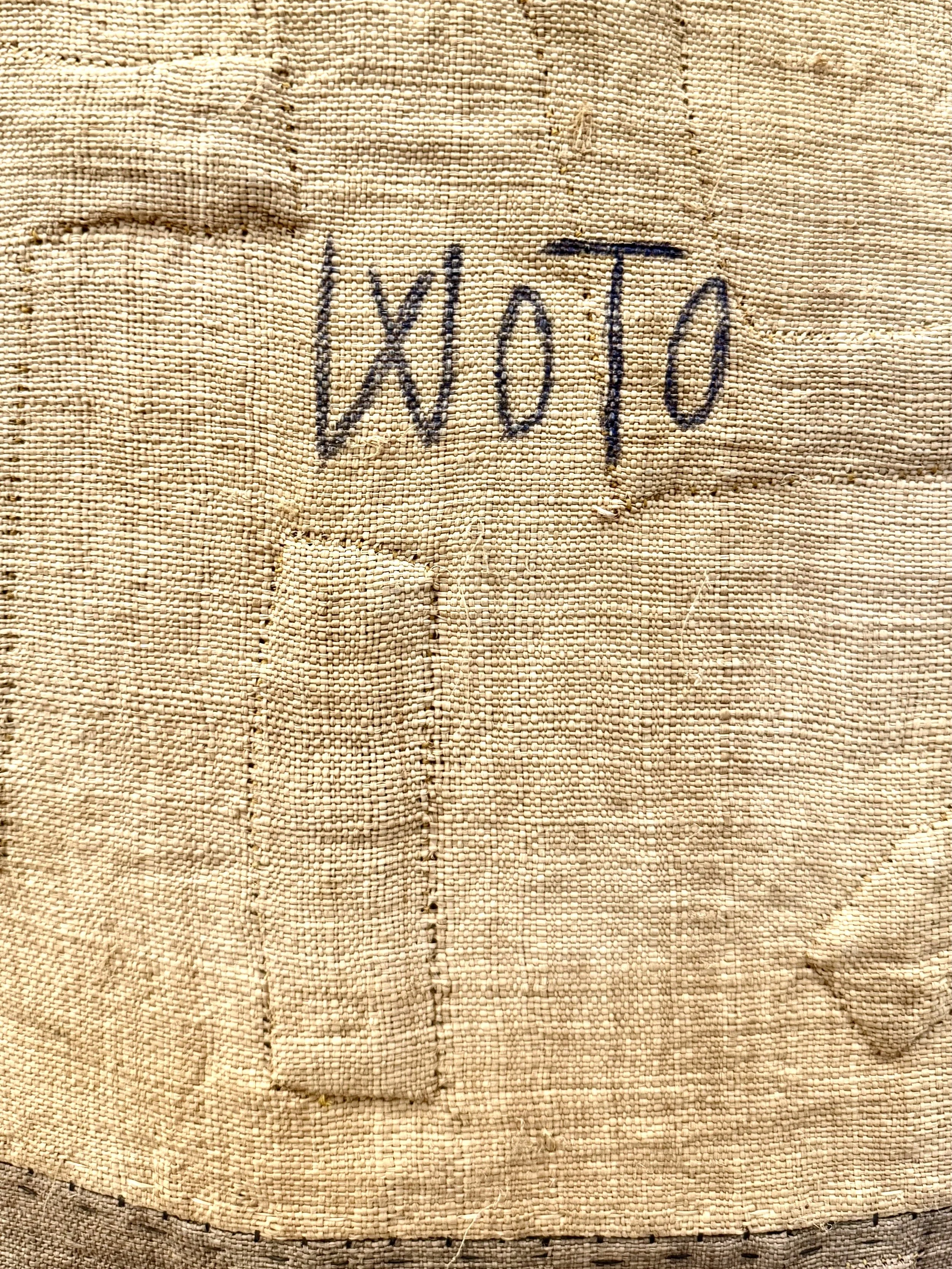 Image 4 of 4
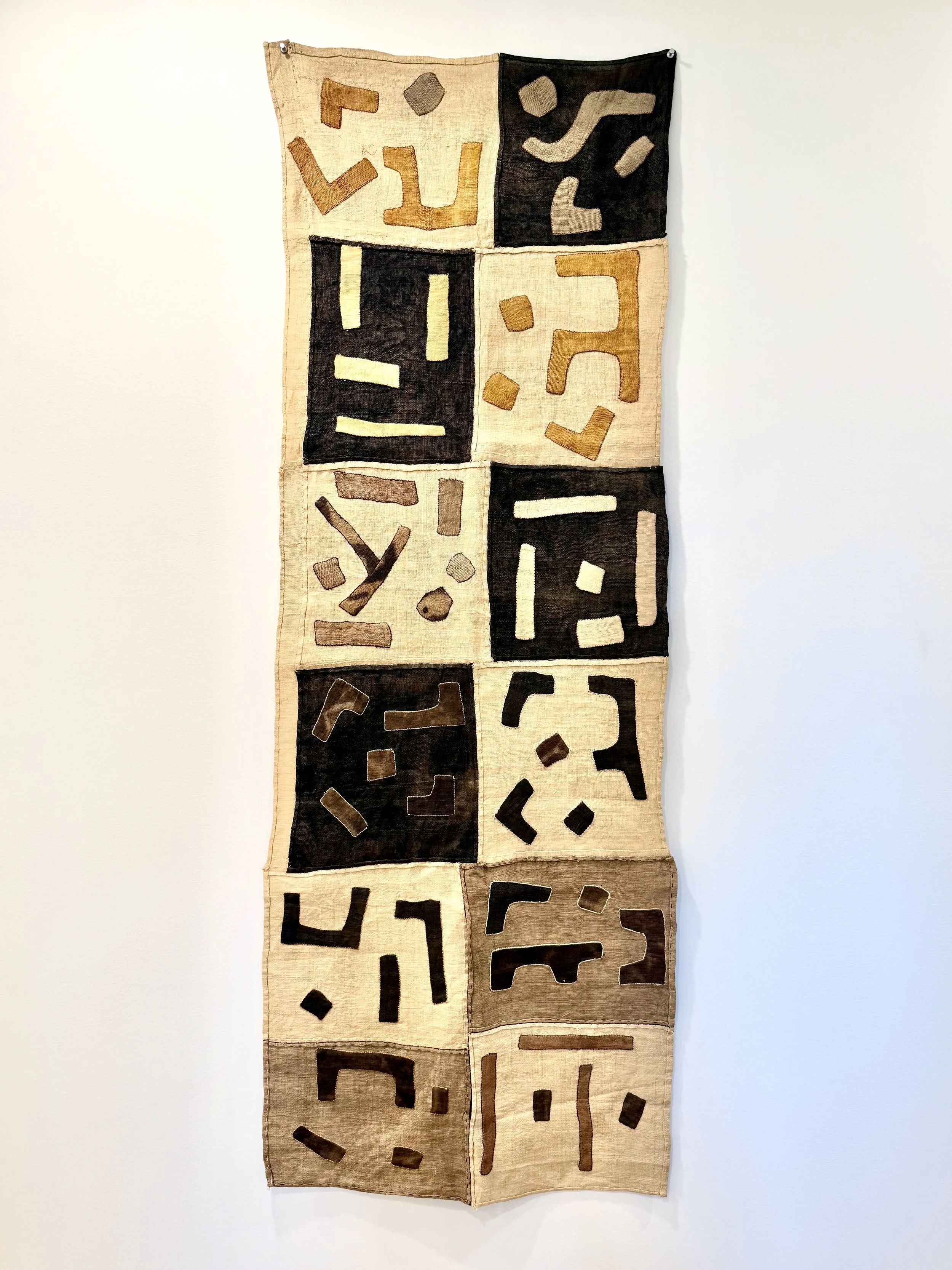
Kuba tcaka, Democratic Republic of the Congo, 20th century. 65" x 23"
Kuba skirts, or tcaka, are cloths woven from raffia palm fiber, sometimes up 25 feet long. They were typically worn by dancers, both men and women, wrapped around the body multiple times. They could be very complex, incorporating embroidered patterns, cowrie shells, bark cloth, etc. The appliqued shapes used in this example evolved from patches that originally covered holes; over the generations, these developed into traditional, abstract design motifs.
The Kuba Kingdom (c. 1600–1884) was a historic alliance of Bantu-speaking peoples (including the Ngeende, Bushoong, and Ngongo), located in the southeastern Democratic Republic of Congo between the Kasai and Sankuru rivers. The name "Kuba" is shorthand for this region and its distinctive artwork.
Note that this example was made for sale, not for cultural use, although it incorporates traditional materials and motifs. Three hanging loops have been added to one end for ease of display. Signed "Woto" on reverse; Woto (or Woot) is the mythical founder, first king, and cultural hero of the Kuba Kingdom.
Kuba tcaka, Democratic Republic of the Congo, 20th century. 65" x 23"
Kuba skirts, or tcaka, are cloths woven from raffia palm fiber, sometimes up 25 feet long. They were typically worn by dancers, both men and women, wrapped around the body multiple times. They could be very complex, incorporating embroidered patterns, cowrie shells, bark cloth, etc. The appliqued shapes used in this example evolved from patches that originally covered holes; over the generations, these developed into traditional, abstract design motifs.
The Kuba Kingdom (c. 1600–1884) was a historic alliance of Bantu-speaking peoples (including the Ngeende, Bushoong, and Ngongo), located in the southeastern Democratic Republic of Congo between the Kasai and Sankuru rivers. The name "Kuba" is shorthand for this region and its distinctive artwork.
Note that this example was made for sale, not for cultural use, although it incorporates traditional materials and motifs. Three hanging loops have been added to one end for ease of display. Signed "Woto" on reverse; Woto (or Woot) is the mythical founder, first king, and cultural hero of the Kuba Kingdom.