 Image 1 of 4
 Image 2 of 4
 Image 3 of 4
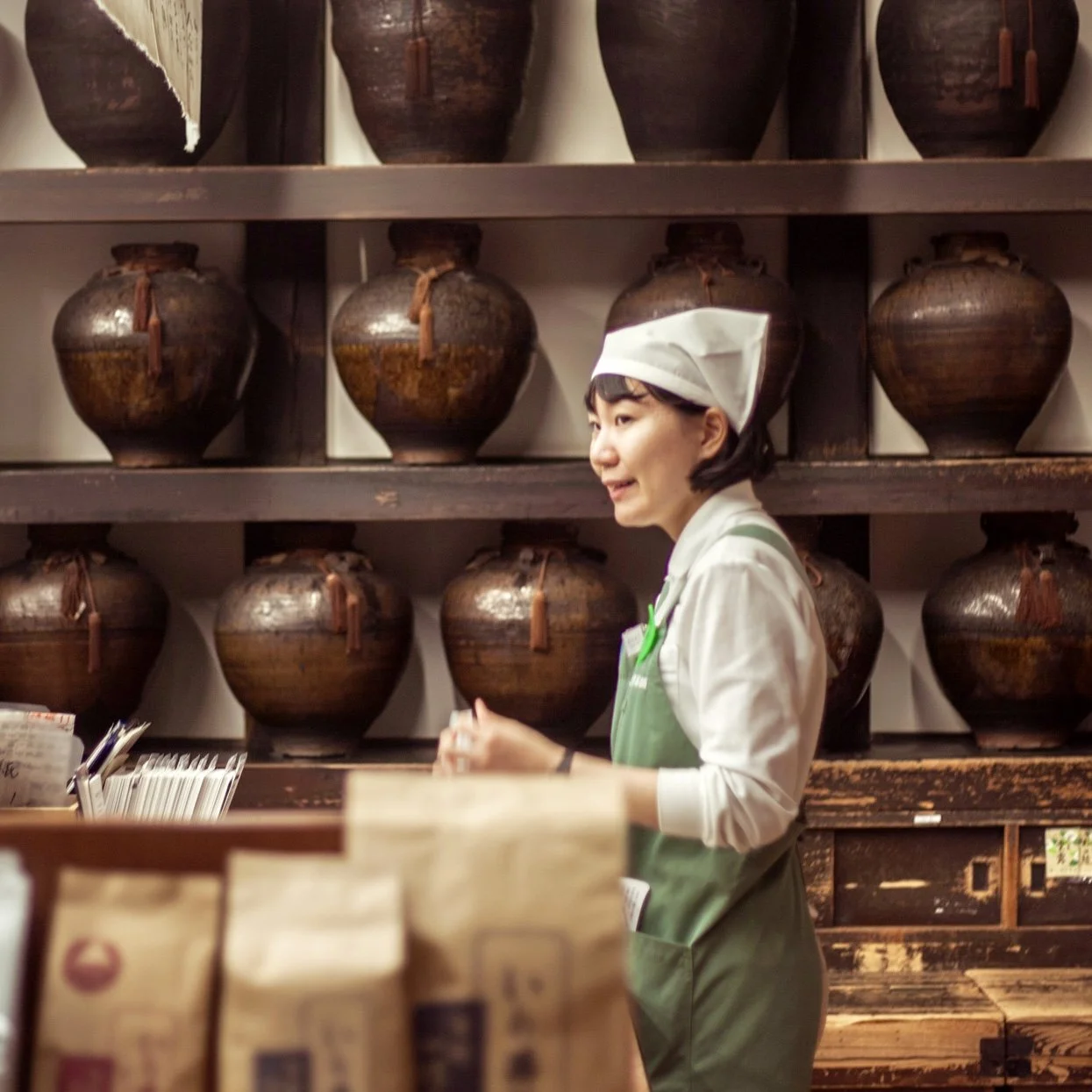 Image 4 of 4
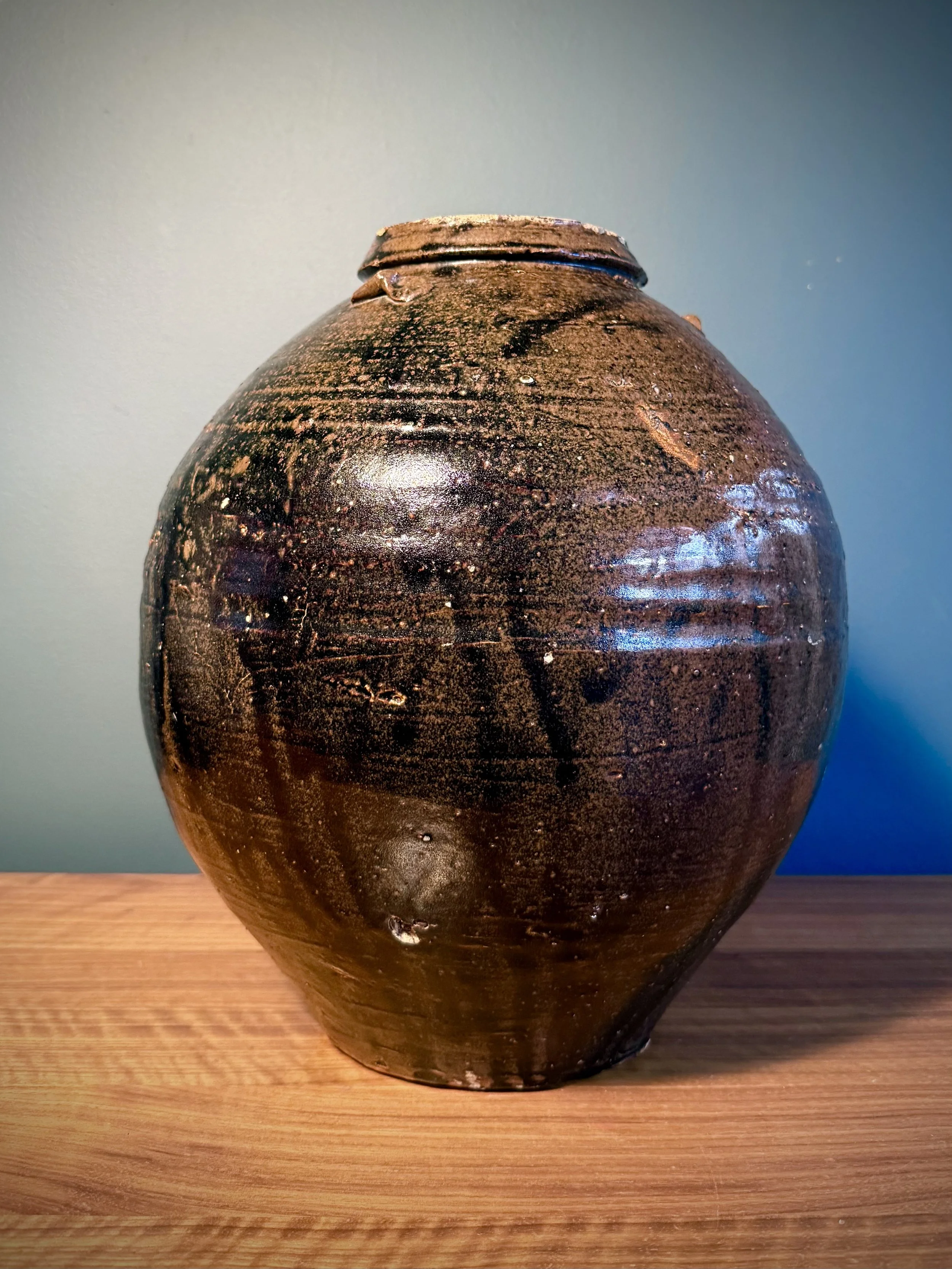
Japanese Shigaraki ware (信楽焼) storage jar. There are four small lugs surrounding the opening, which were used for securing a wooden lid with cords, in the style of a Chinese Martaban jar. However, we feel that the clay body (full of feldspar chunks) is more characteristic of Shigaraki. Opinions are welcome! Shigaraki dates back to 1278, if not earlier. It is one the ‘Six Old Kilns," along with Seto, Echizen, Tokoname, Bizen, and Tamba.
The last picture shows a collection of identical vessels, lining the walls of the amazing Ippodo Tea Shop (founded 1717) on Kyoto's Teramachi Street. These jars were used for storing tea, of course!
Note that this vessel has a fine hairline crack (stabilized) which makes it unsuitable for holding liquids. However, it is eminently suitable for holding dried arrangements!
Japanese Shigaraki ware (信楽焼) storage jar. There are four small lugs surrounding the opening, which were used for securing a wooden lid with cords, in the style of a Chinese Martaban jar. However, we feel that the clay body (full of feldspar chunks) is more characteristic of Shigaraki. Opinions are welcome! Shigaraki dates back to 1278, if not earlier. It is one the ‘Six Old Kilns," along with Seto, Echizen, Tokoname, Bizen, and Tamba.
The last picture shows a collection of identical vessels, lining the walls of the amazing Ippodo Tea Shop (founded 1717) on Kyoto's Teramachi Street. These jars were used for storing tea, of course!
Note that this vessel has a fine hairline crack (stabilized) which makes it unsuitable for holding liquids. However, it is eminently suitable for holding dried arrangements!