 Image 1 of 4
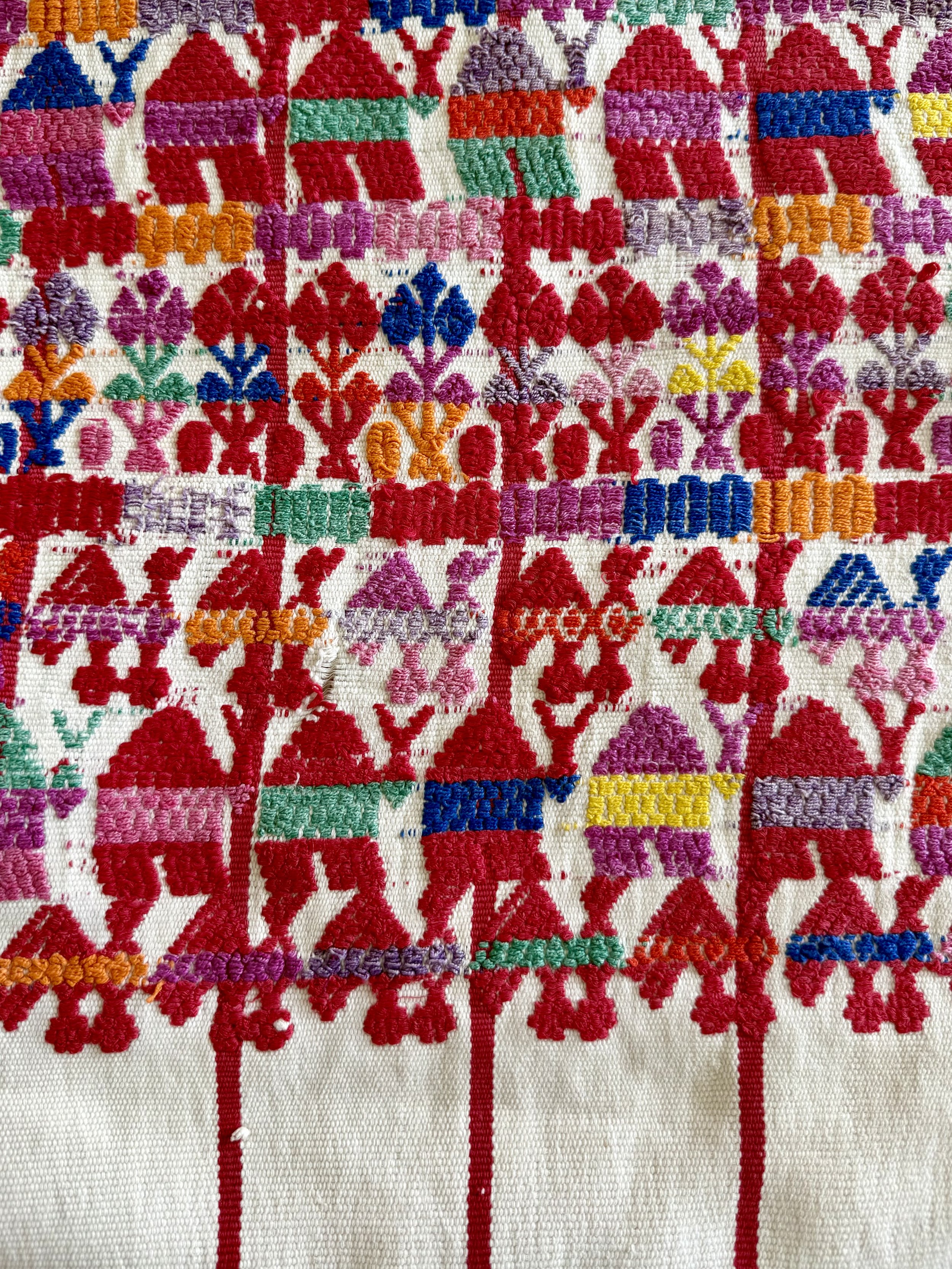 Image 2 of 4
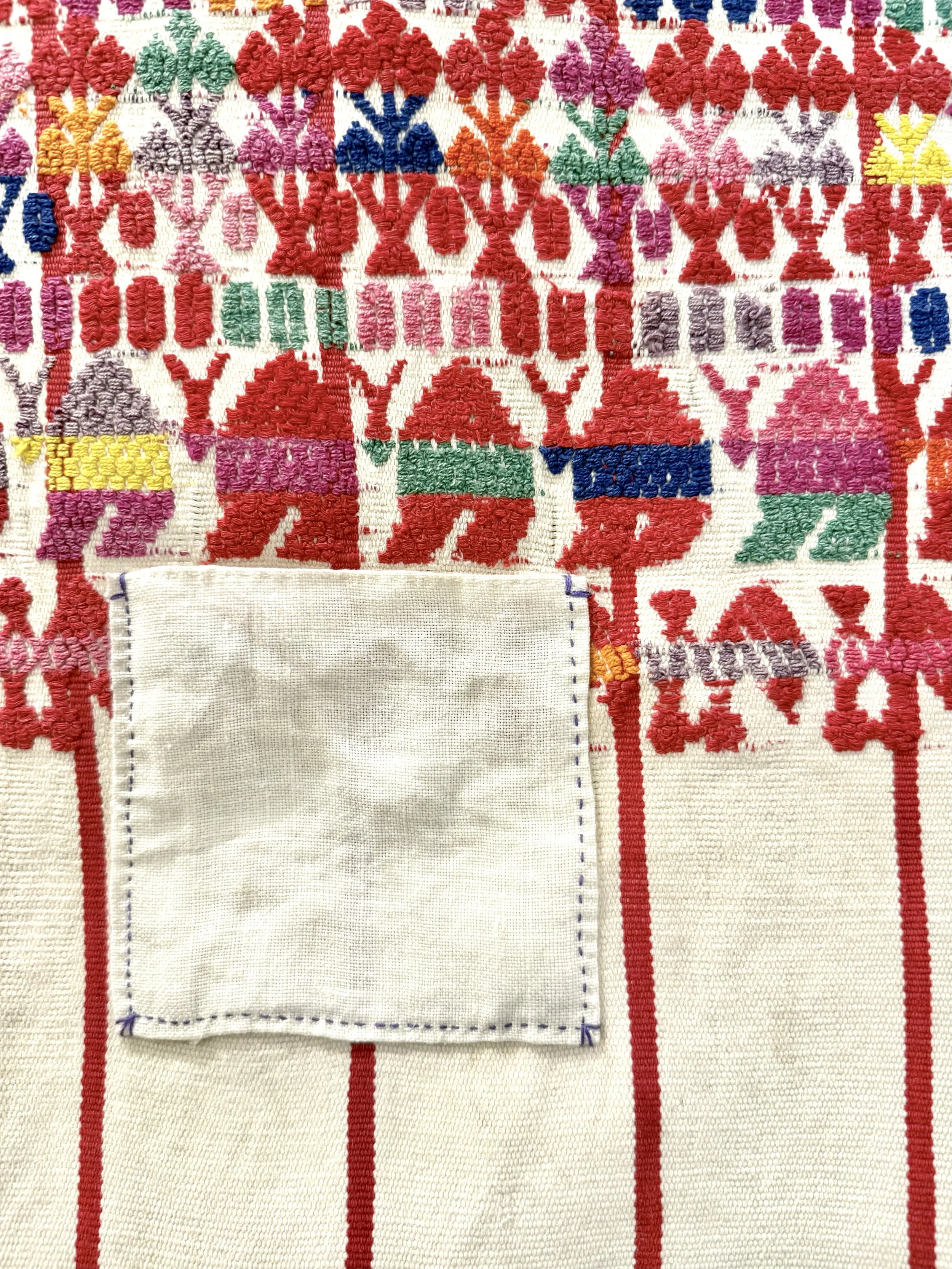 Image 3 of 4
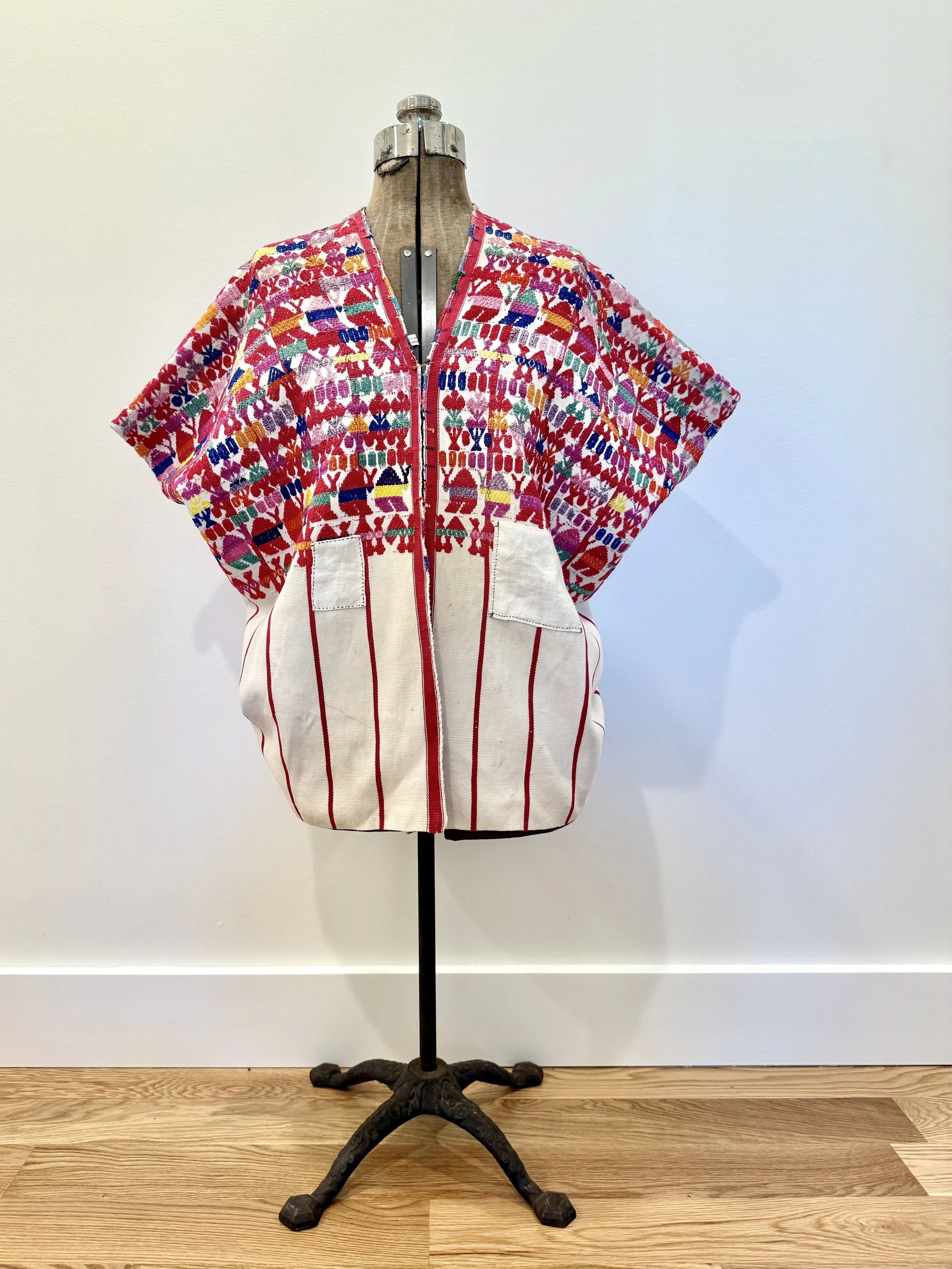 Image 4 of 4
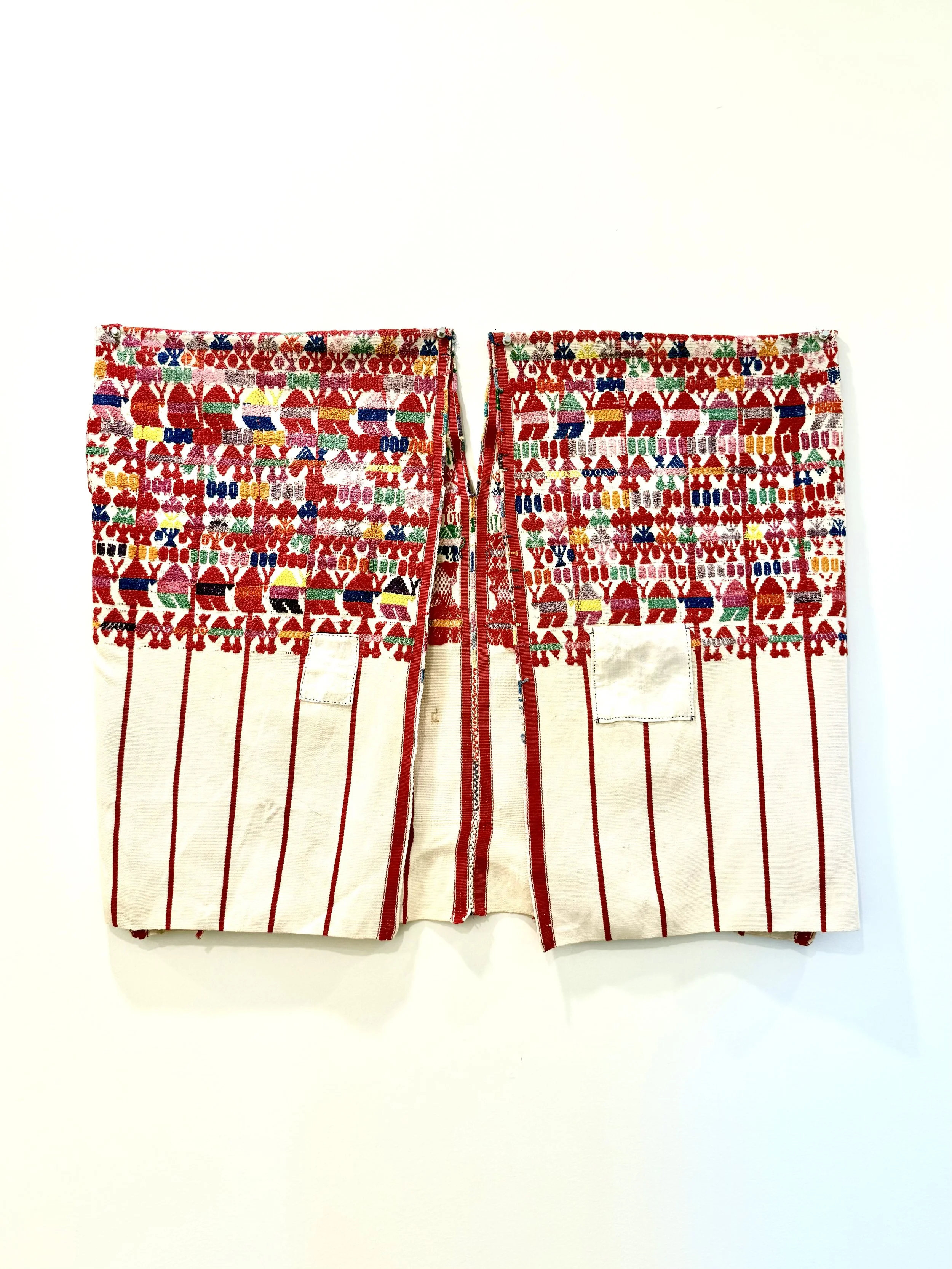
Mayan huipil from the Department of Sacatepéquez in central Guatemala.
The word huipil comes from a Náhuatl word meaning “my covering.” It is the upper half of a woman's daily outfit, or traje (a cortes or wraparound skirt comprises the lower half). Huipiles are mostly worn in Guatemala, as well as in parts of Oaxaca, Chiapas, and the Yucatan. They tend to be longer in cooler climates (like the Highlands), and shorter in warmer regions. Most huipiles are pullovers, but some, like this one, are open in front, making them easier to wear as a layer.
In pre-colonial times, huipiles were primarily worn as ceremonial garments, or to convey social status. Later, their use grew more widespread, and the huipil became a means of personal expression and a symbol of local pride. In the 1940s, Frida Kahlo helped to popularize the huipil internationally. The garment has been reinterpreted by fashionistas ever since, like leading Mexican designer Carla Fernández.
Huipiles are usually woven on a traditional backstrap loom in two or three separate panels, which are then sewn together. They are often elaborately-decorated, using brocade, embroidery, or appliqué. Brocade, where the design is woven into the cloth, is the most traditional and widespread technique. This example incorporates the quetzal bird (for Guatemala) and rabbits (for Sacatepéquez), along with other more symbolic geometric forms.
Mayan huipil from the Department of Sacatepéquez in central Guatemala.
The word huipil comes from a Náhuatl word meaning “my covering.” It is the upper half of a woman's daily outfit, or traje (a cortes or wraparound skirt comprises the lower half). Huipiles are mostly worn in Guatemala, as well as in parts of Oaxaca, Chiapas, and the Yucatan. They tend to be longer in cooler climates (like the Highlands), and shorter in warmer regions. Most huipiles are pullovers, but some, like this one, are open in front, making them easier to wear as a layer.
In pre-colonial times, huipiles were primarily worn as ceremonial garments, or to convey social status. Later, their use grew more widespread, and the huipil became a means of personal expression and a symbol of local pride. In the 1940s, Frida Kahlo helped to popularize the huipil internationally. The garment has been reinterpreted by fashionistas ever since, like leading Mexican designer Carla Fernández.
Huipiles are usually woven on a traditional backstrap loom in two or three separate panels, which are then sewn together. They are often elaborately-decorated, using brocade, embroidery, or appliqué. Brocade, where the design is woven into the cloth, is the most traditional and widespread technique. This example incorporates the quetzal bird (for Guatemala) and rabbits (for Sacatepéquez), along with other more symbolic geometric forms.