 Image 1 of 4
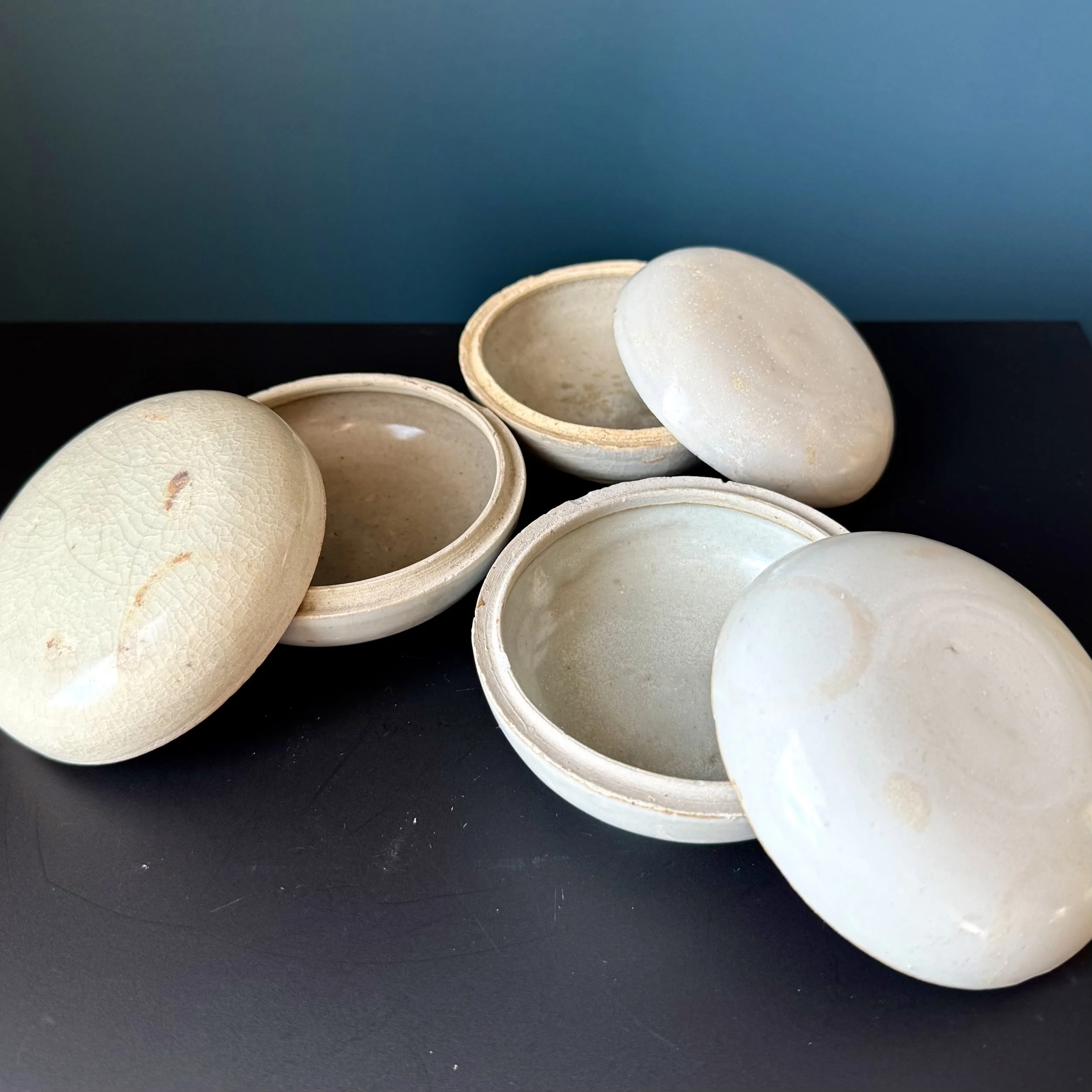 Image 2 of 4
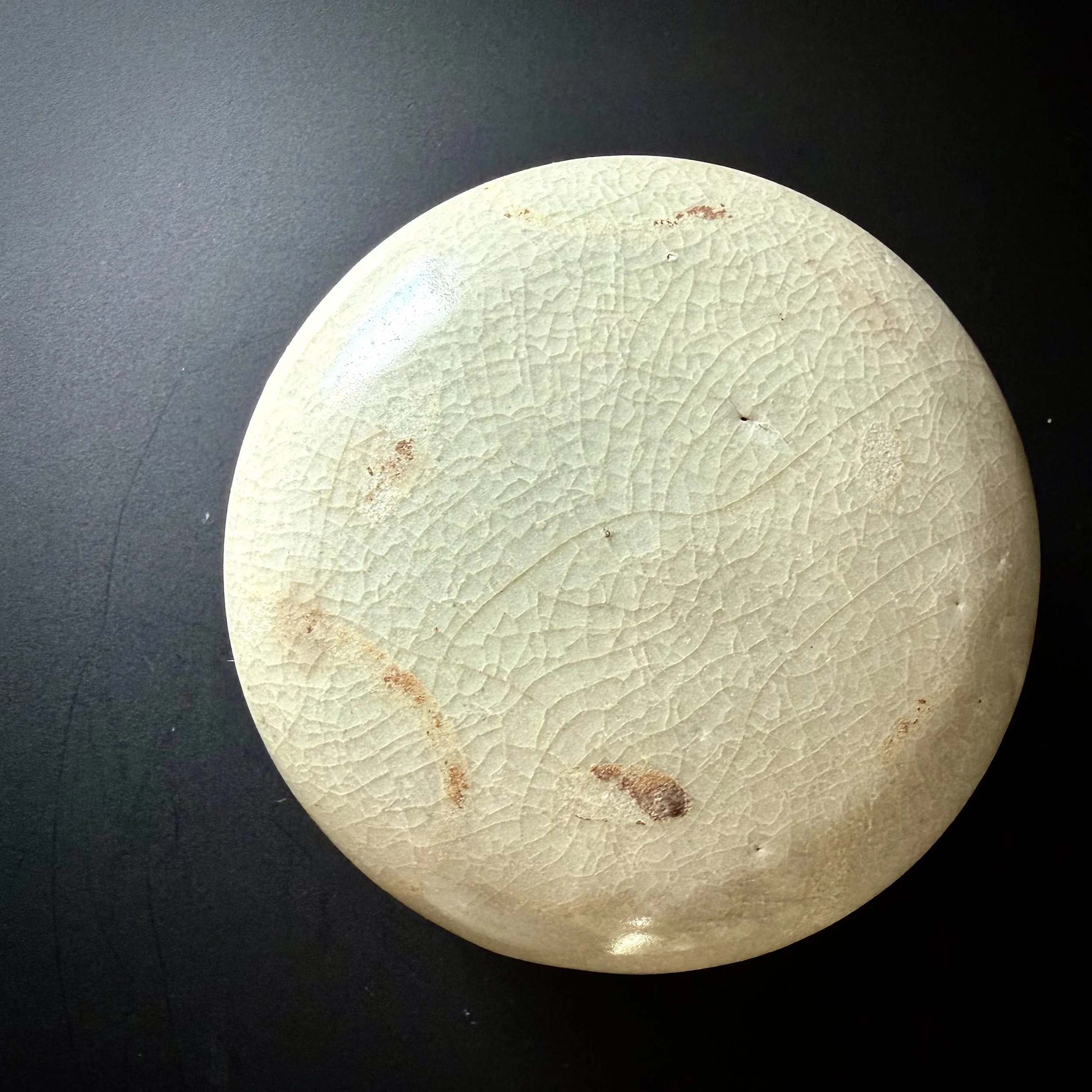 Image 3 of 4
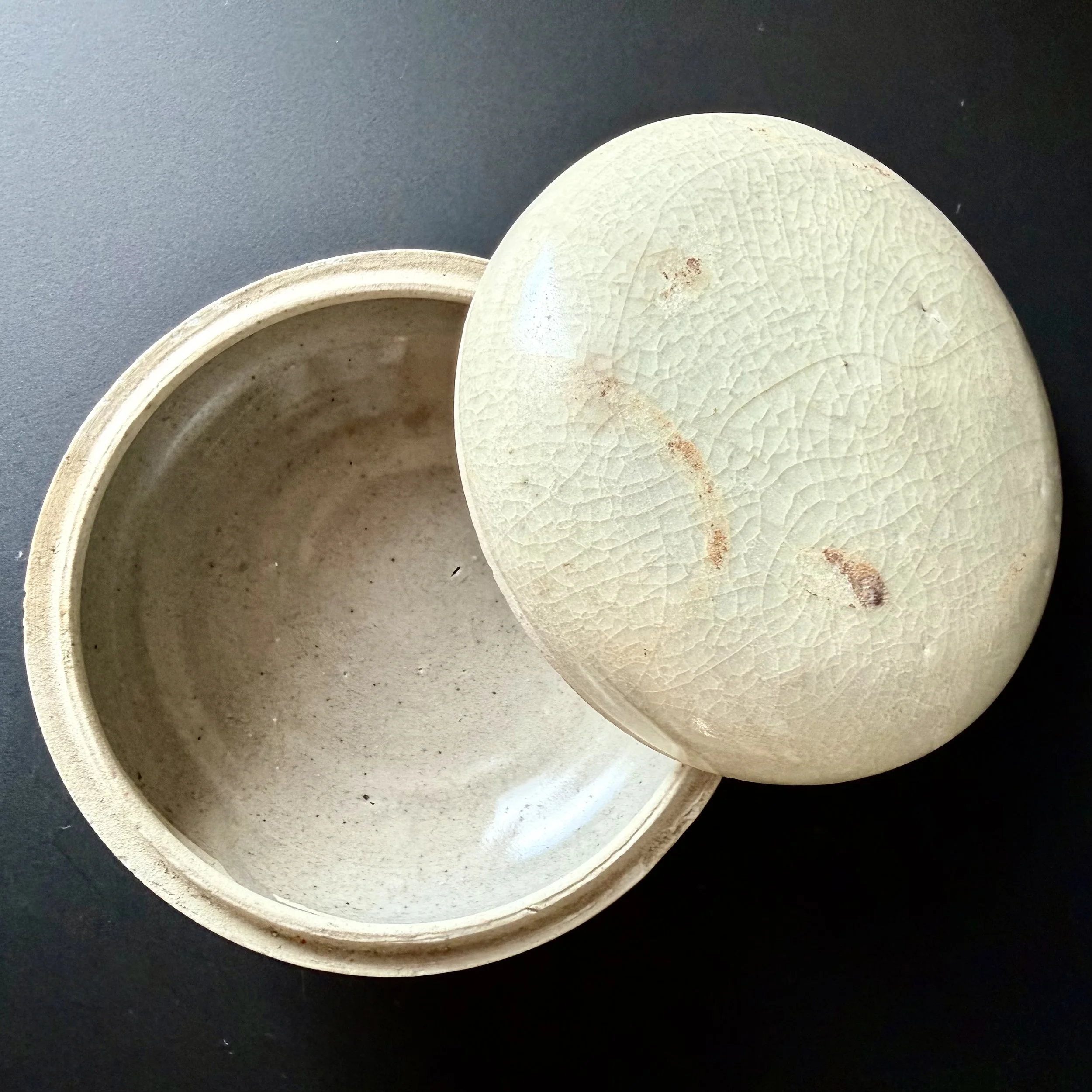 Image 4 of 4
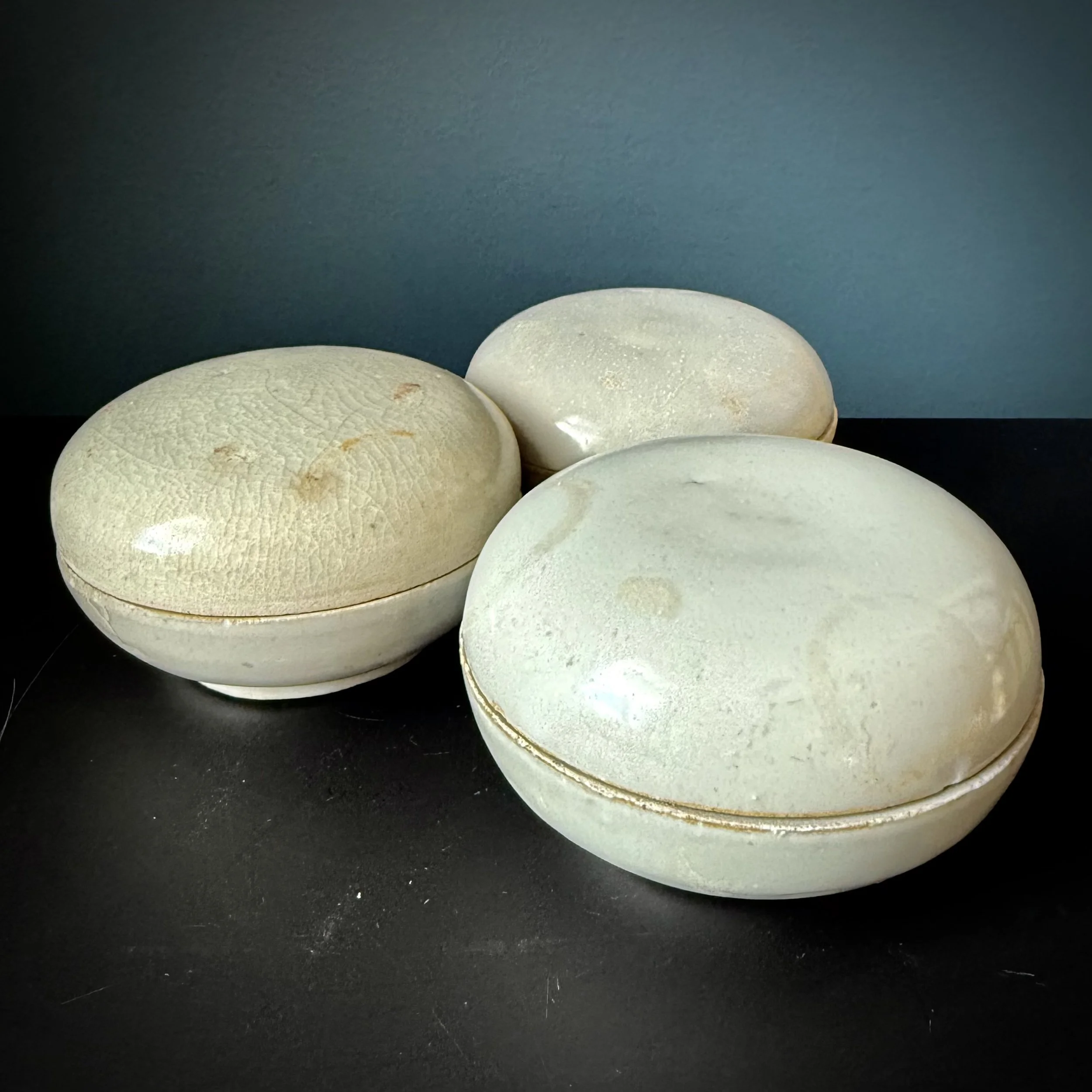
These porcelain lidded boxes date to the late Ming Dynasty (Wanli Period, 1572 - 1620). They were salvaged from the wreck of a Chinese junk, which sank off the coast of Vietnam's Bin Thuan Province in 1608.
The shipwreck was first discovered by local fishermen in 2001. It turned out to be carrying an enormous cargo of porcelain, from Zhangzhou in Southern China. Historical records suggest that the ship belonged to a Chinese merchant named I Sin Ho, and was bound for the Malay Peninsula. A salvage operation, undertaken by the Vietnamese government, yielded 34,000 pieces of porcelain. About half of the treasure went to museums, while the remainder was auctioned for the benefit of the Vietnamese people.
These boxes were originally designed to hold powdered makeup, but if that's not your jam, they have other possible uses. Such as: a table-top saltcellar (and conversation piece!), or a bedside ring dish. Your choice. You, too, can own a piece of Ming!
Each box is 3.5” wide x 2” tall