 Image 1 of 5
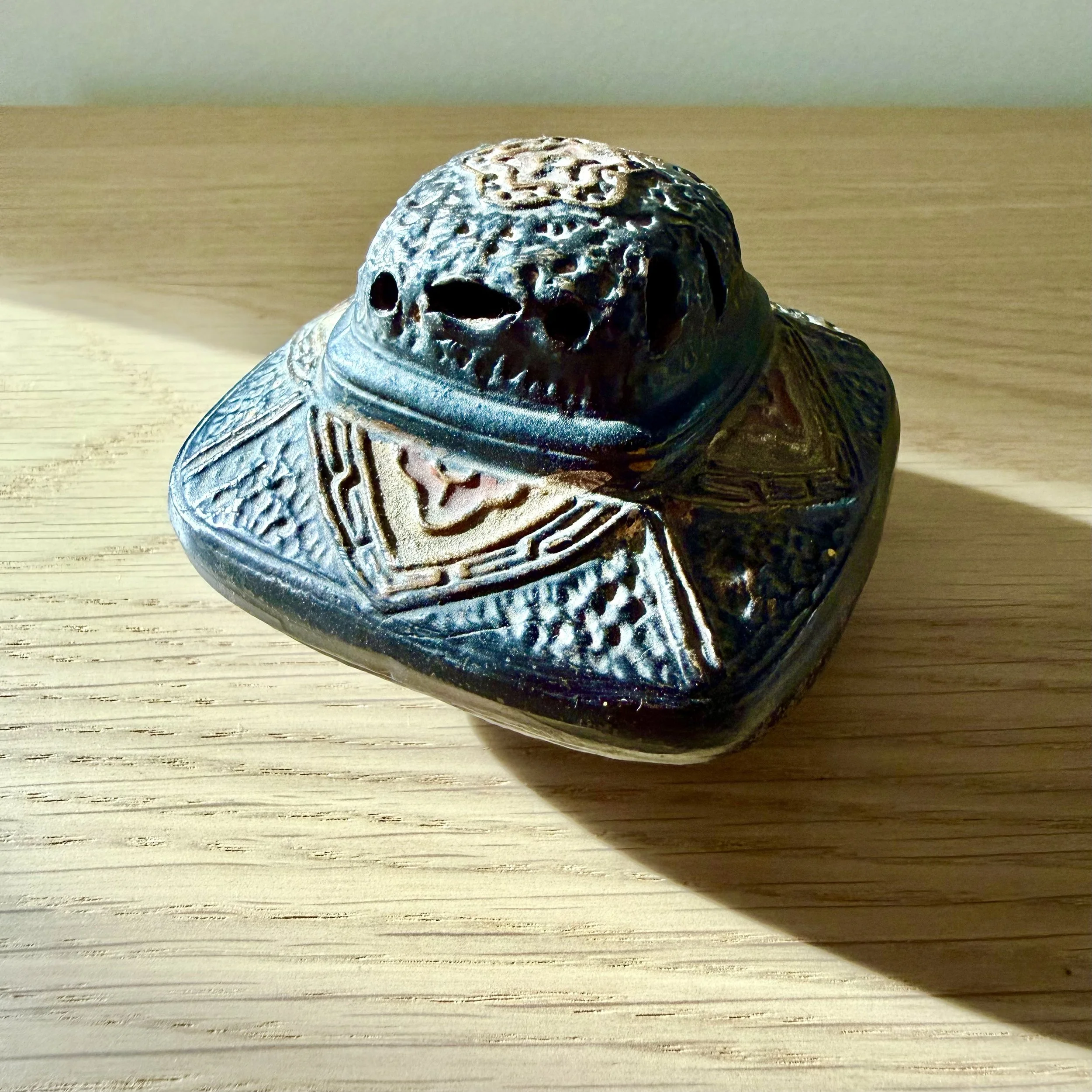 Image 2 of 5
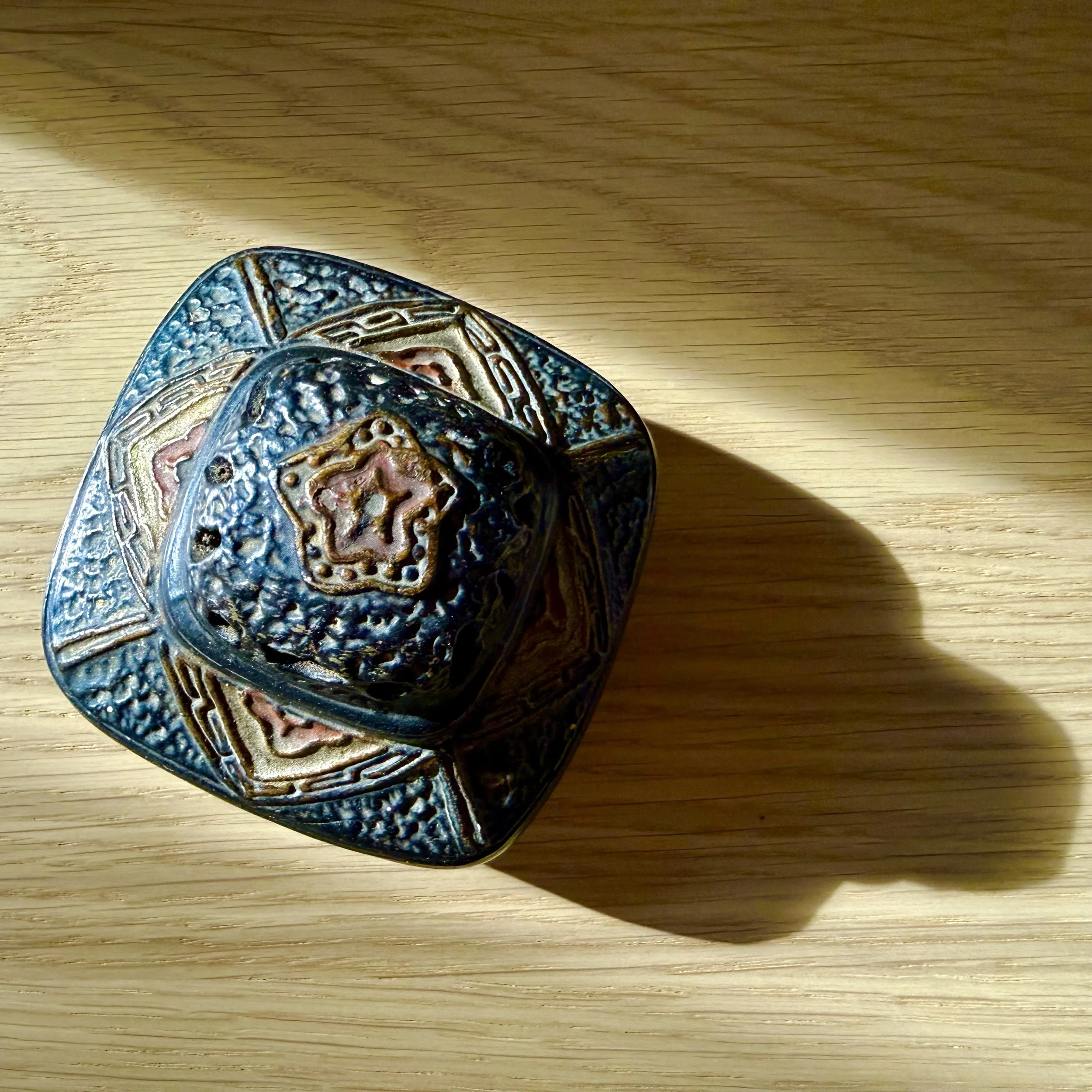 Image 3 of 5
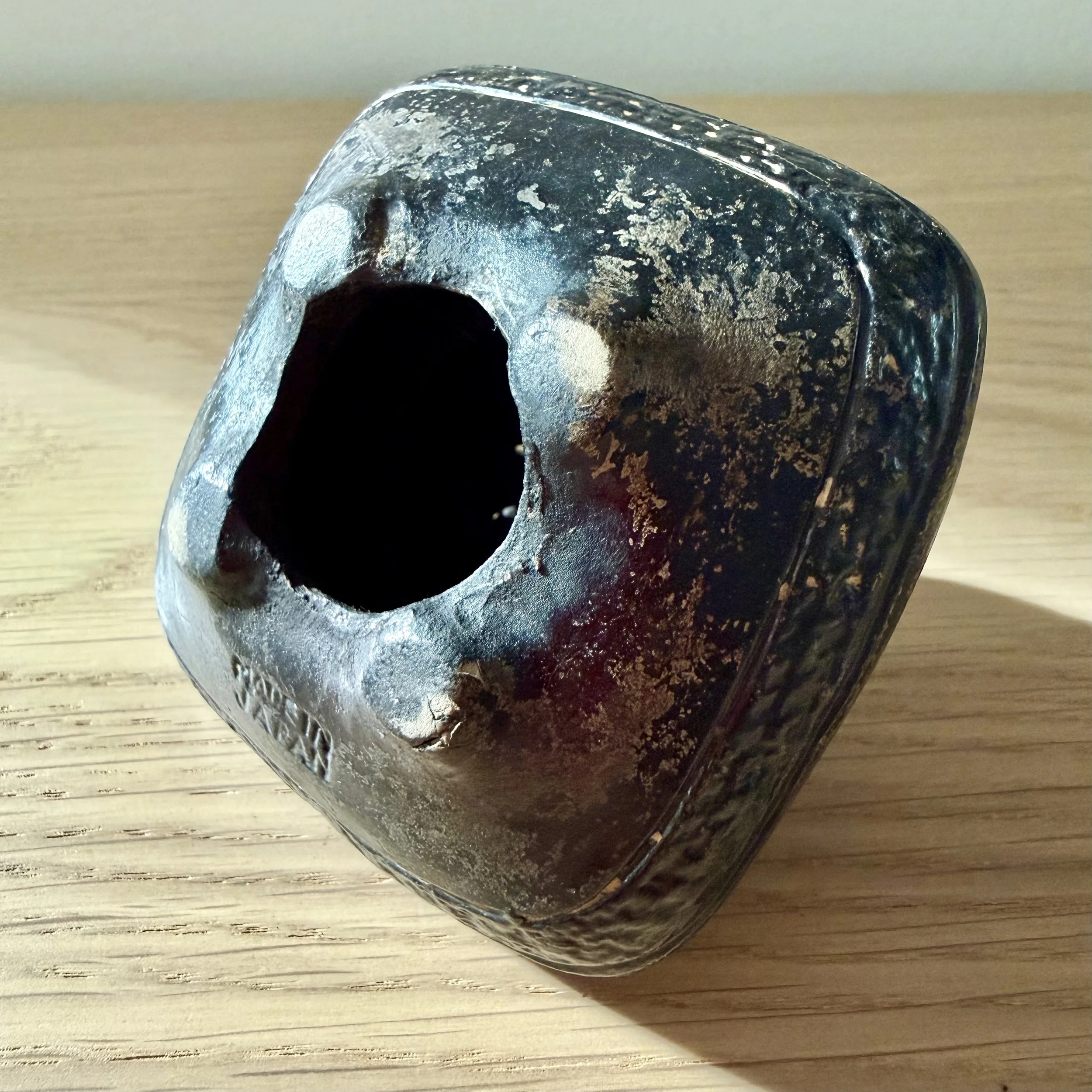 Image 4 of 5
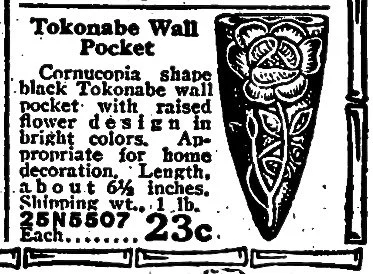 Image 5 of 5
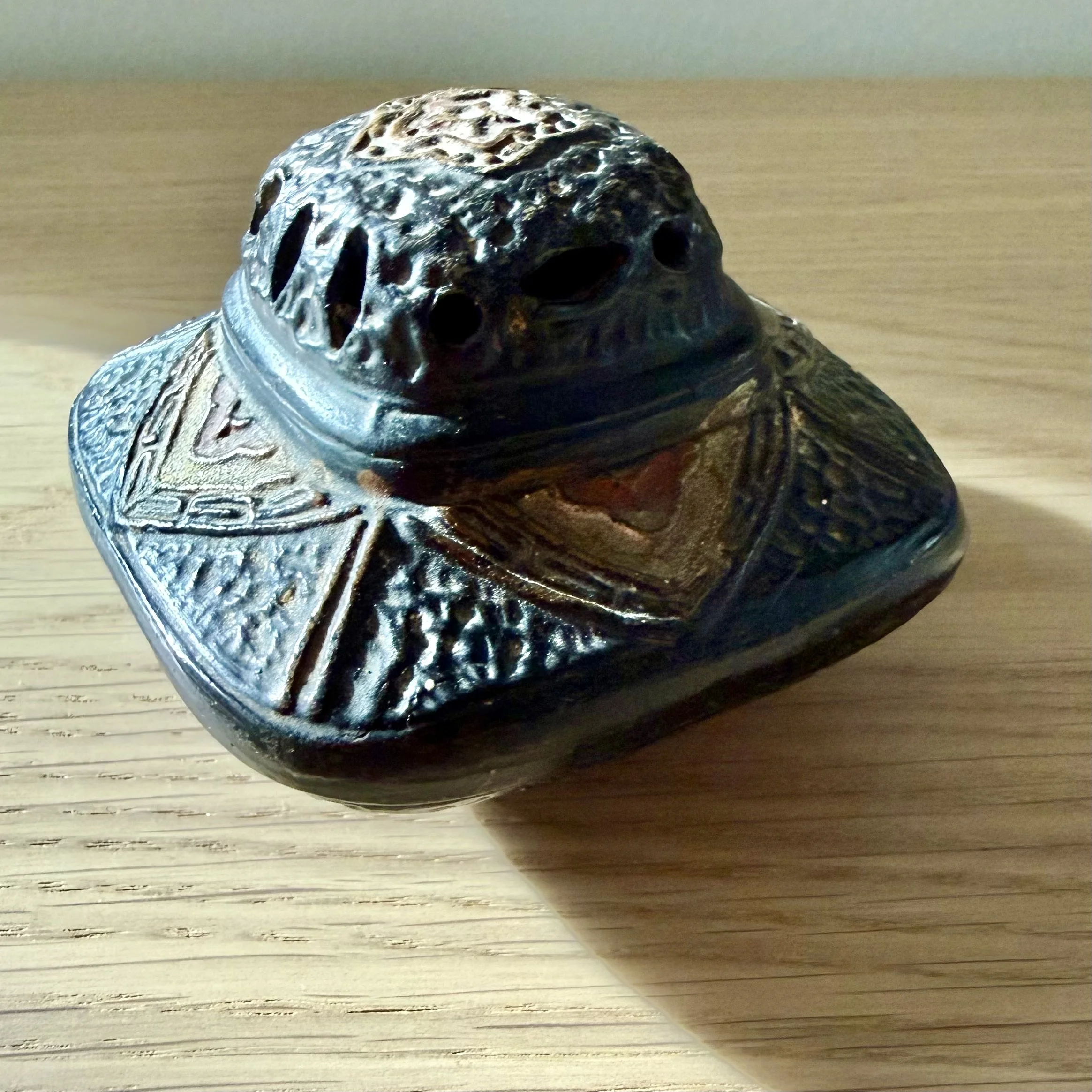
A "Tokonabe" kōro, or incense burner. The kōro is an important part of the kōdō, or classical Japanese art of incense appreciation. Traditionally, aromatic woods, resins, or kneaded incense (kōboku) would be placed on a disk of heated charcoal, then the kōro set on top to disperse the smoke. Lacking charcoal, you can simply set a cone of incense on a dish, light it, and place the kōro over it.
Tokoname ware (常滑焼, Tokoname-yaki) is among the more unusual styles of Japanese ceramics. Tokoname village is located on Ise Bay, on the outskirts of Nagoya, and is one of the "Six Ancient Kilns" of Japan. Historically, the kilns of Tokoname have produced mostly industrial and utilitarian wars, such as clay pipes and roof tiles. The local clay contains a high concentration of iron, which turns a vibrant reddish-brown (shudei) upon firing. Even the ornamental ceramics tend to be rather earthy. Now, Tokoname is best known for making unglazed kyusu teapots, and maneki-neko (lucky cat) figurines.
Sometime in the late 19th century, traders discovered that the Tokoname style dovetailed nicely with Victorian aesthetic sensibilities. By the late 1920s, ornamental Tokoname ware made an appearance in the Sears and Roebuck catalog, rebranded as "Tokonabe." It was a real cross-cultural phenomenon, a mashup of traditional Japanese ideas with speculation on what might appeal to western buyers. "Tokonabe" was slip-cast or press-molded, and (apparently) reduction-fired, turning the clay body uniformly sepia, or black. It is typically hand-decorated with a subtle application of paint, or none at all. This kind of pottery finds few contemporary collectors, and tends to be inexpensive. We like it, however!
A "Tokonabe" kōro, or incense burner. The kōro is an important part of the kōdō, or classical Japanese art of incense appreciation. Traditionally, aromatic woods, resins, or kneaded incense (kōboku) would be placed on a disk of heated charcoal, then the kōro set on top to disperse the smoke. Lacking charcoal, you can simply set a cone of incense on a dish, light it, and place the kōro over it.
Tokoname ware (常滑焼, Tokoname-yaki) is among the more unusual styles of Japanese ceramics. Tokoname village is located on Ise Bay, on the outskirts of Nagoya, and is one of the "Six Ancient Kilns" of Japan. Historically, the kilns of Tokoname have produced mostly industrial and utilitarian wars, such as clay pipes and roof tiles. The local clay contains a high concentration of iron, which turns a vibrant reddish-brown (shudei) upon firing. Even the ornamental ceramics tend to be rather earthy. Now, Tokoname is best known for making unglazed kyusu teapots, and maneki-neko (lucky cat) figurines.
Sometime in the late 19th century, traders discovered that the Tokoname style dovetailed nicely with Victorian aesthetic sensibilities. By the late 1920s, ornamental Tokoname ware made an appearance in the Sears and Roebuck catalog, rebranded as "Tokonabe." It was a real cross-cultural phenomenon, a mashup of traditional Japanese ideas with speculation on what might appeal to western buyers. "Tokonabe" was slip-cast or press-molded, and (apparently) reduction-fired, turning the clay body uniformly sepia, or black. It is typically hand-decorated with a subtle application of paint, or none at all. This kind of pottery finds few contemporary collectors, and tends to be inexpensive. We like it, however!