 Image 1 of 1
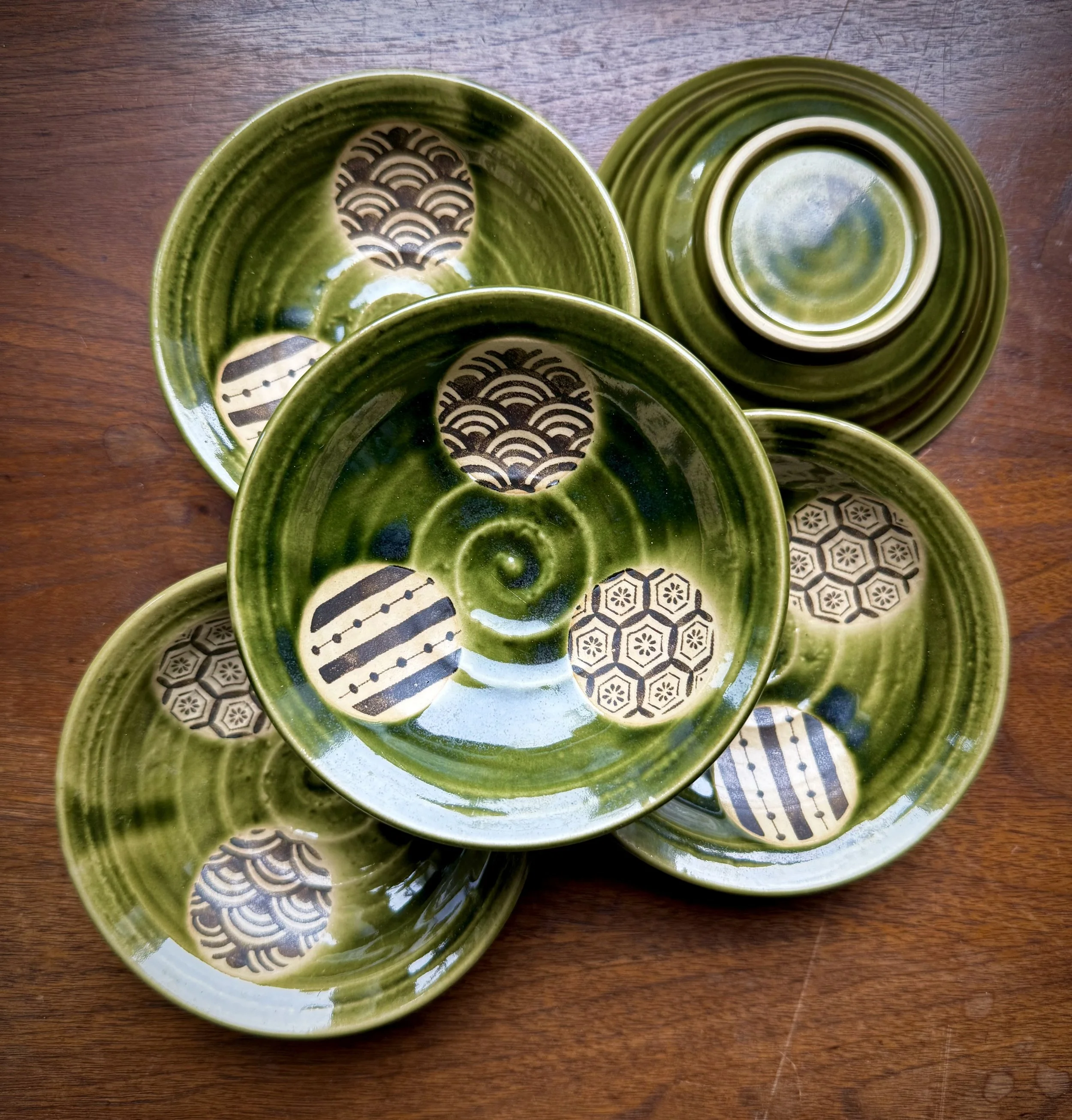
Oribe ware (Oribe-yaki), is a is a special category of Mino ware, originating in Japan's Gifu Prefecture. It first appeared in the sixteenth century, and is sometimes associated with the tea master Furuta Oribe (1544–1615). Oribe is characterized by vibrant green glazes, although red and black forms exist as well. Oribe ware is characterized by a playful insouciance, often taking angular or asymmetrical forms.
These small kaiseki or omakase bowls display the classic grassy-green Oribe glaze. They also have an unusual decorative pattern, in which a stencil or transfer has been directly applied to unglazed portions of the stoneware, which were in turn created by appying a resist during the glazing process.