 Image 1 of 5
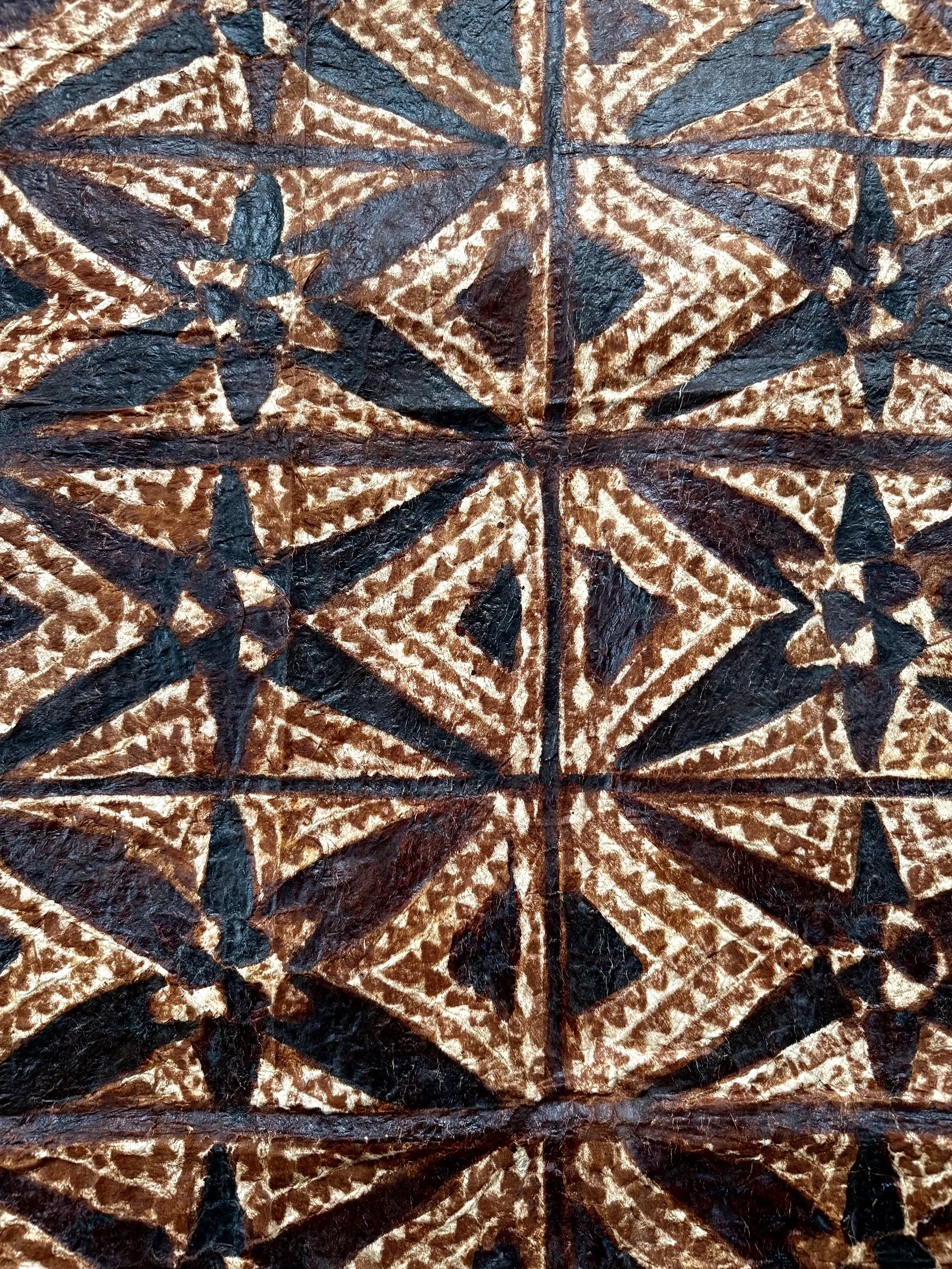 Image 2 of 5
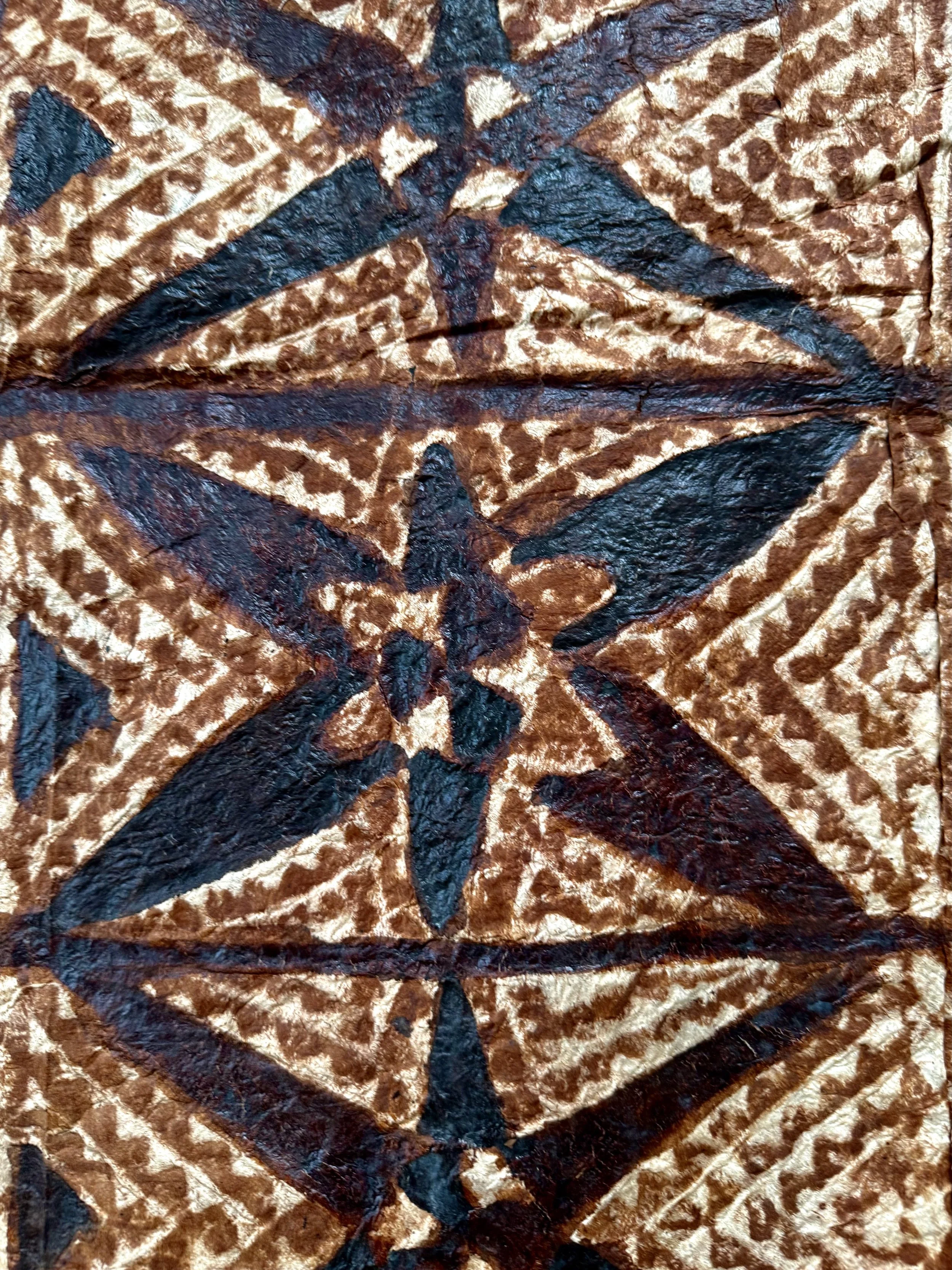 Image 3 of 5
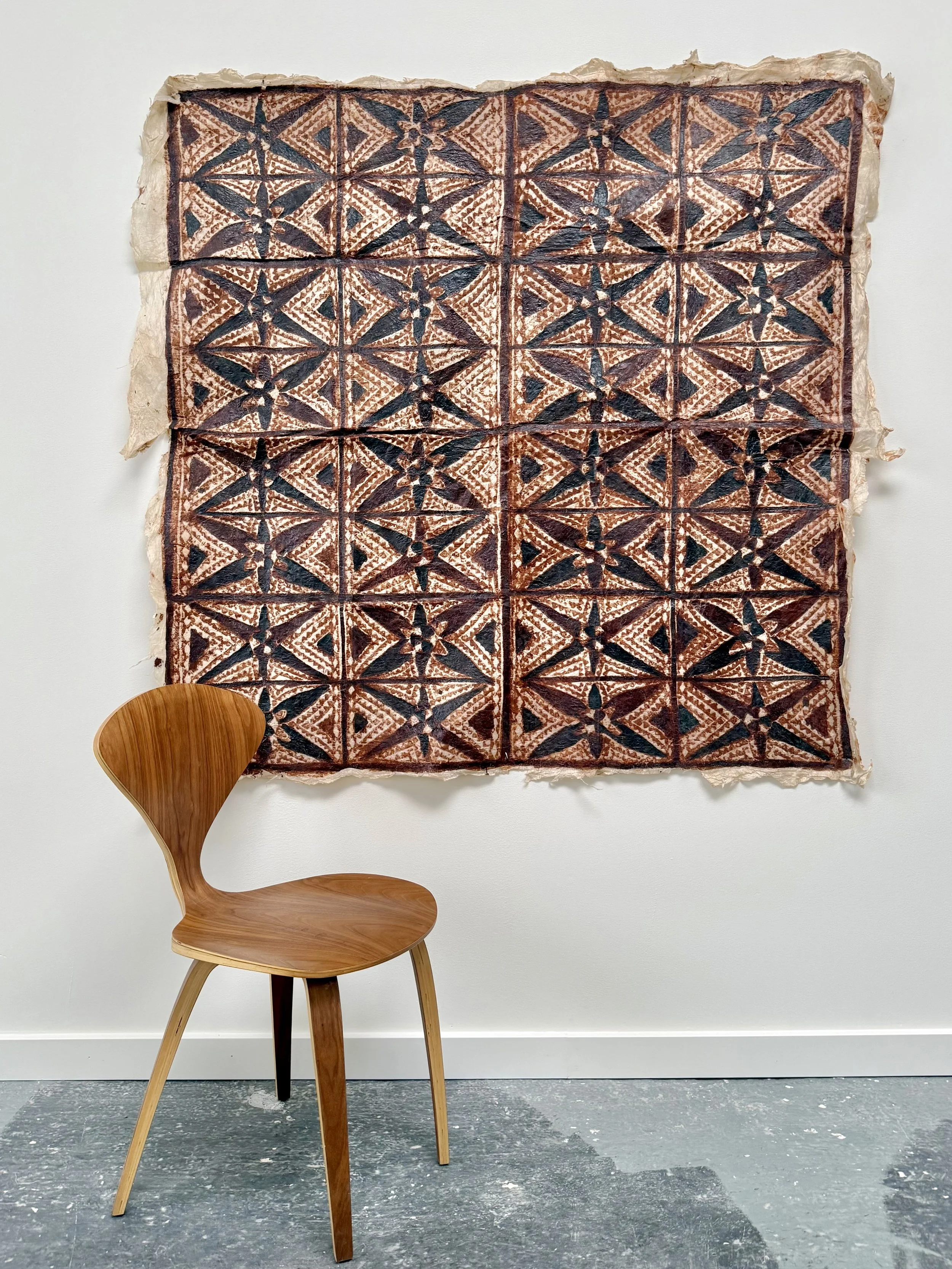 Image 4 of 5
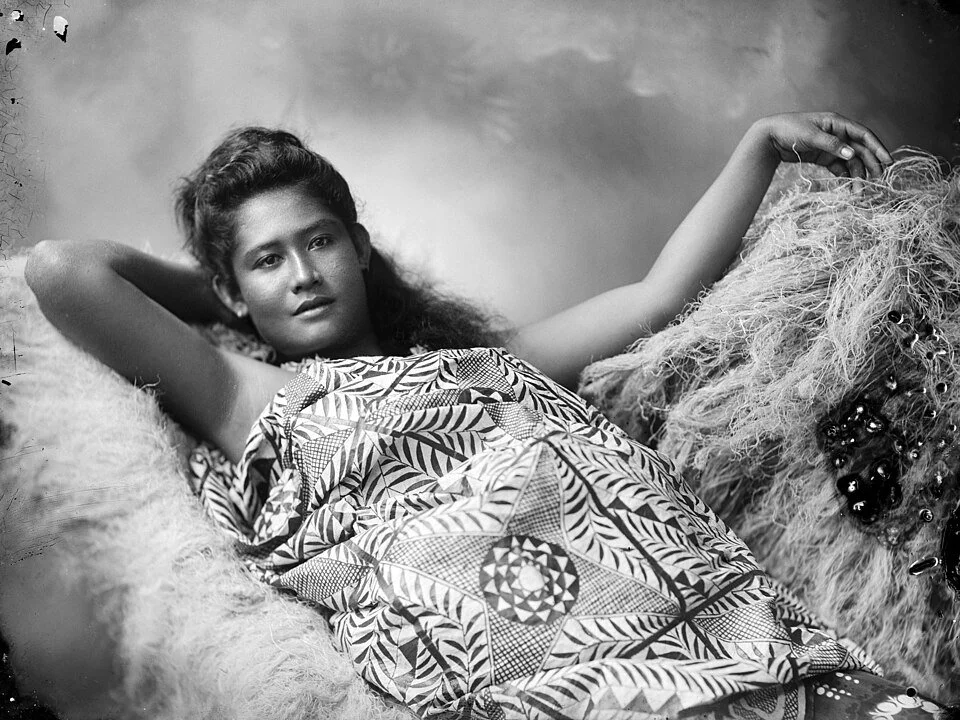 Image 5 of 5
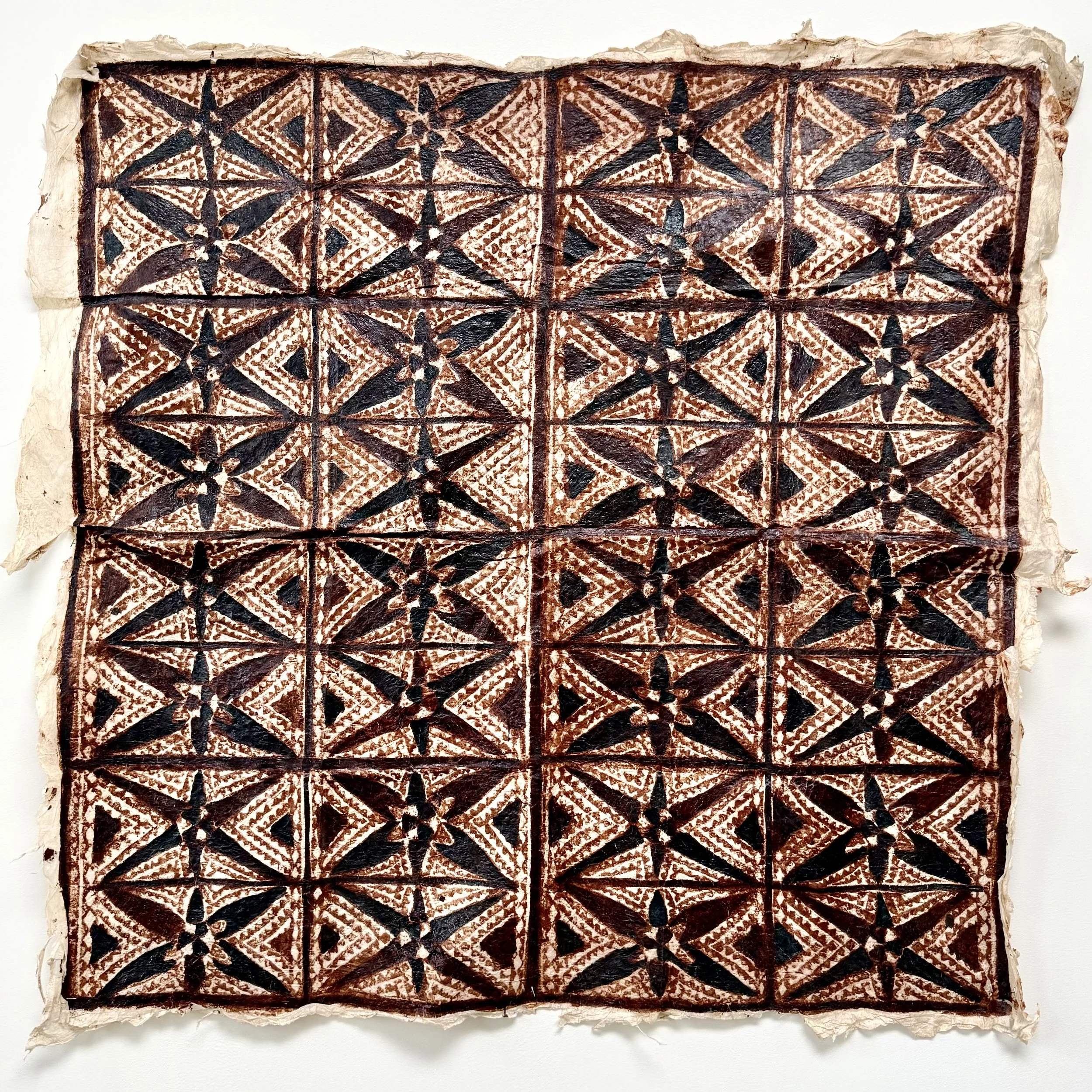
Samoan siapo, or tapa cloth. This ancient fiber technology, indigenous to Polynesia and Micronesia, was probably first developed by the ancient Lapita culture thousands of years ago. Tapa “cloth” is not woven, but made by carefully-preparing the bark of the u'a, or paper mulberry tree (Broussonetia papyrifera).
The inner bark of the mulberry is initially prepared by beating it on a wooden block to flatten and spread the fibers. The resulting paper is pieced together to form larger rectangular sheets. These are then decorated. In siapo ‘elei (the rubbing method), the raw cloth is placed on a wooden printing panel (upeti) that has been covered with dye; the top surface is then rubbed to transfer the design from the board to the cloth. In the siapo mamanu method, each design image is hand painted on the surface of the cloth. These techniques are often used in combination. The dyes used for Siapo come from native Samoan plants. The most important of these is the brown dye o'a, extracted from the bark of the Blood Tree. Lama, a black dye, is processed from Candlenut charcoal. The red dye loa is derived from the seeds of the Lipstick Tree, and the yellow dye ago is extracted from turmeric roots.
The work of making and decorating tapa has traditionally been done by women, working together in groups. The process continues to be important to community-building, intergenerational bonding, and social cohesion generally. Tapa cloths are useful for decoration, clothing, etc, but they are mostly circulated as gifts. Last photo is an historical image of a young Samoan woman relaxing in her siapo, circa 1910.
Dimensions 58" x 56"
Samoan siapo, or tapa cloth. This ancient fiber technology, indigenous to Polynesia and Micronesia, was probably first developed by the ancient Lapita culture thousands of years ago. Tapa “cloth” is not woven, but made by carefully-preparing the bark of the u'a, or paper mulberry tree (Broussonetia papyrifera).
The inner bark of the mulberry is initially prepared by beating it on a wooden block to flatten and spread the fibers. The resulting paper is pieced together to form larger rectangular sheets. These are then decorated. In siapo ‘elei (the rubbing method), the raw cloth is placed on a wooden printing panel (upeti) that has been covered with dye; the top surface is then rubbed to transfer the design from the board to the cloth. In the siapo mamanu method, each design image is hand painted on the surface of the cloth. These techniques are often used in combination. The dyes used for Siapo come from native Samoan plants. The most important of these is the brown dye o'a, extracted from the bark of the Blood Tree. Lama, a black dye, is processed from Candlenut charcoal. The red dye loa is derived from the seeds of the Lipstick Tree, and the yellow dye ago is extracted from turmeric roots.
The work of making and decorating tapa has traditionally been done by women, working together in groups. The process continues to be important to community-building, intergenerational bonding, and social cohesion generally. Tapa cloths are useful for decoration, clothing, etc, but they are mostly circulated as gifts. Last photo is an historical image of a young Samoan woman relaxing in her siapo, circa 1910.
Dimensions 58" x 56"