 Image 1 of 4
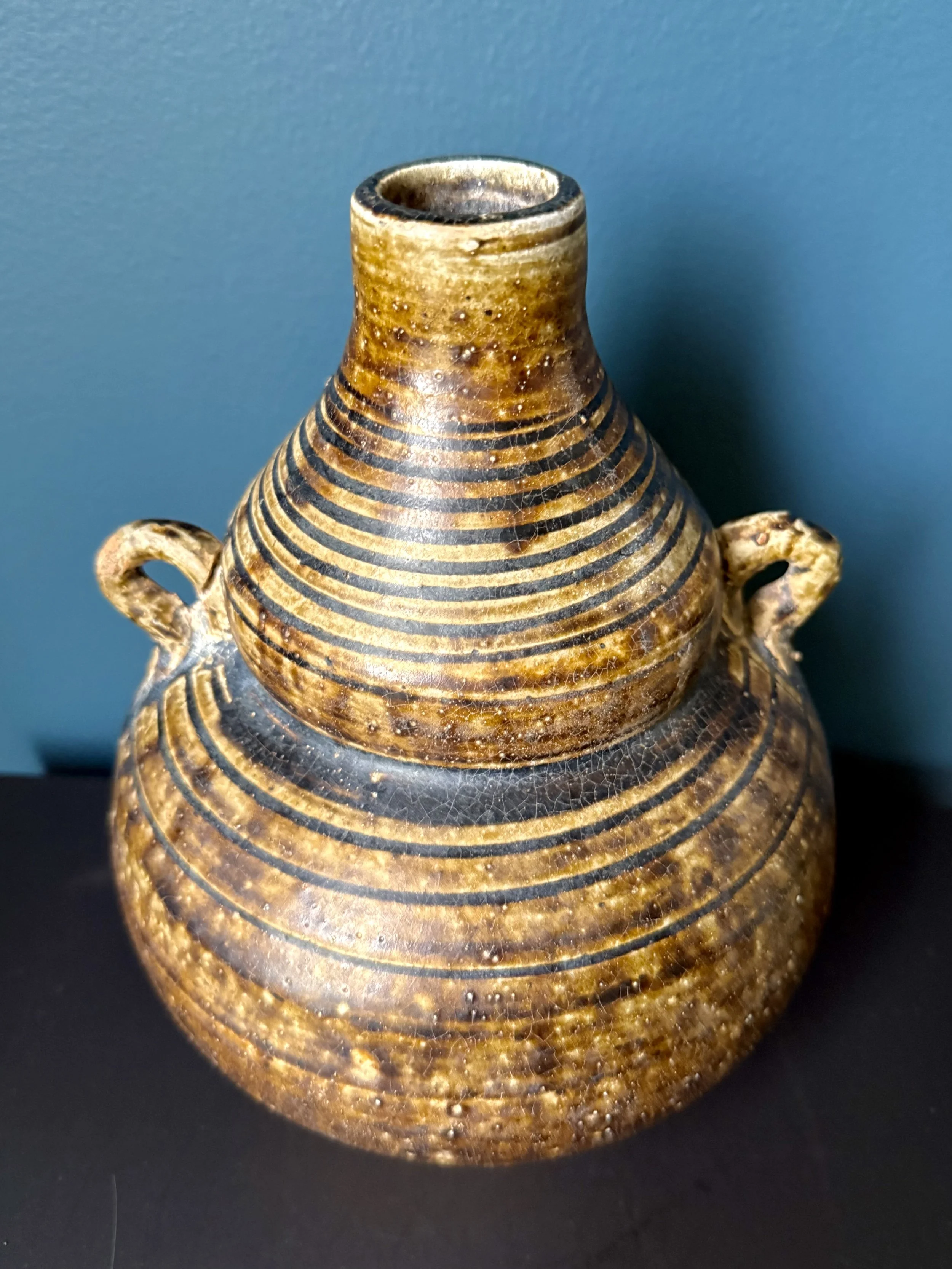 Image 2 of 4
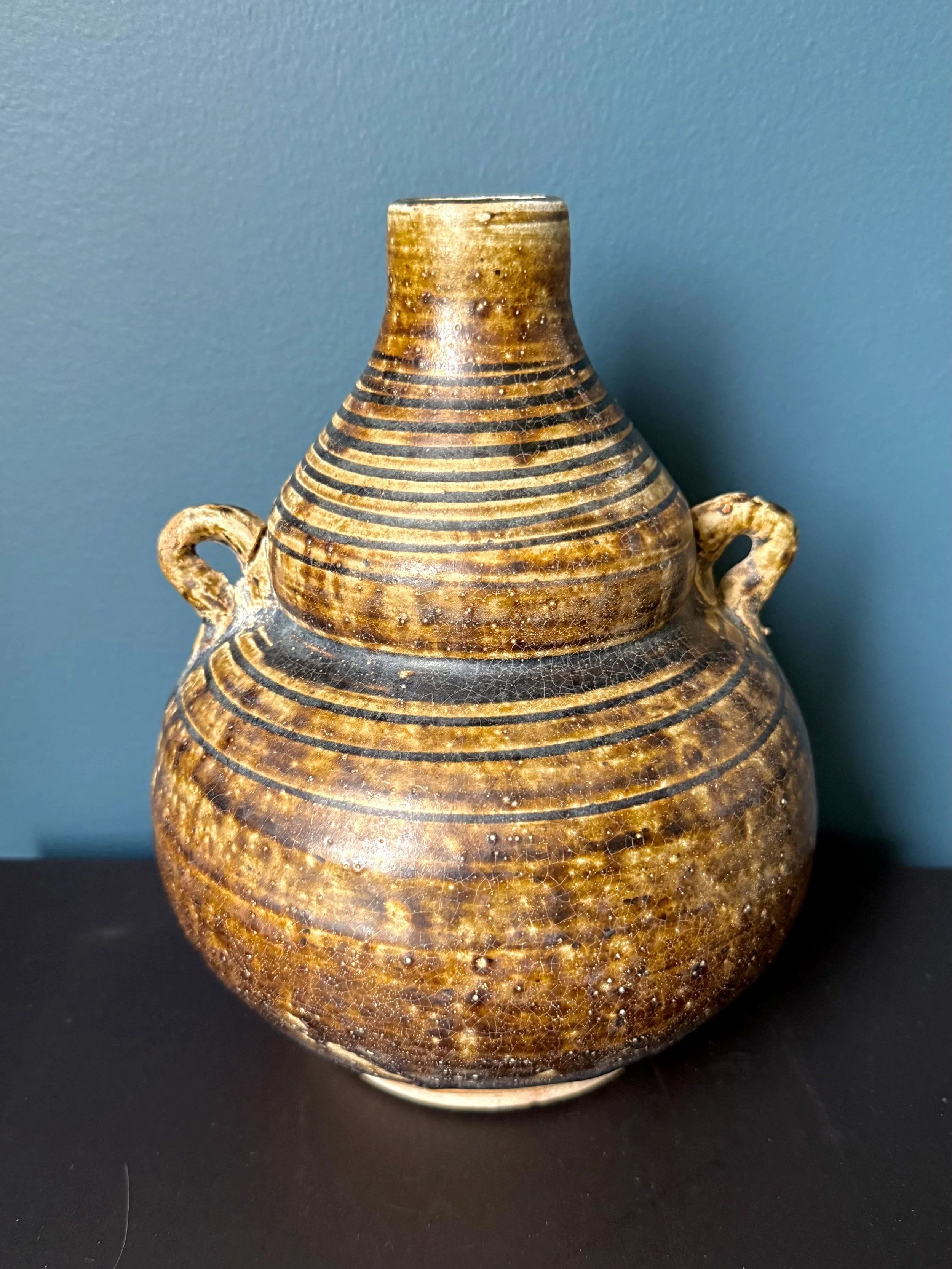 Image 3 of 4
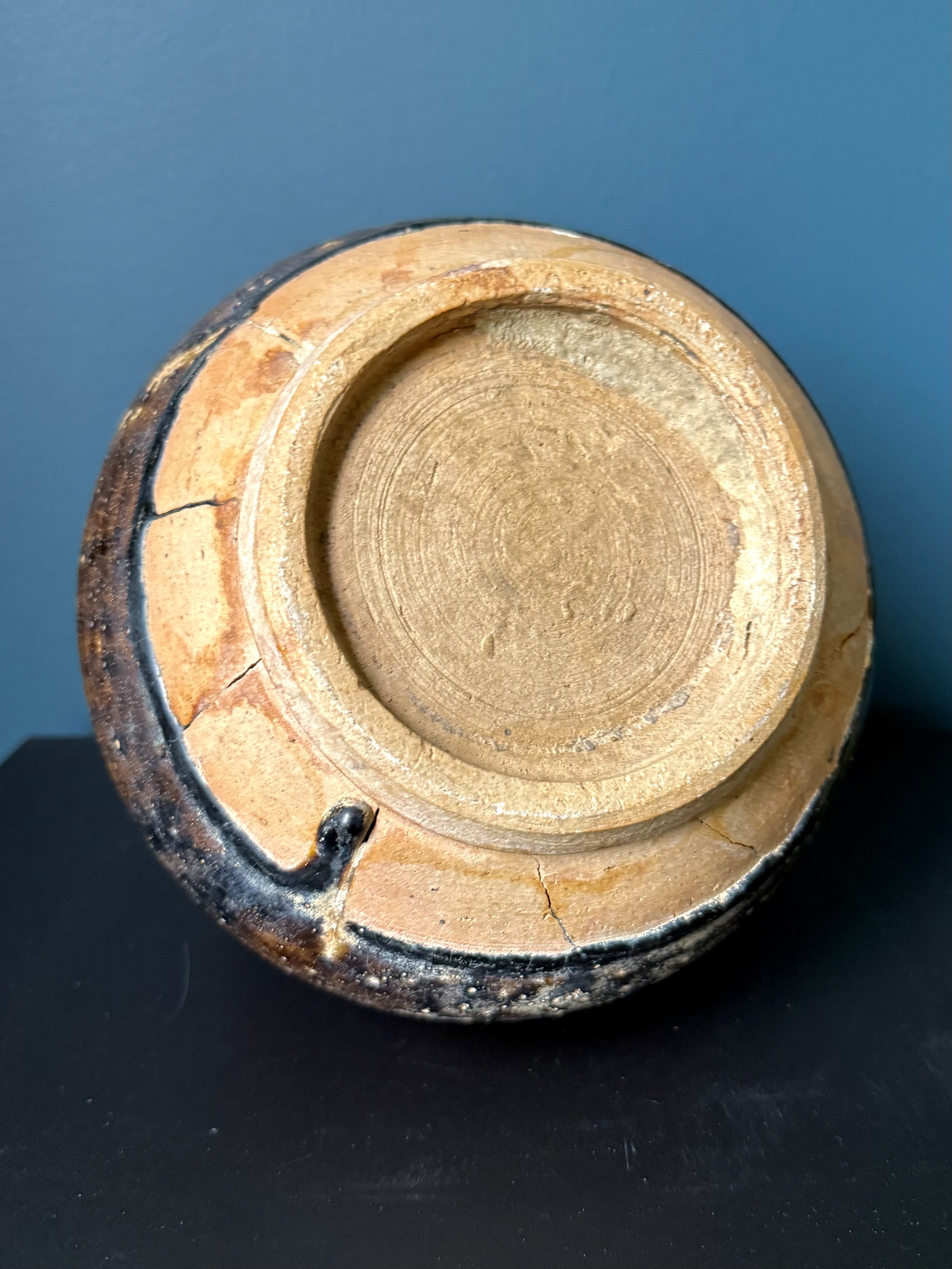 Image 4 of 4
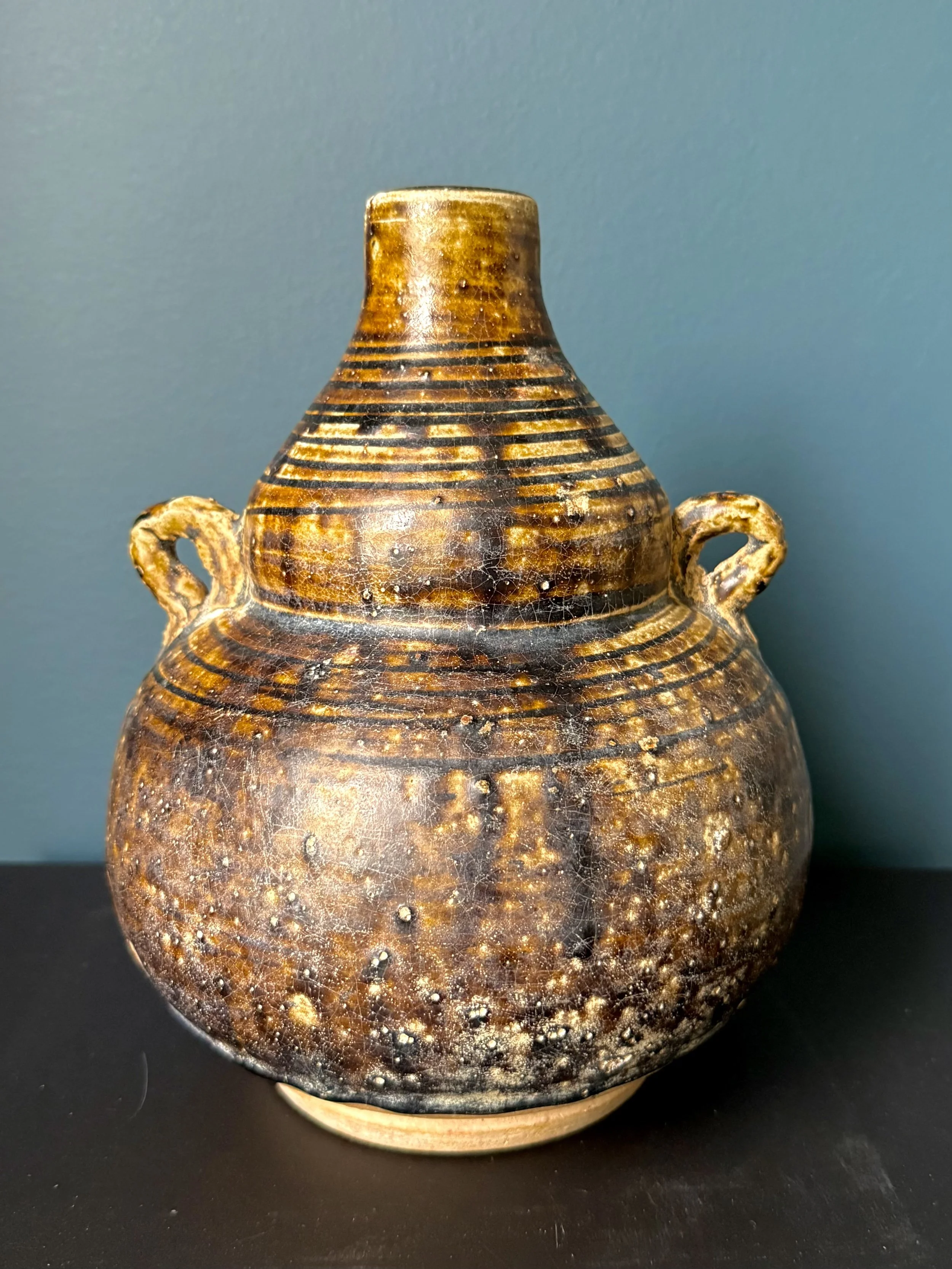
An interesting Southeast Asian jug, most likely from the 14th to 16th-century. The dark olive glaze is distinctive of both Sawankhalok (Sangkhalok) ware from Thailand, or Khmer pottery of similar age from Cambodia. Very rustic, with several cracks contemporaneous with firing. One (on the base) was repaired with clay during the glaze firing. The small lugs, apparently for a carrying strap, suggest use as a canteen. Throughout Asia, the double-gourd shape has many positive associations, from longevity and good fortune, to the harmony between heaven and earth.
An interesting Southeast Asian jug, most likely from the 14th to 16th-century. The dark olive glaze is distinctive of both Sawankhalok (Sangkhalok) ware from Thailand, or Khmer pottery of similar age from Cambodia. Very rustic, with several cracks contemporaneous with firing. One (on the base) was repaired with clay during the glaze firing. The small lugs, apparently for a carrying strap, suggest use as a canteen. Throughout Asia, the double-gourd shape has many positive associations, from longevity and good fortune, to the harmony between heaven and earth.