 Image 1 of 5
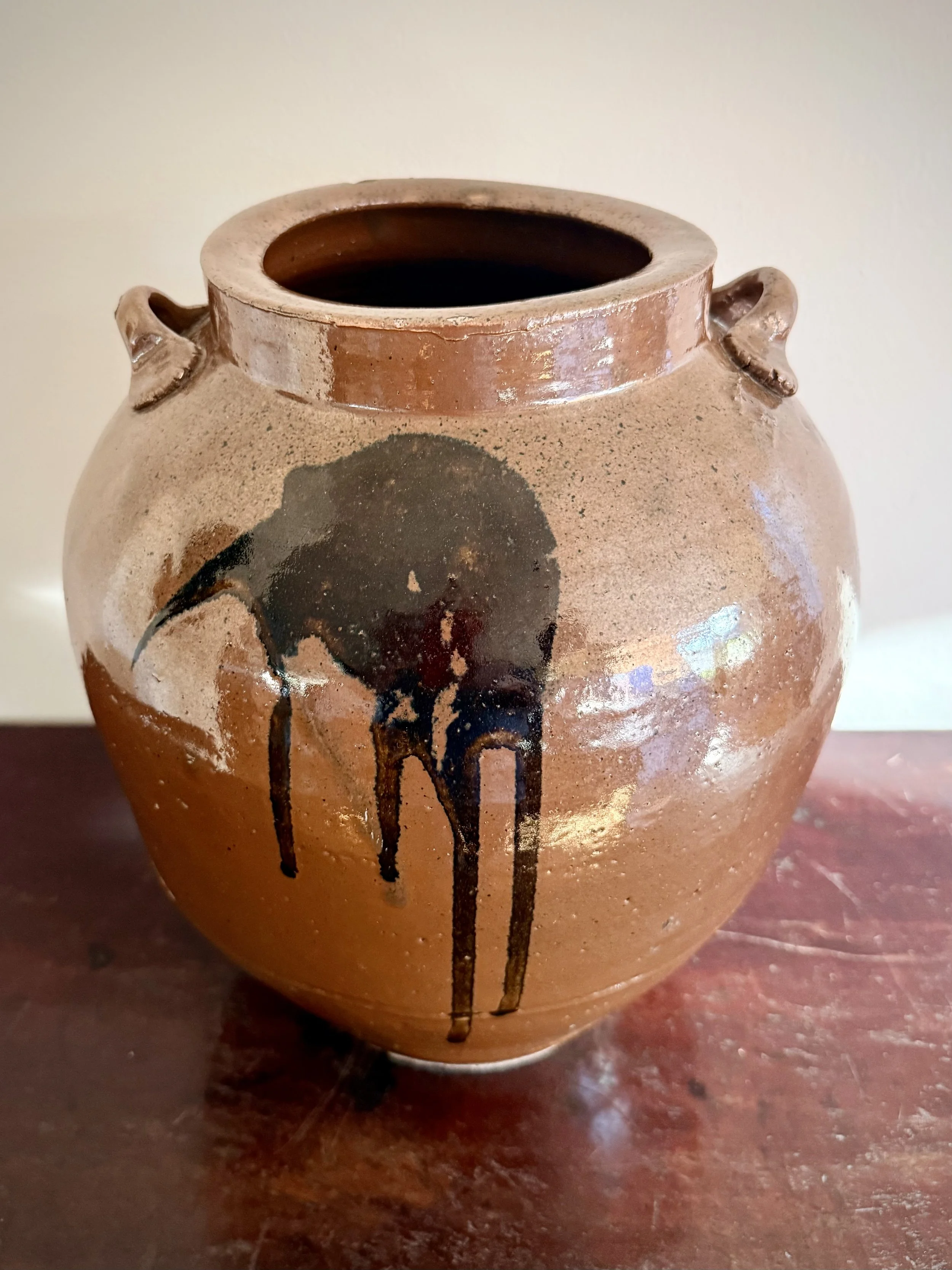 Image 2 of 5
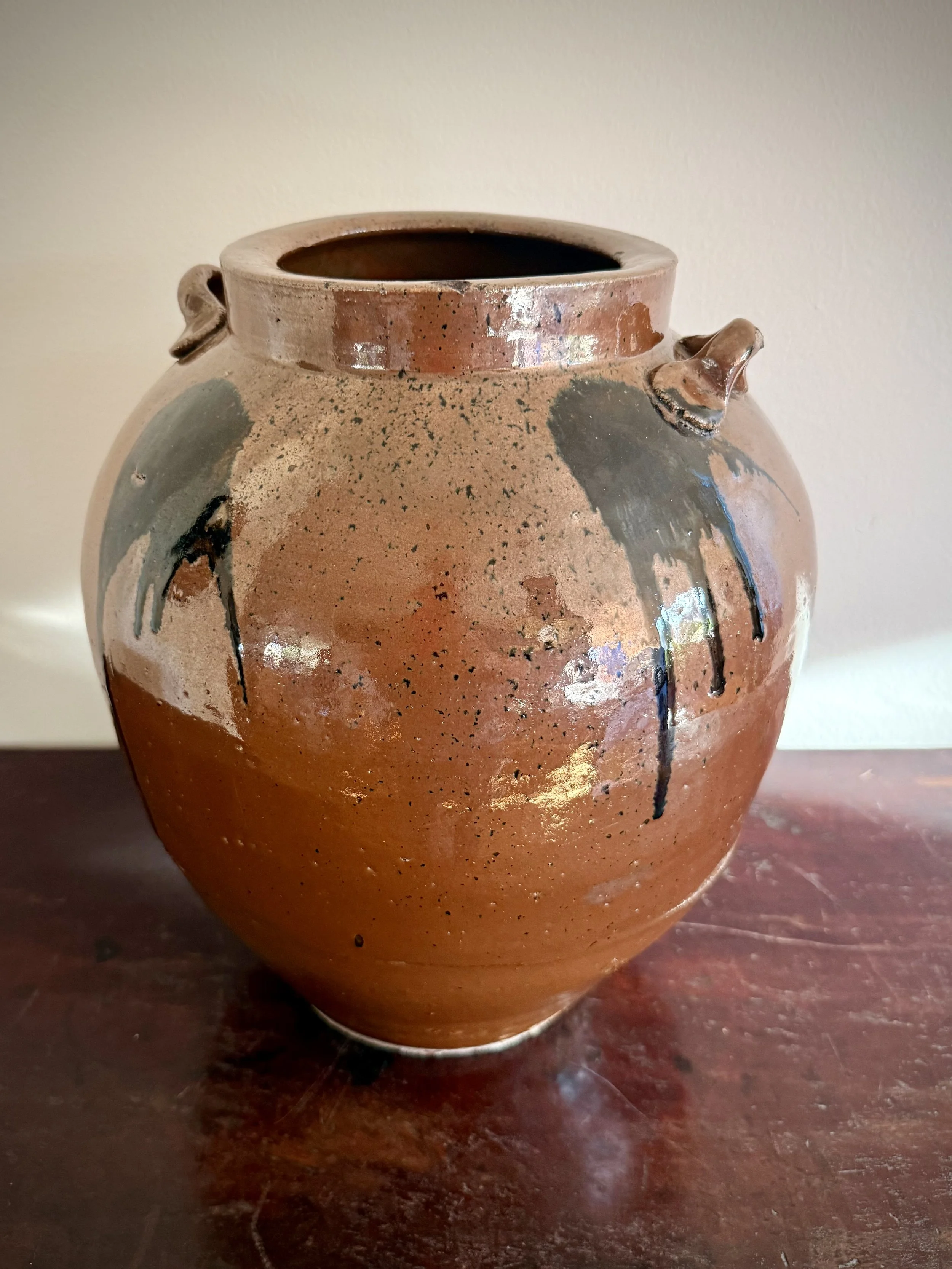 Image 3 of 5
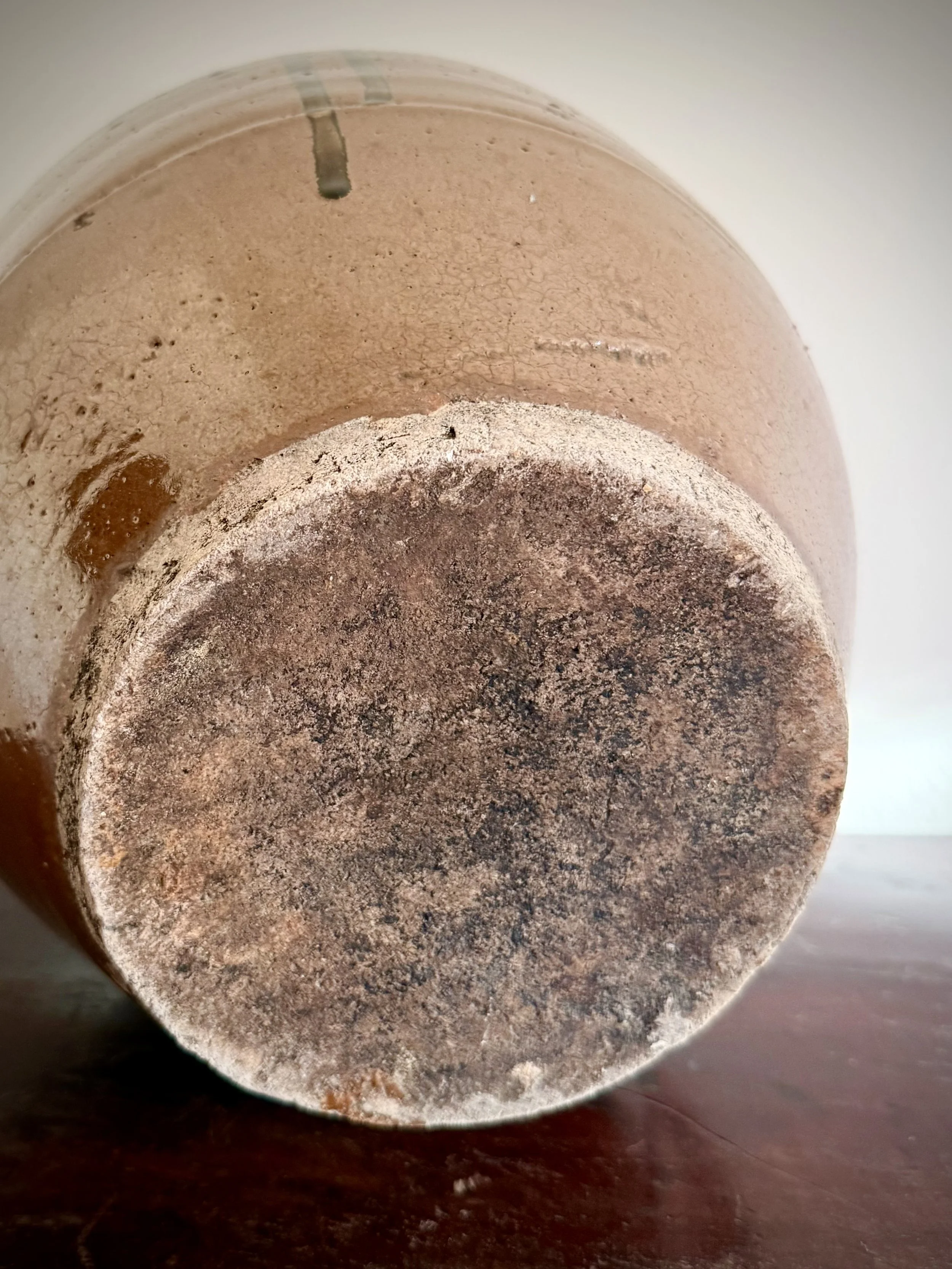 Image 4 of 5
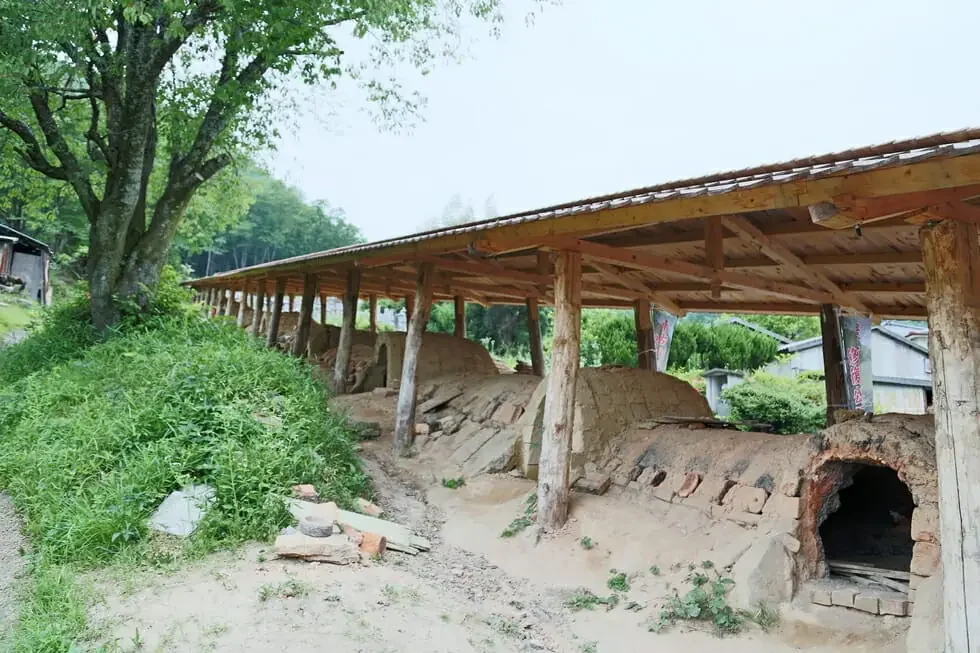 Image 5 of 5
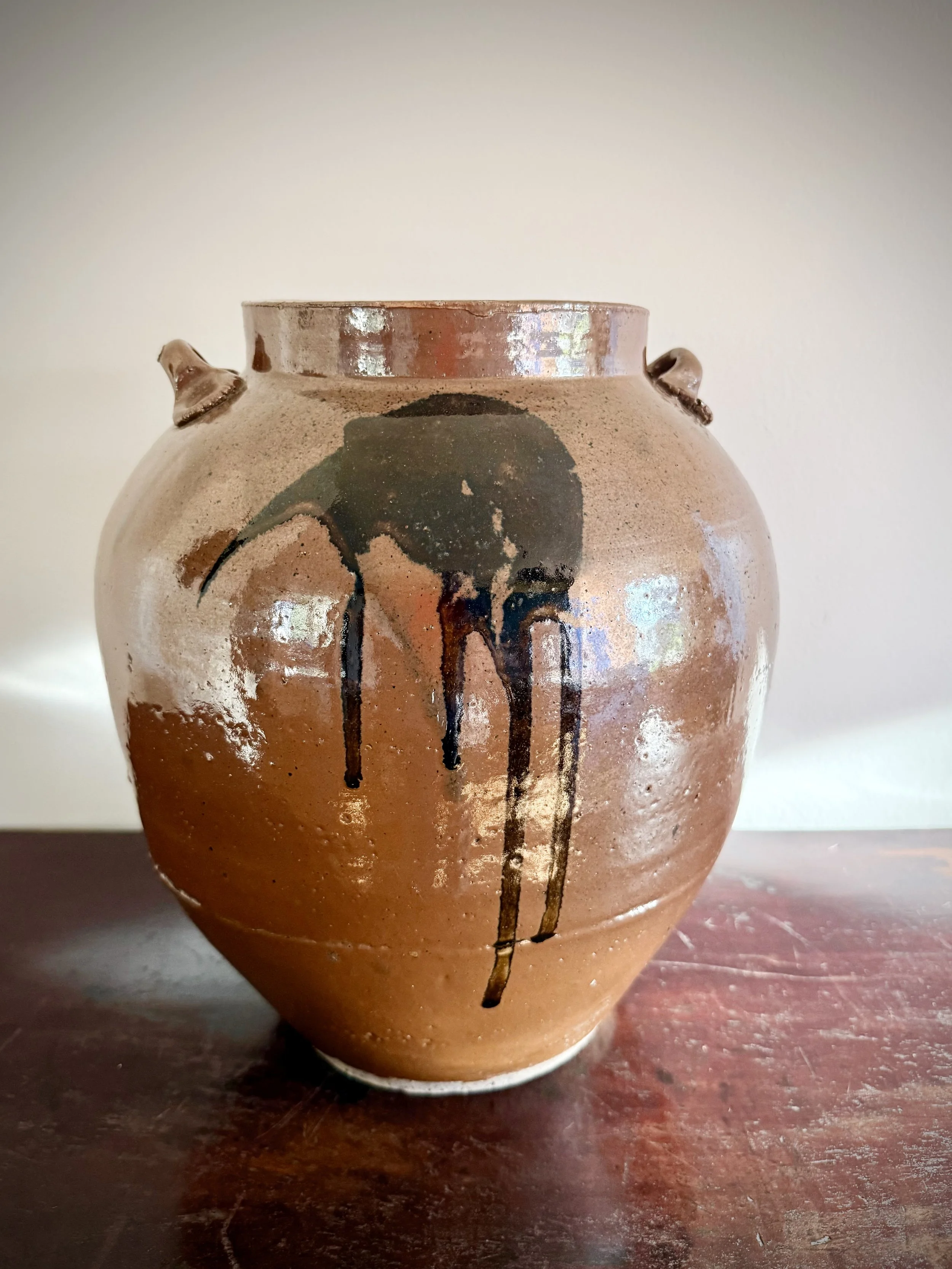
Tamba ware storage jar, Taisho era (early 20th c.). The 800-year-old Tamba kilns around Sasayama and Tachikui, Hyōgo Prefecture are included among the "Six Ancient Kilns of Japan" (along with Bizen, Echizen, Shigaraki, Seto, and Tokoname). Tamba ware is mostly fired in wood-burning "climbing kilns," long structures built on hillsides that funnel the heat like chimneys. The oldest Tamba kiln, Tanba Tachikui Noborigama (last image), is 47 meters long! Built in 1895, this kiln is still in use, and is registered as an Important Tangible Folk Cultural Property.
Early Tamba (also "Tanba") ware (Tamba-Tachikui-yaki), 丹波立杭焼 ) was purely utilitarian, including storage jars, water jugs, and especially kitchen mortars (suribachi). These pieces were typically unglazed, deriving their character from the natural pine wood ash created during the firing process. More artisianal styles appeared over the centuries, but much Tamba ware retains an earthy, wabi-sabi character. This jar, for example, is graceful, yet practical; the decoration has the casual-yet-intentional aspect of Zen calligraphy. A solid, but sophisticated pot!
Tamba ware storage jar, Taisho era (early 20th c.). The 800-year-old Tamba kilns around Sasayama and Tachikui, Hyōgo Prefecture are included among the "Six Ancient Kilns of Japan" (along with Bizen, Echizen, Shigaraki, Seto, and Tokoname). Tamba ware is mostly fired in wood-burning "climbing kilns," long structures built on hillsides that funnel the heat like chimneys. The oldest Tamba kiln, Tanba Tachikui Noborigama (last image), is 47 meters long! Built in 1895, this kiln is still in use, and is registered as an Important Tangible Folk Cultural Property.
Early Tamba (also "Tanba") ware (Tamba-Tachikui-yaki), 丹波立杭焼 ) was purely utilitarian, including storage jars, water jugs, and especially kitchen mortars (suribachi). These pieces were typically unglazed, deriving their character from the natural pine wood ash created during the firing process. More artisianal styles appeared over the centuries, but much Tamba ware retains an earthy, wabi-sabi character. This jar, for example, is graceful, yet practical; the decoration has the casual-yet-intentional aspect of Zen calligraphy. A solid, but sophisticated pot!