A hand-carved wooden printing block in the Tibetan Buddhist tradition, from Tibet (China), or Nepal. Woodblock printing originated in China, and made its way to the Himalayan monasteries around 1200 CE. Buddhist monks then spread the technique throughout Central Asia and beyond. It has never gone out of style! The Dêrgê Barkang printing house ,founded in 1729 CE in Eastern Tibet (now Sichuan), is still turning out as many as 2500 prints per day (see images).
Woodblocks like this are first coated with ink, then paper or fabric is laid on top and rubbed with a leather brayer. The resulting images, texts, prayer flags, and other printed materials are not saved, but distributed widely, sometimes stuffed into stupas or released to the wind. Merit is gained by simply reproducing the image of the Buddha and the bodhisattvas, as often as possible! Sometimes, lay people are allowed to make rubbings from the blocks, in order to accrue merit for themselves.
This block depicts three Buddhist figures in a classic protective triad. On the left is Vajrapāṇi, a wrathful guardian deity depicted in warrior stance (pratyalidha). Vajrapāṇi's power is deployed to crush spiritual obstacles, ignorance, and negative forces. In the center is Śākyamuni (or Amitābha) Buddha, a peaceful, meditative Buddha. He is seated in the full lotus position (vajraparyanka), with his hands resting in his lap in the gesture of meditative equanimity (dhyana mudra). On the right is Manjushri, the Bodhisattva of Transcendent Wisdom, holding a raised sword to cut through ignorance.
A hand-carved wooden printing block in the Tibetan Buddhist tradition, from Tibet (China), or Nepal. Woodblock printing originated in China, and made its way to the Himalayan monasteries around 1200 CE. Buddhist monks then spread the technique throughout Central Asia and beyond. It has never gone out of style! The Dêrgê Barkang printing house ,founded in 1729 CE in Eastern Tibet (now Sichuan), is still turning out as many as 2500 prints per day (see images).
Woodblocks like this are first coated with ink, then paper or fabric is laid on top and rubbed with a leather brayer. The resulting images, texts, prayer flags, and other printed materials are not saved, but distributed widely, sometimes stuffed into stupas or released to the wind. Merit is gained by simply reproducing the image of the Buddha and the bodhisattvas, as often as possible! Sometimes, lay people are allowed to make rubbings from the blocks, in order to accrue merit for themselves.
This block depicts three Buddhist figures in a classic protective triad. On the left is Vajrapāṇi, a wrathful guardian deity depicted in warrior stance (pratyalidha). Vajrapāṇi's power is deployed to crush spiritual obstacles, ignorance, and negative forces. In the center is Śākyamuni (or Amitābha) Buddha, a peaceful, meditative Buddha. He is seated in the full lotus position (vajraparyanka), with his hands resting in his lap in the gesture of meditative equanimity (dhyana mudra). On the right is Manjushri, the Bodhisattva of Transcendent Wisdom, holding a raised sword to cut through ignorance.
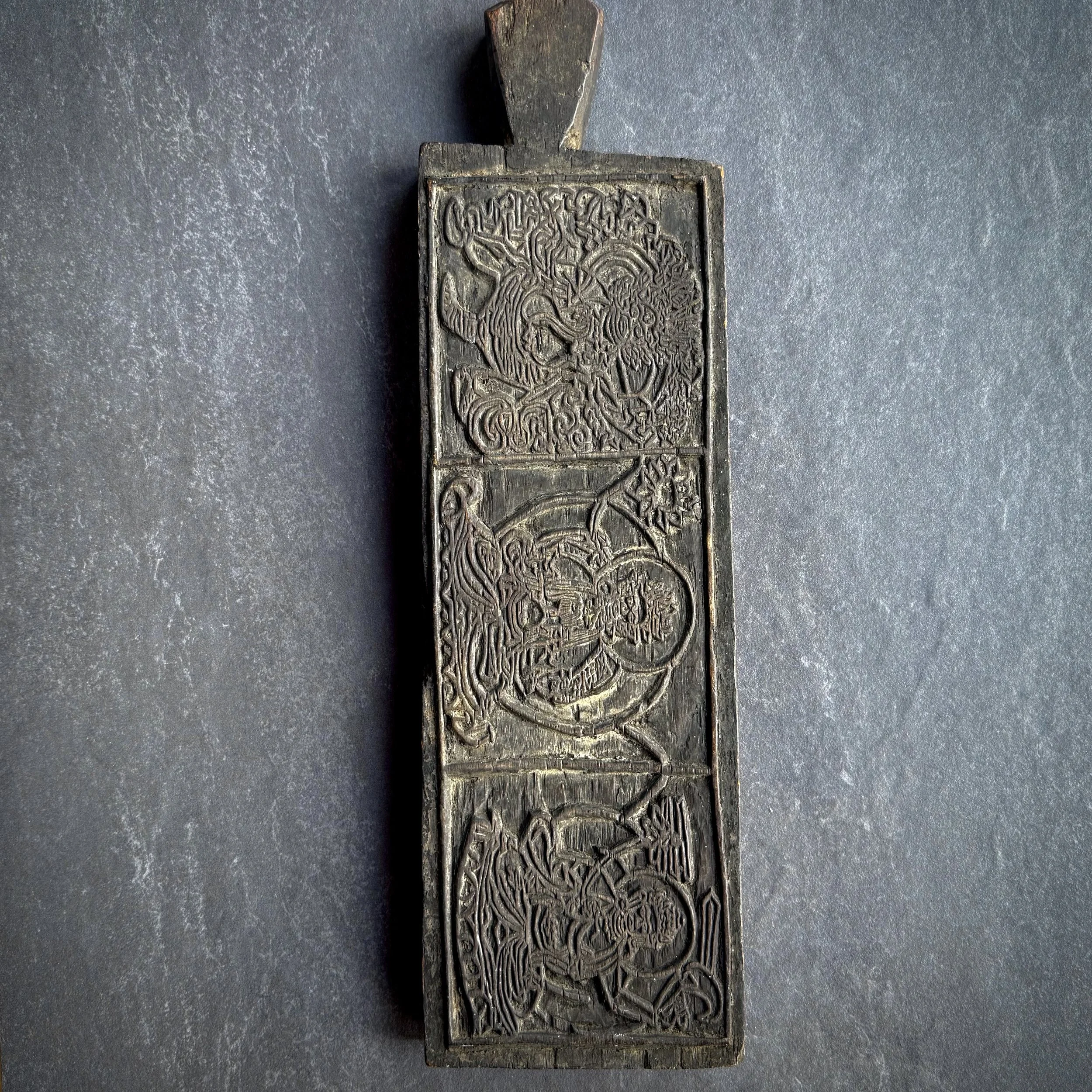 Image 1 of 11
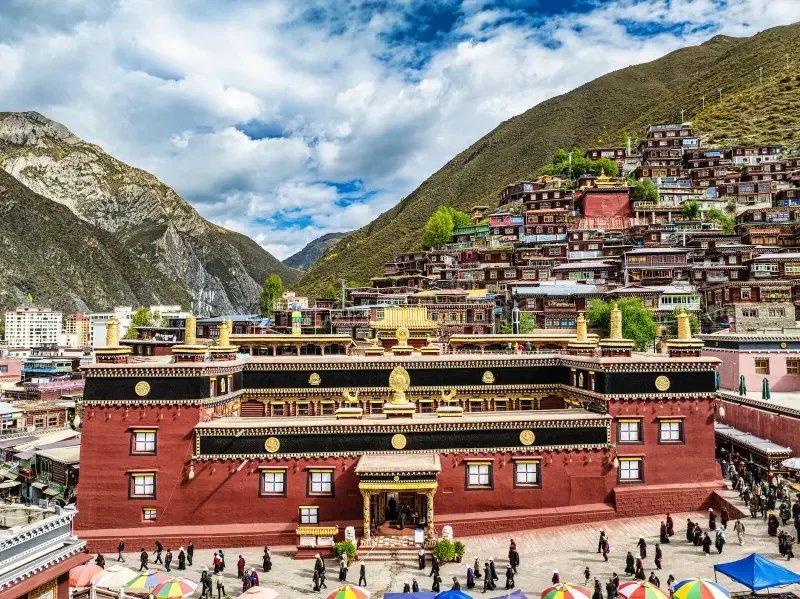 Image 2 of 11
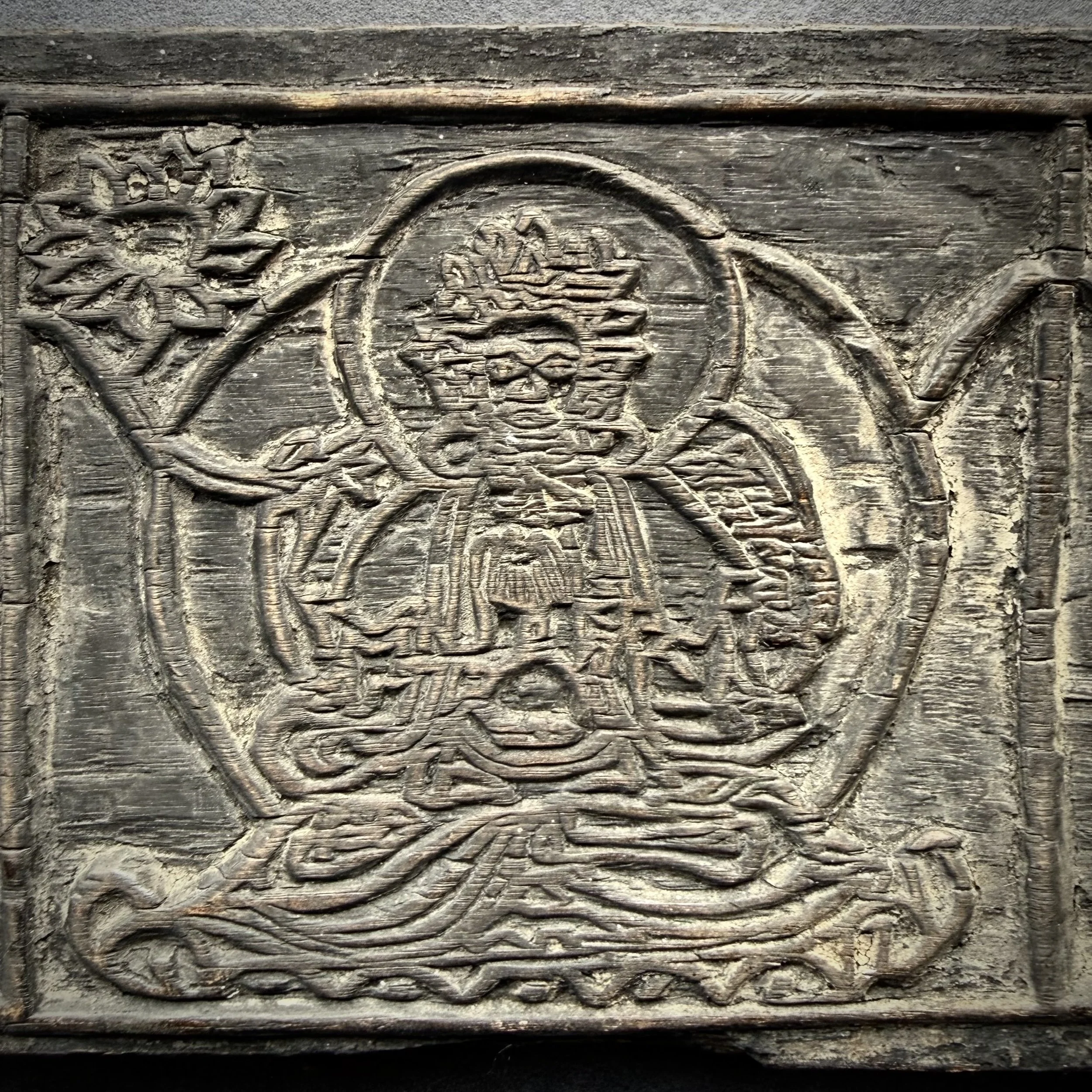 Image 3 of 11
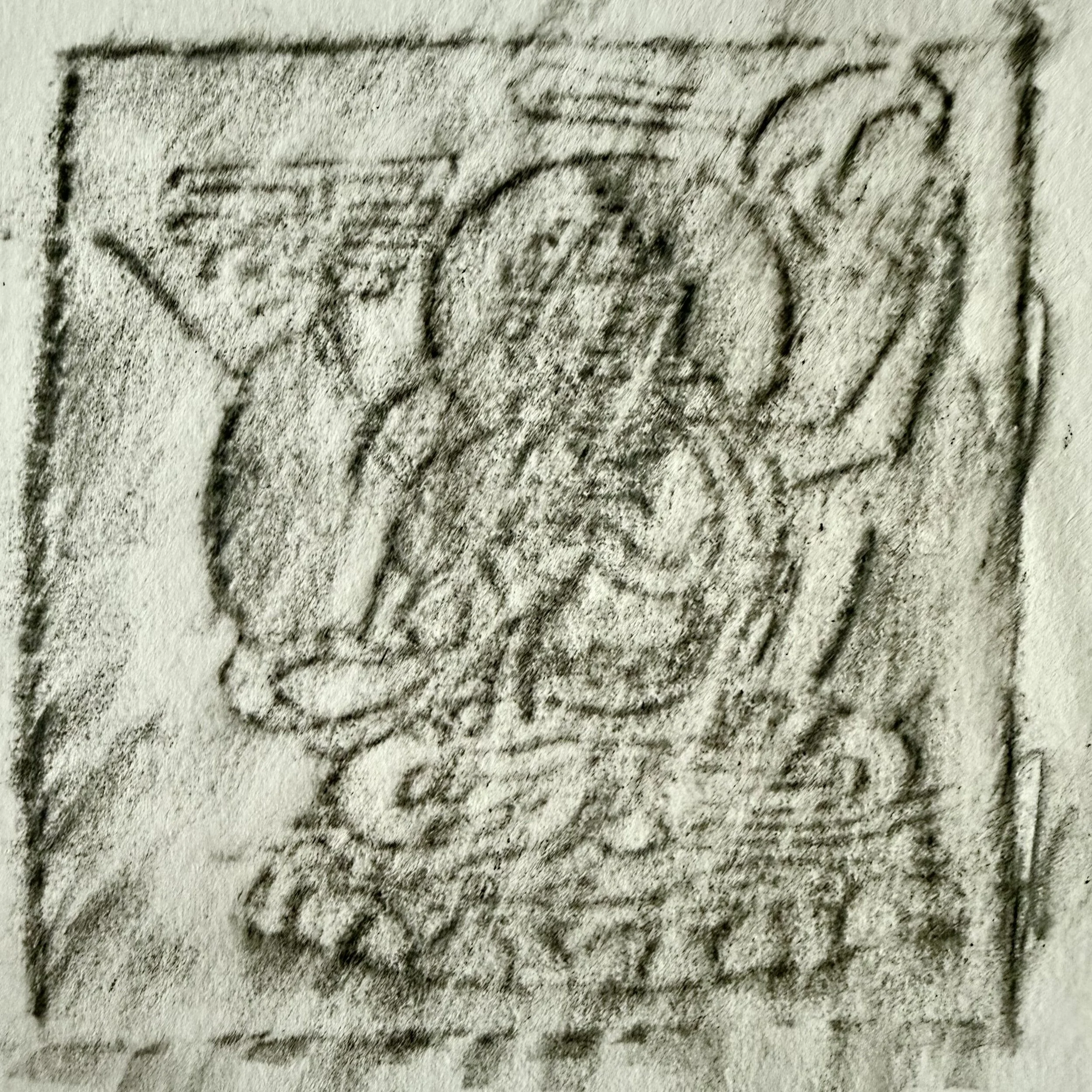 Image 4 of 11
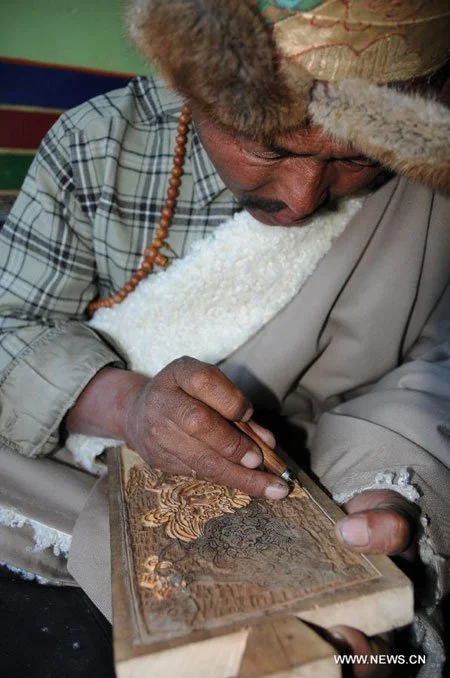 Image 5 of 11
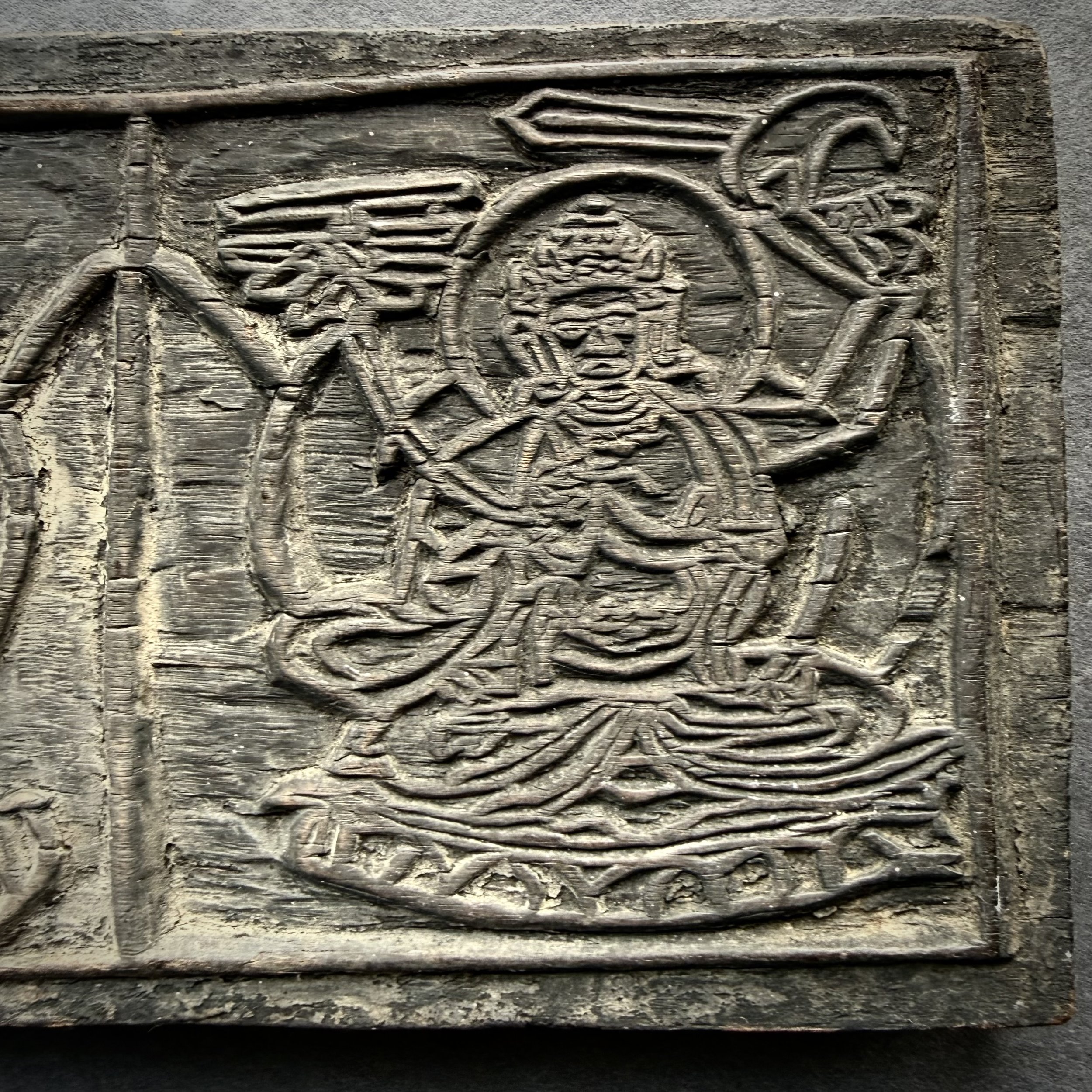 Image 6 of 11
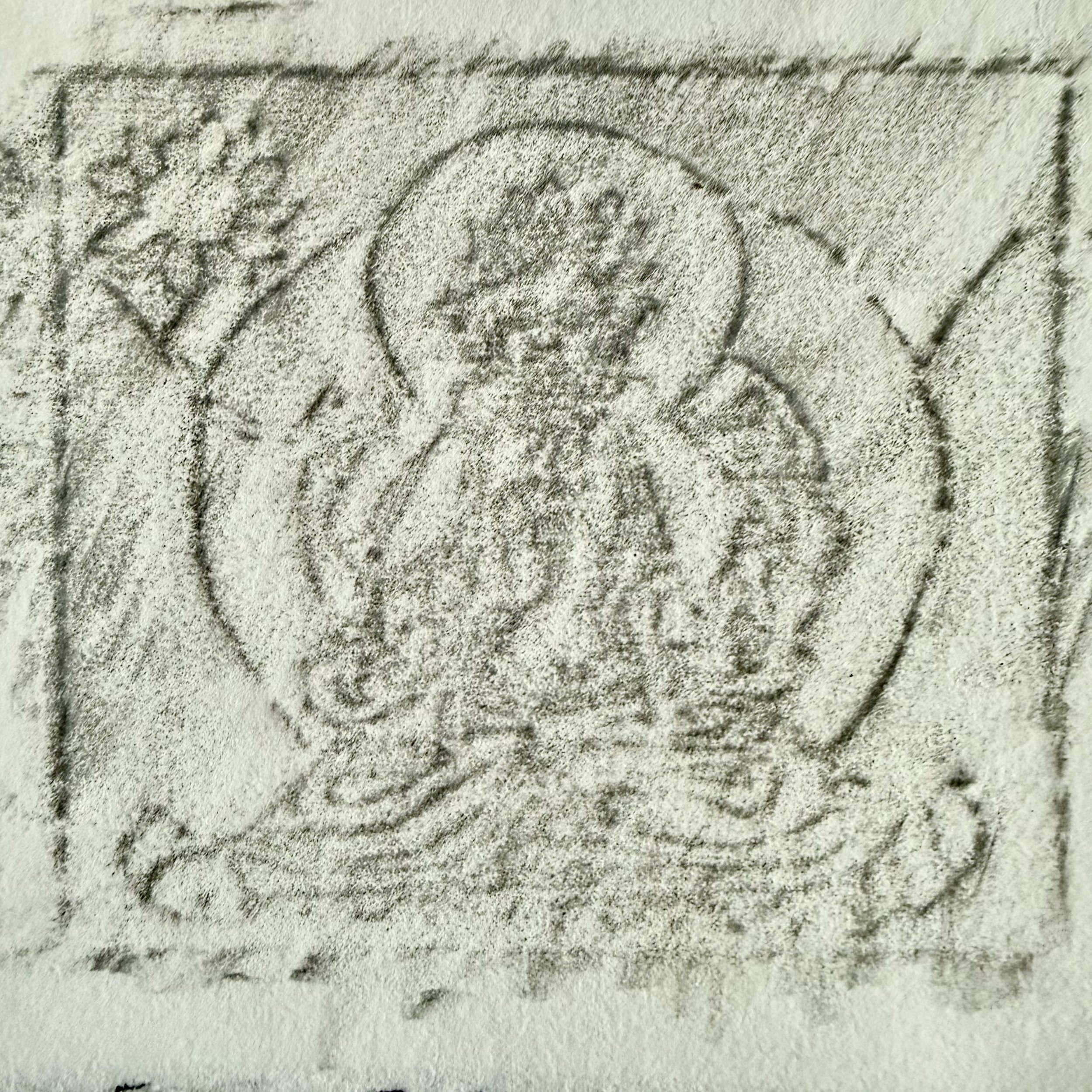 Image 7 of 11
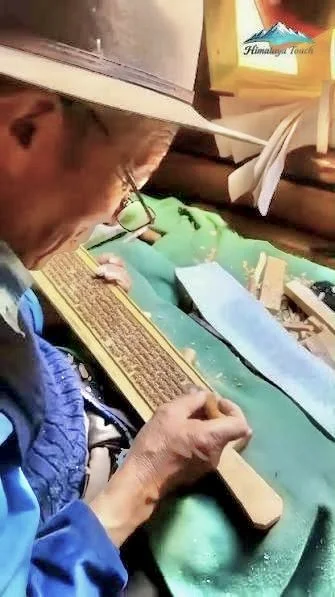 Image 8 of 11
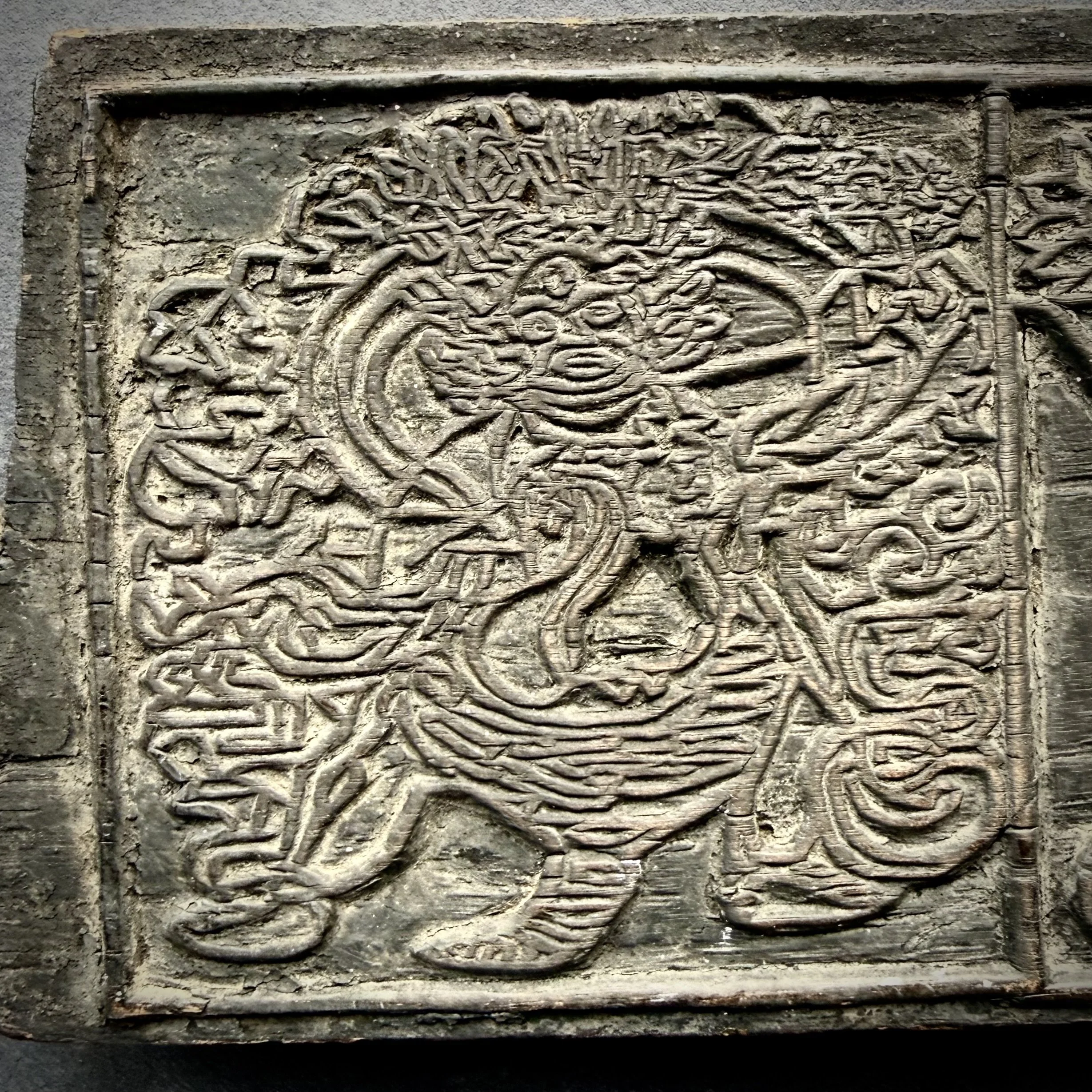 Image 9 of 11
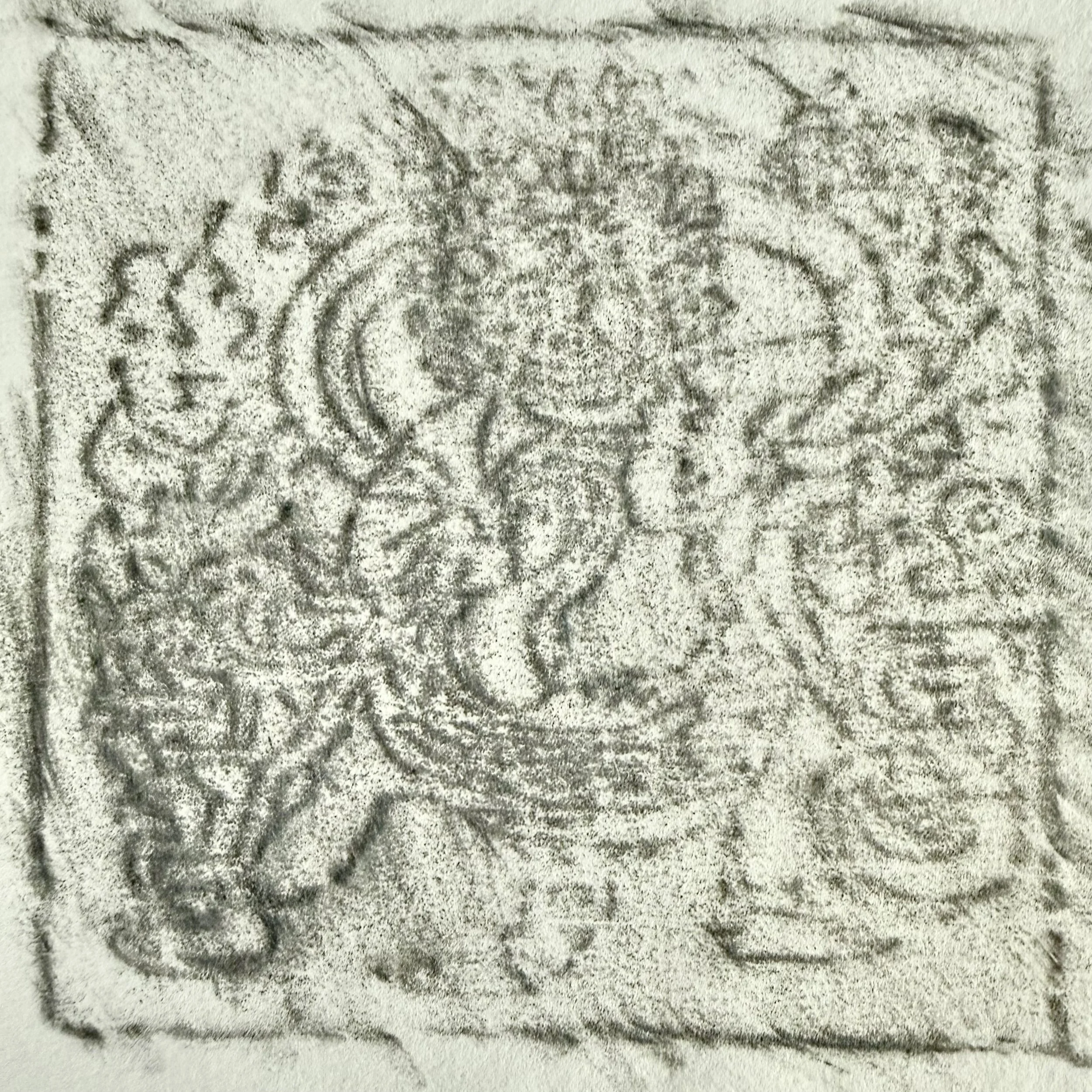 Image 10 of 11
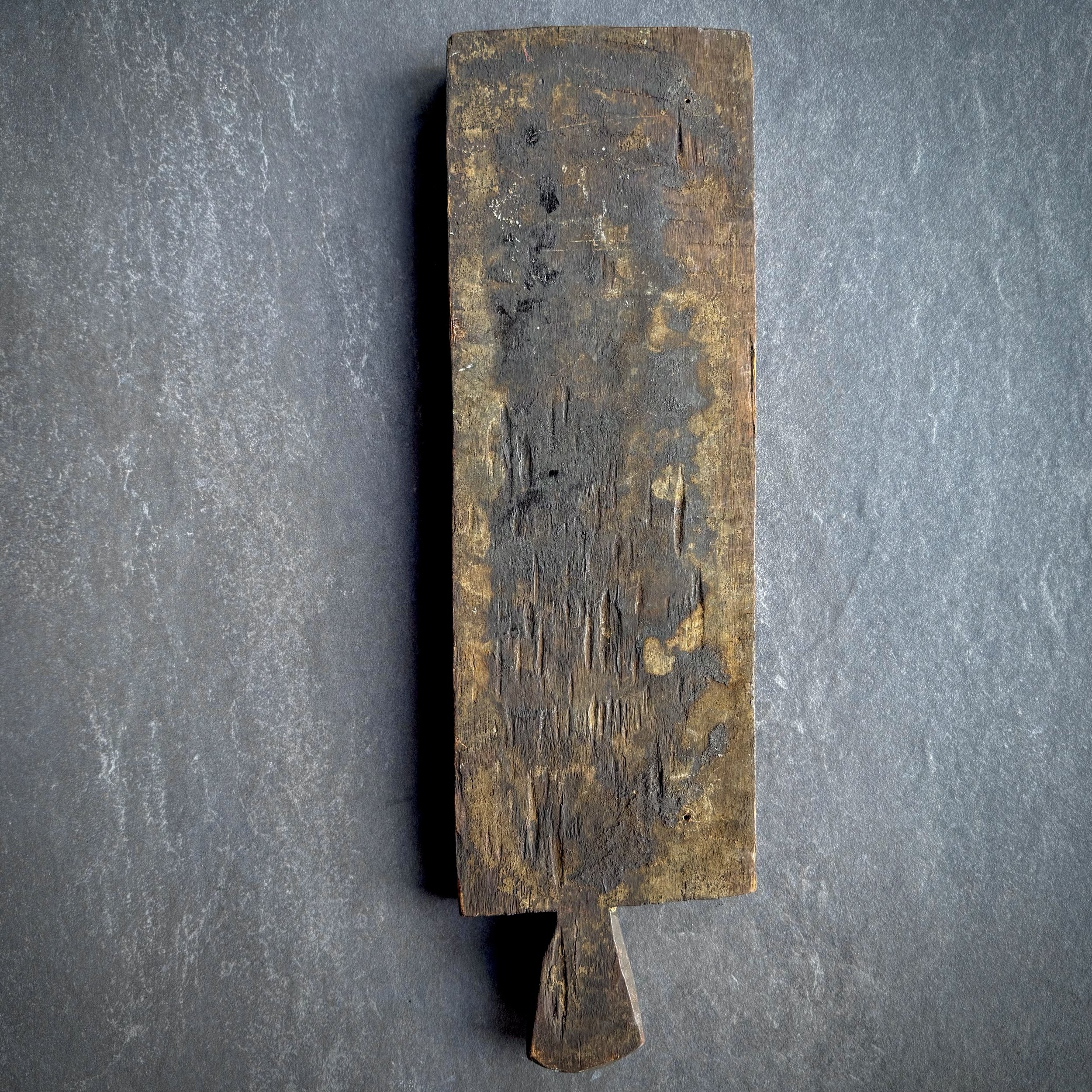 Image 11 of 11