 Image 1 of 1
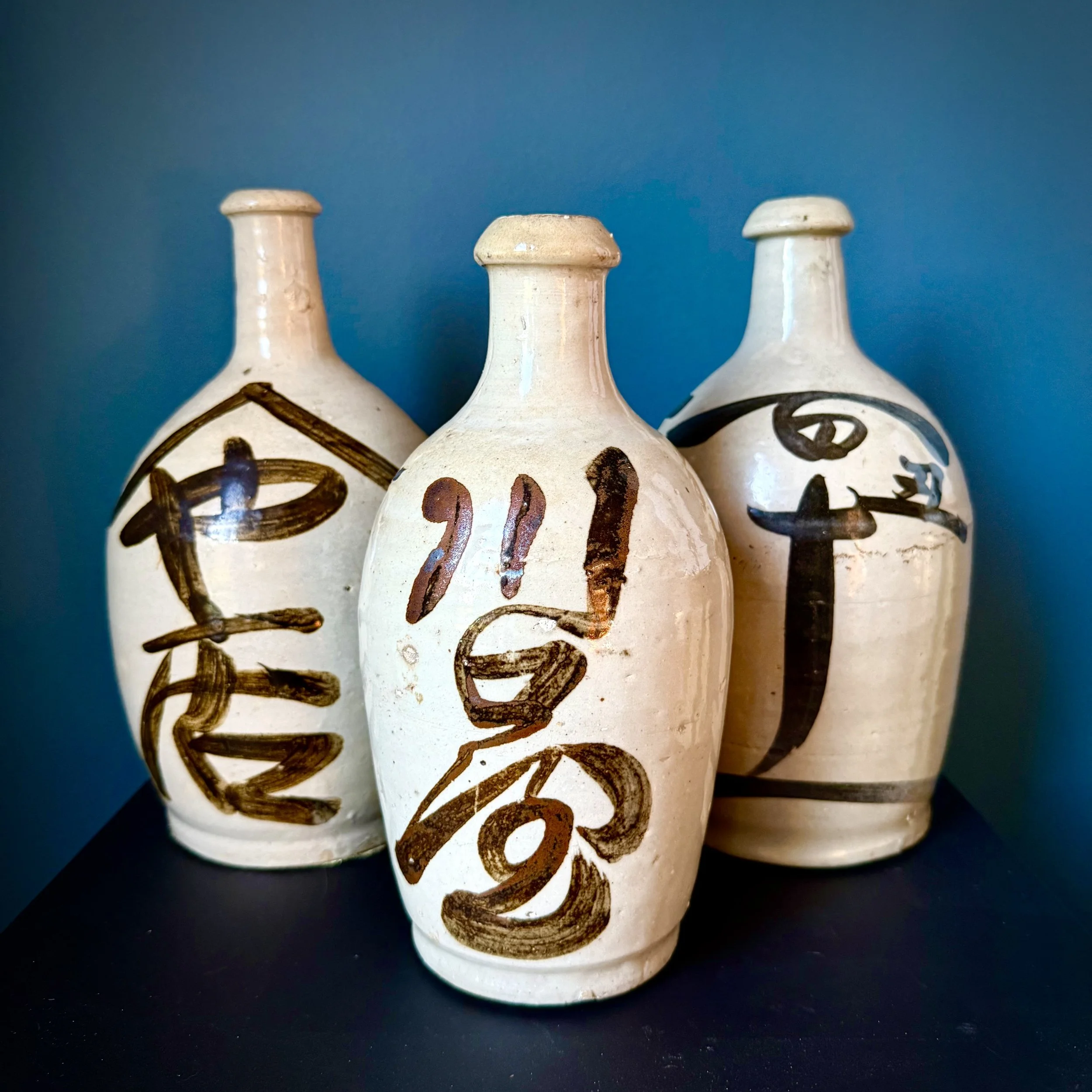
A collection of three kayoi tokurri (“commuter’s sake bottles”). These jugs were traditionally used to buy sake (or shochu) at a shop, to be carried home. The tokurri usually belonged to the shop, the name of which was conspicuously written on the side. A rope was tied around the neck for ease of carrying. As this was a working class tradition, such bottles were also called binbo-daro, or “poor man’s jugs." (Presumably, posh folks would send a servant out with their own tokurri!) Remember: three of anything makes a collection!
Here is a haiku by Kobayashi Issa (小林 一茶 1763 - 1828), one of the great haiku poets of old Japan:
spring rain -
some plum blossoms
in a poor man's sake flask
A collection of three kayoi tokurri (“commuter’s sake bottles”). These jugs were traditionally used to buy sake (or shochu) at a shop, to be carried home. The tokurri usually belonged to the shop, the name of which was conspicuously written on the side. A rope was tied around the neck for ease of carrying. As this was a working class tradition, such bottles were also called binbo-daro, or “poor man’s jugs." (Presumably, posh folks would send a servant out with their own tokurri!) Remember: three of anything makes a collection!
Here is a haiku by Kobayashi Issa (小林 一茶 1763 - 1828), one of the great haiku poets of old Japan:
spring rain -
some plum blossoms
in a poor man's sake flask