 Image 1 of 5
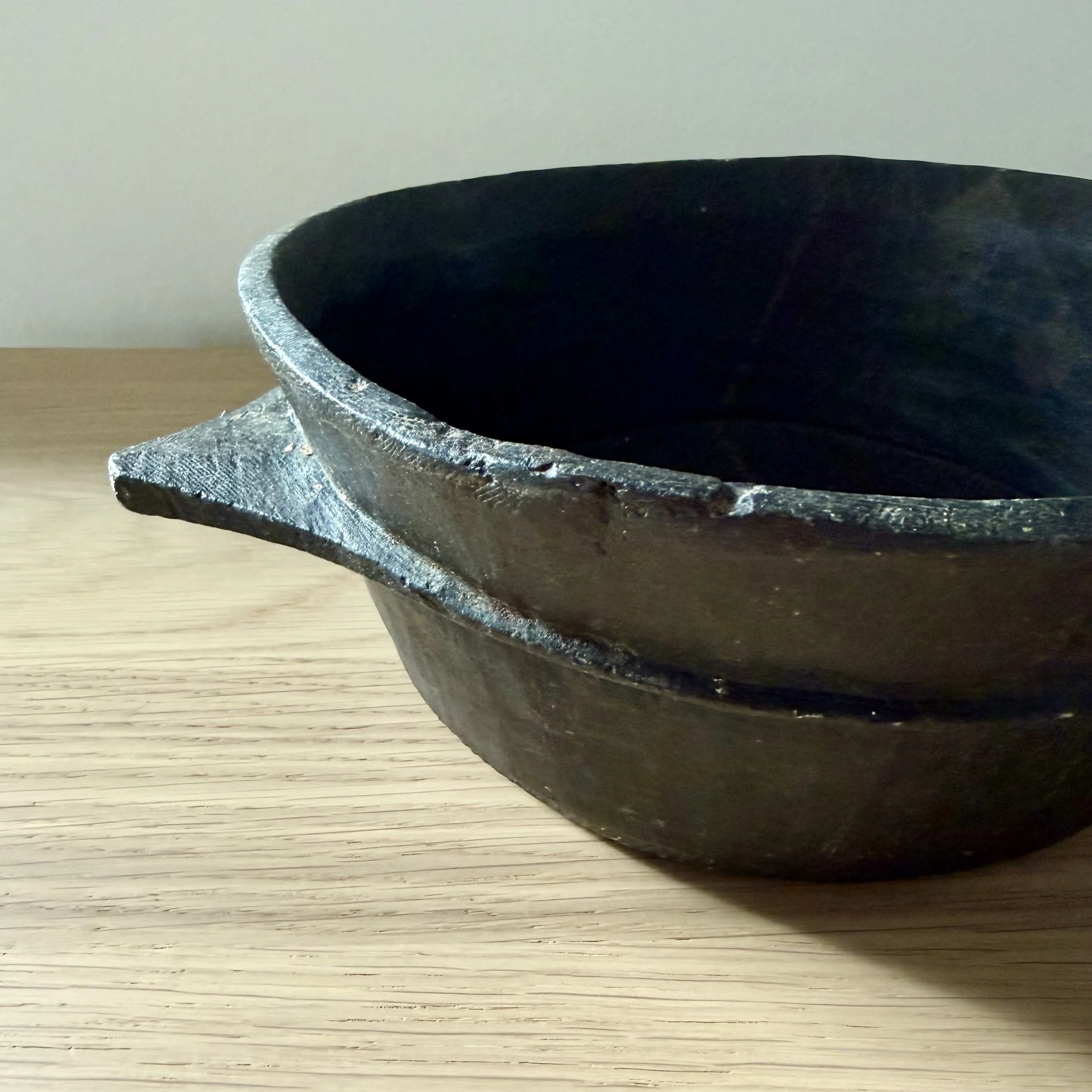 Image 2 of 5
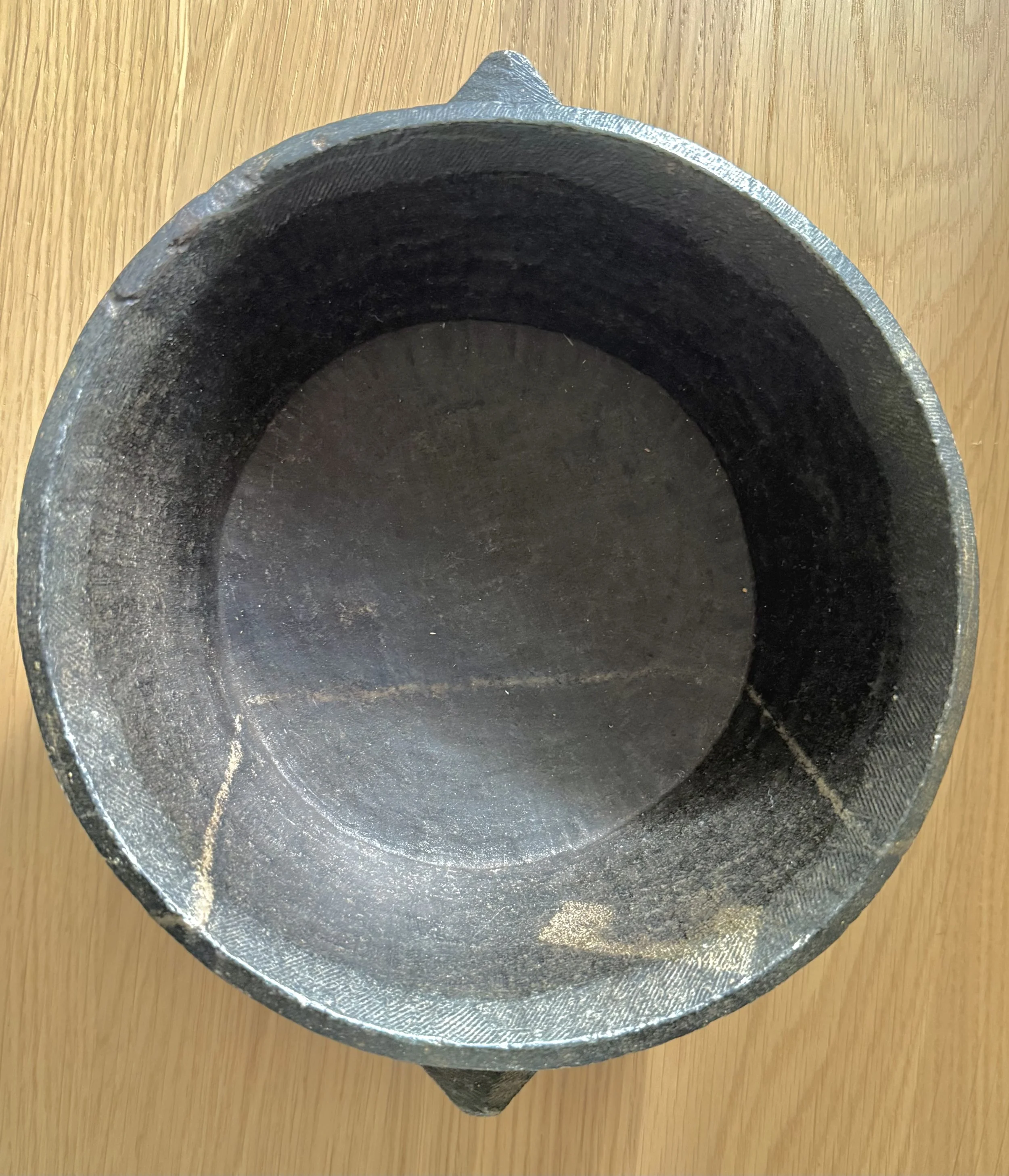 Image 3 of 5
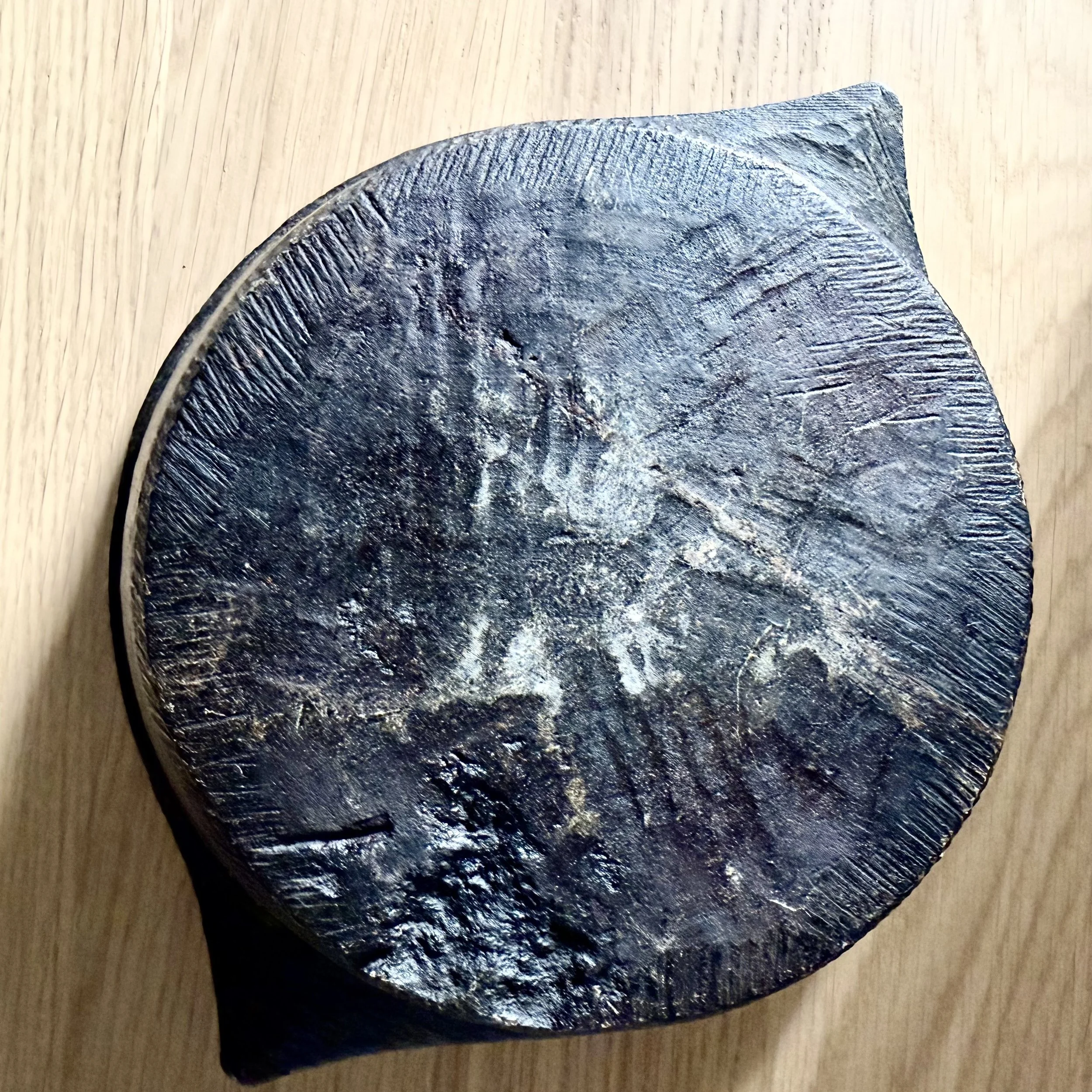 Image 4 of 5
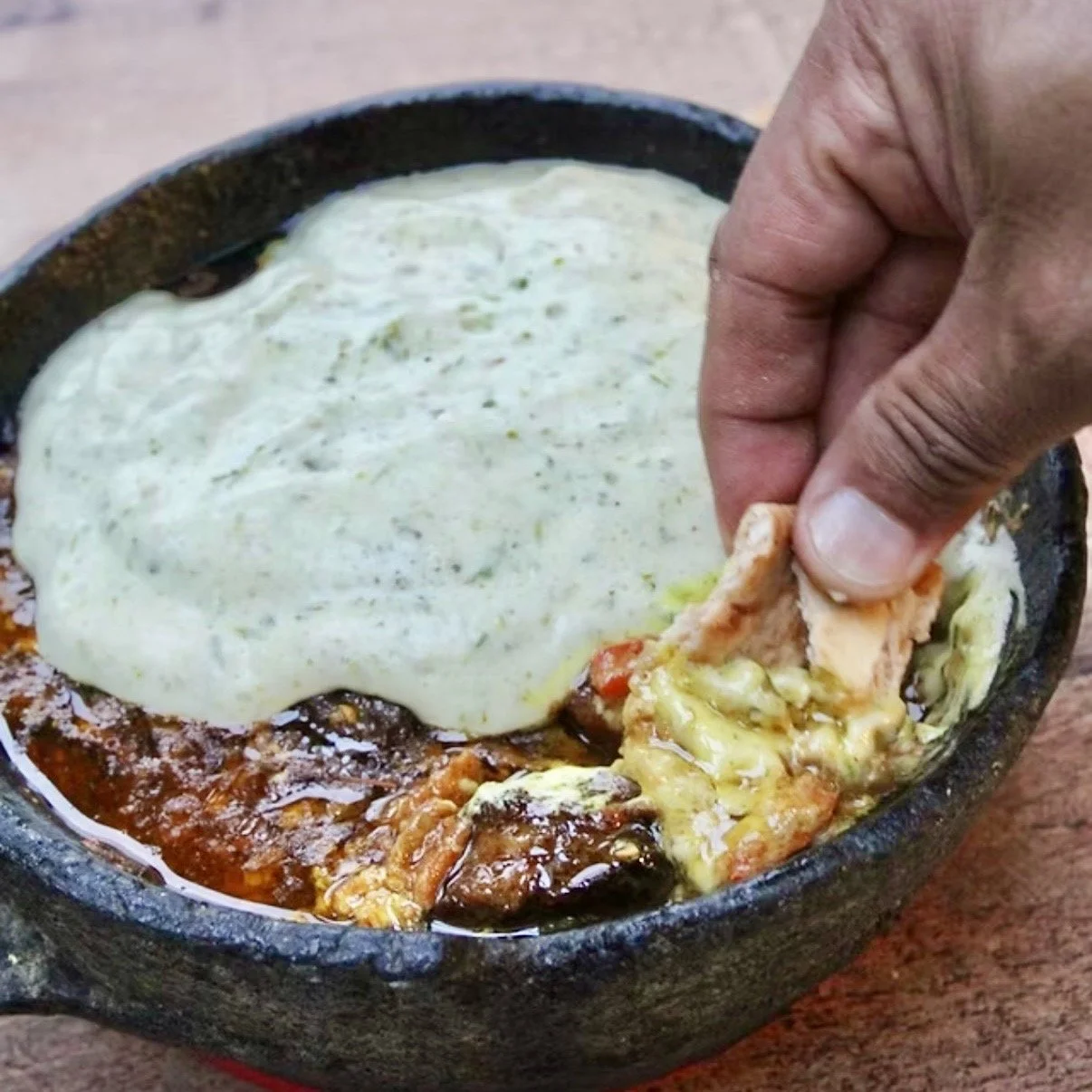 Image 5 of 5
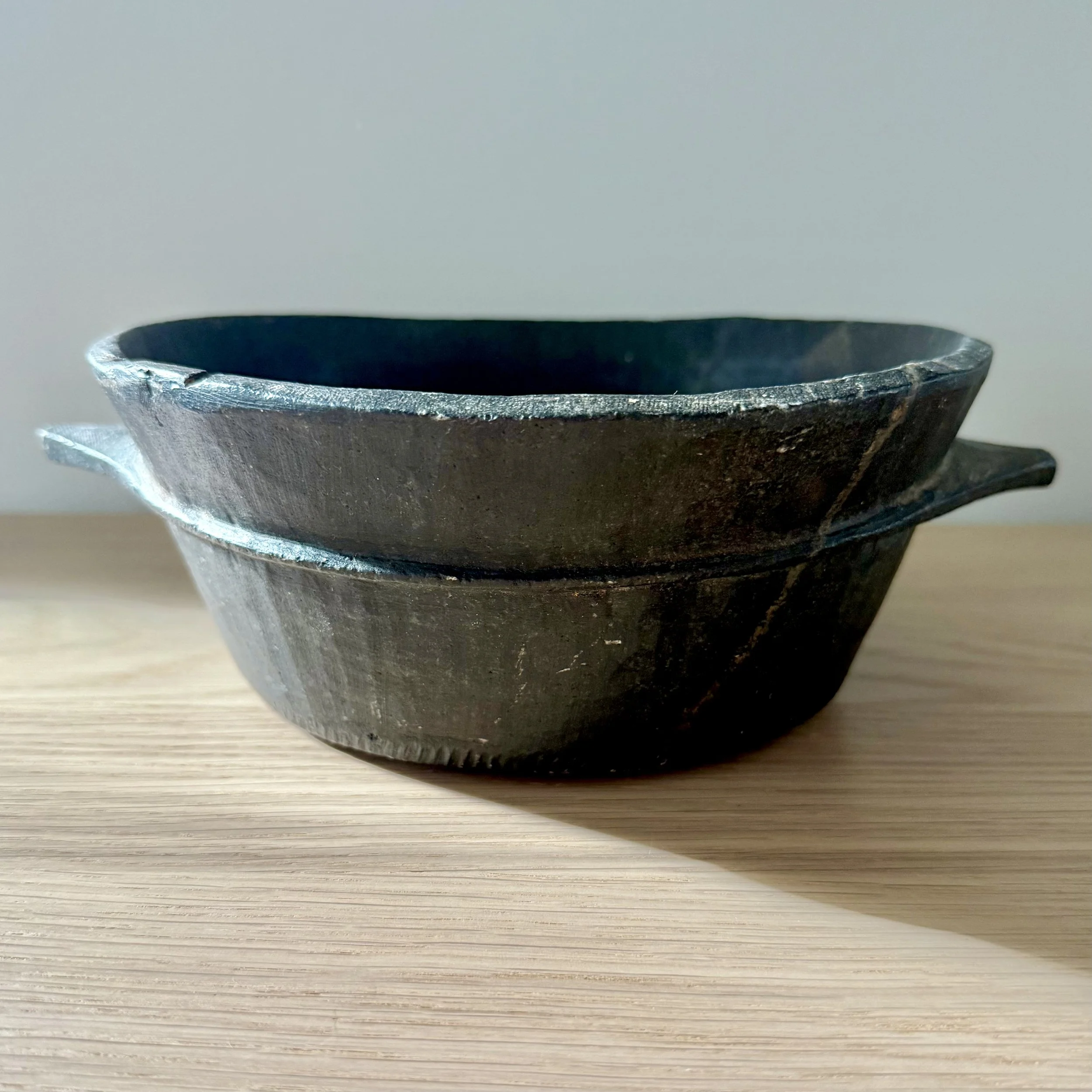
A Yemeni stone cooking vessel, known as a madra (مدرة, also magla or harada). This type of stone is extraordinarily durable, and is used both for cooking (over an open flame) and for serving. Despite Yemen being predominately an Arab country, Yemeni cooking is strongly influenced by Indian and Indonesian methods, due to its role is a maritime trading hub. Historically, there was also a strong influence from the Teimanim (Yemenite Jews). See image of Salta (aka Fahsa), an iconic Yemeni dish, served in a madra.
These vessels are carved from "Sa'dah stone," quarried for centuries near Sa’dah, in the Sarawat mountains, near the Saudi Arabian border. Sa'dah is the historic center of Zaydism, a branch of Shia Islam. It is widely known as the birthplace and main political and military stronghold of the Houthi movement. As a result, this beautiful medieval city has been largely reduced to rubble in recent years, by bombing and missile strikes by a Saudi Arabian-American coalition.
A Yemeni stone cooking vessel, known as a madra (مدرة, also magla or harada). This type of stone is extraordinarily durable, and is used both for cooking (over an open flame) and for serving. Despite Yemen being predominately an Arab country, Yemeni cooking is strongly influenced by Indian and Indonesian methods, due to its role is a maritime trading hub. Historically, there was also a strong influence from the Teimanim (Yemenite Jews). See image of Salta (aka Fahsa), an iconic Yemeni dish, served in a madra.
These vessels are carved from "Sa'dah stone," quarried for centuries near Sa’dah, in the Sarawat mountains, near the Saudi Arabian border. Sa'dah is the historic center of Zaydism, a branch of Shia Islam. It is widely known as the birthplace and main political and military stronghold of the Houthi movement. As a result, this beautiful medieval city has been largely reduced to rubble in recent years, by bombing and missile strikes by a Saudi Arabian-American coalition.