 Image 1 of 5
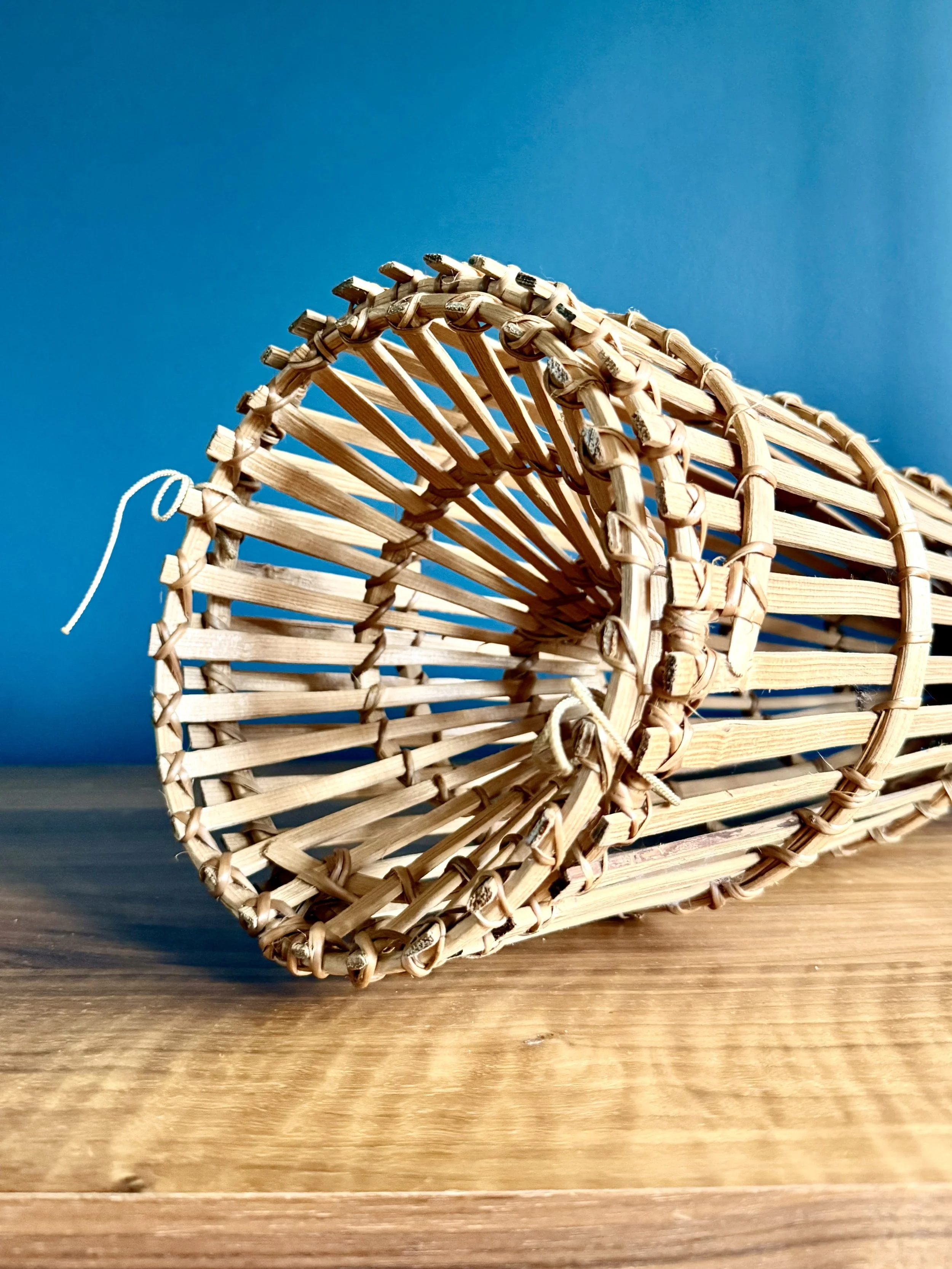 Image 2 of 5
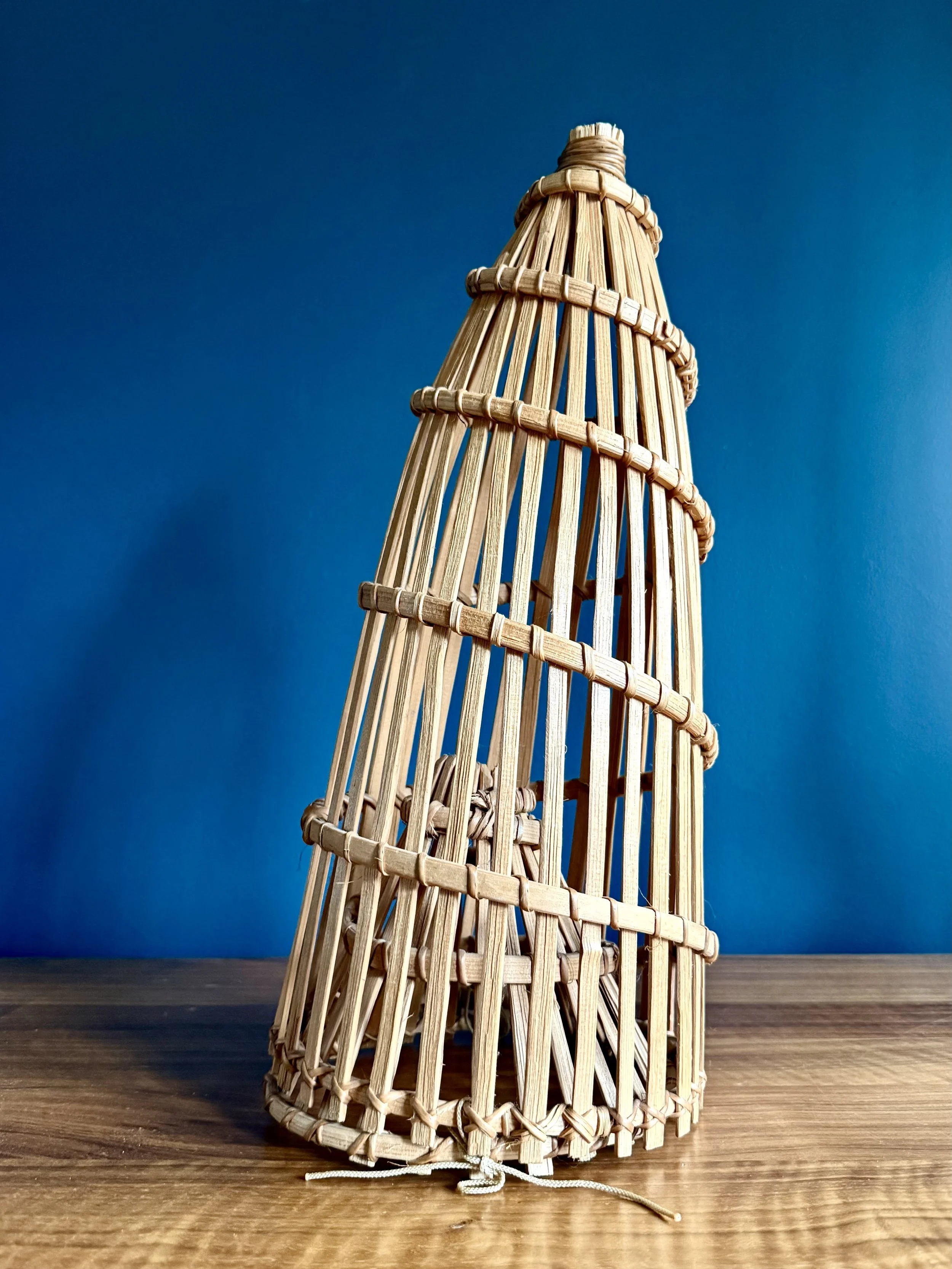 Image 3 of 5
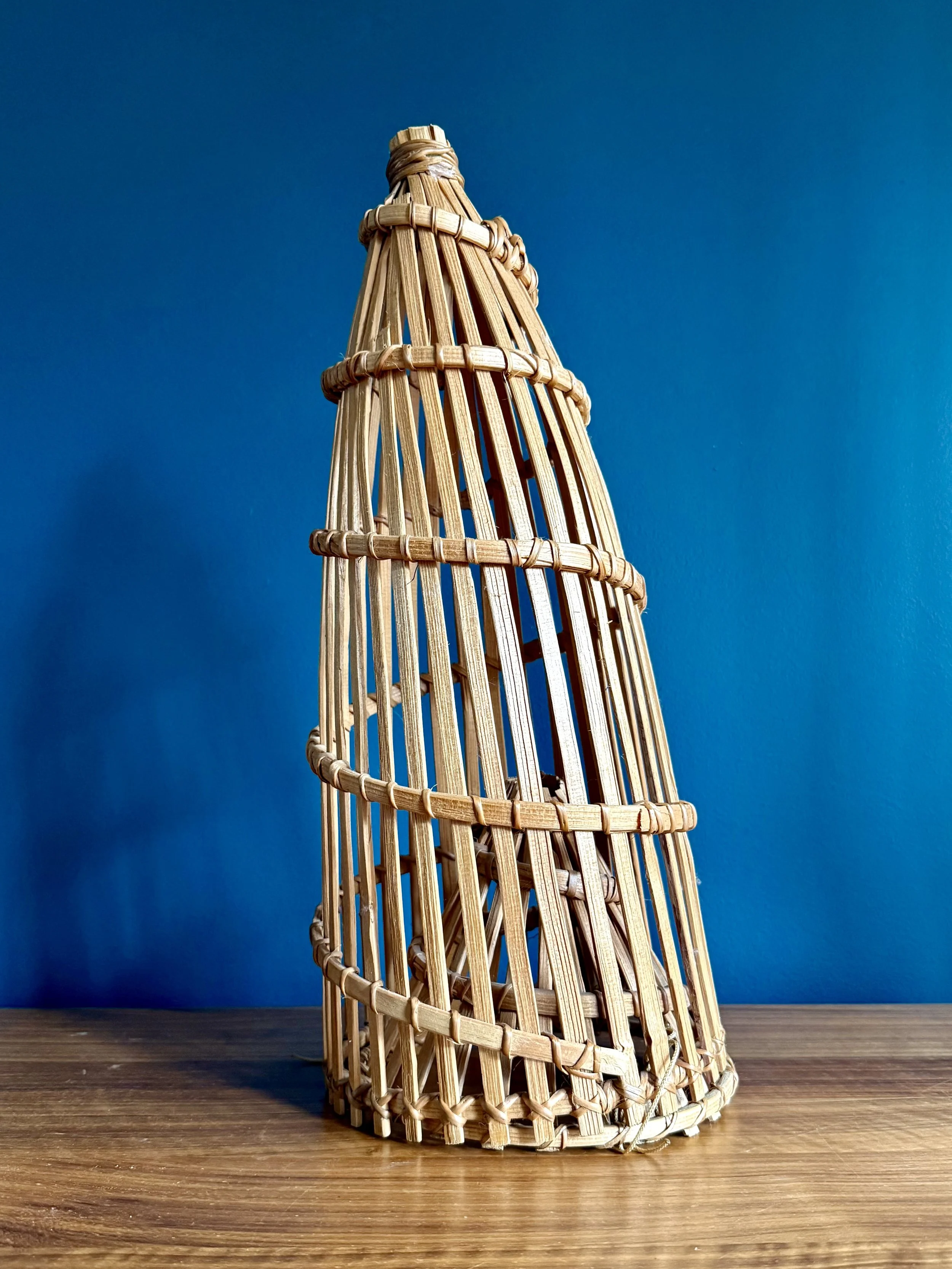 Image 4 of 5
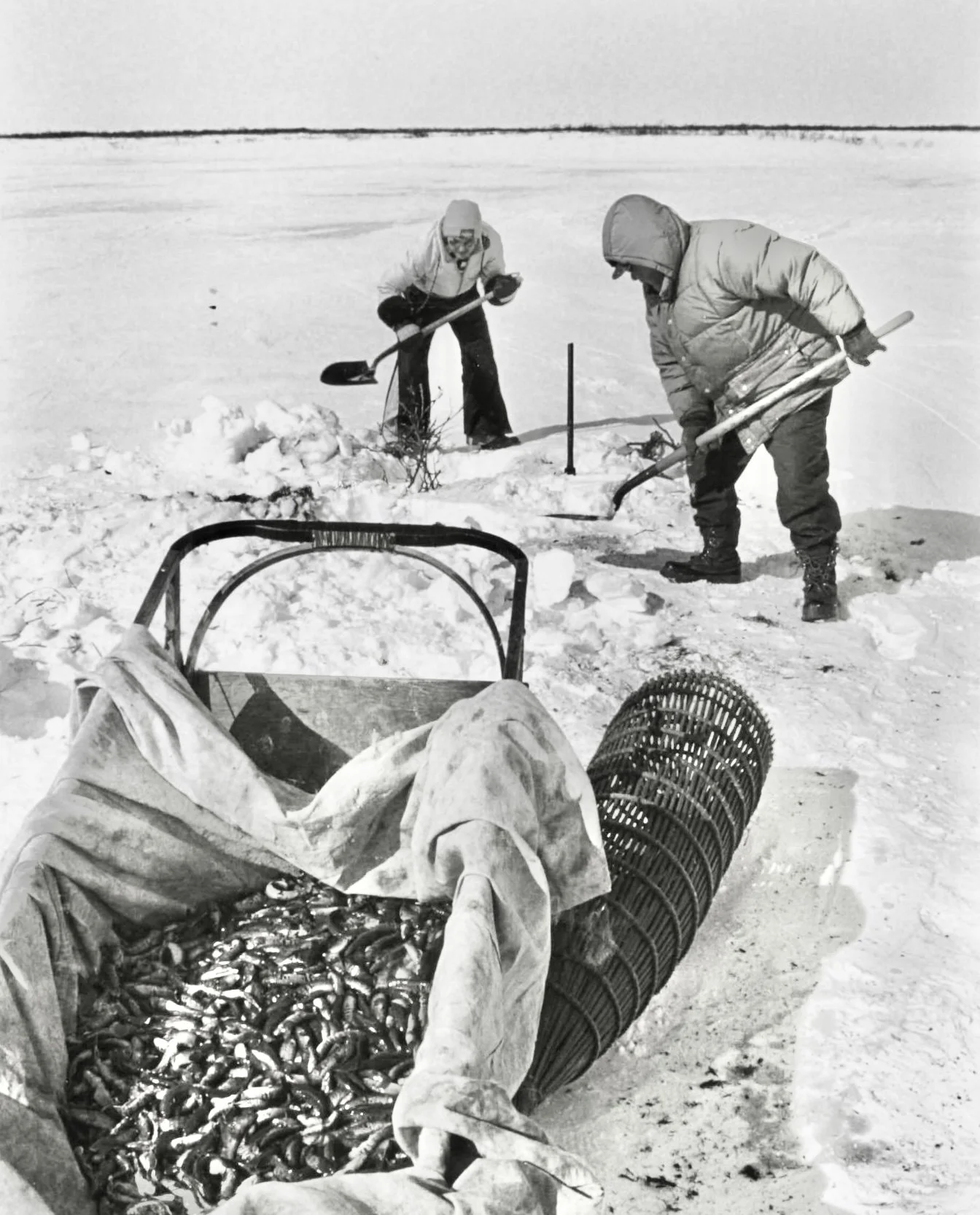 Image 5 of 5
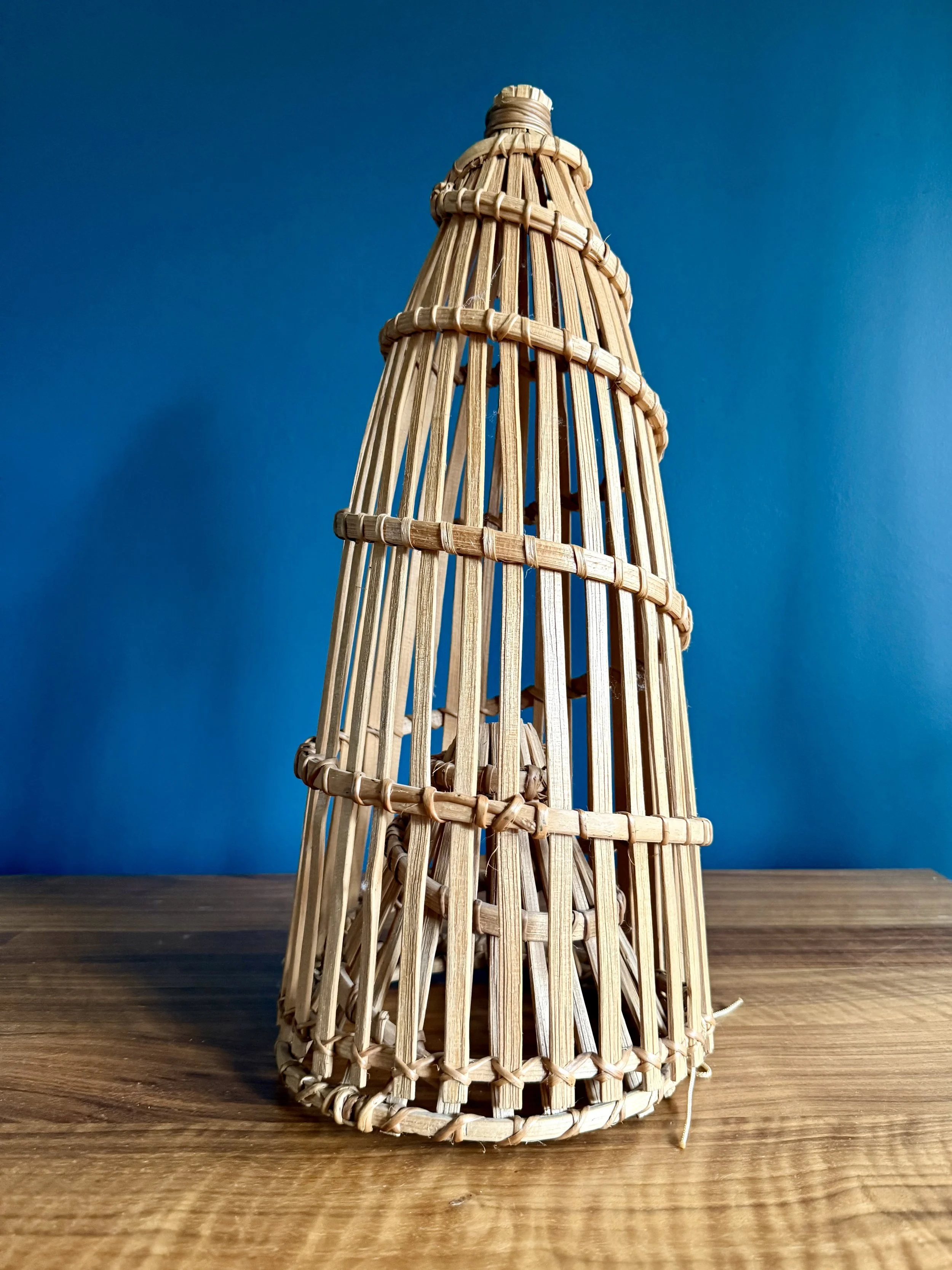
A taluyak, or blackfish trap, used by the Yup'ik people of Alaska to harvest this traditional staple. This taluyak is made of split spruce, bound with spruce roots (note that the supporting element is one continuous spiral of split wood). The removable cap is held loosely by string. It was made by John Andrew of Togiak village (d. 1982), one of the last elders using the traditional methods. An almost identical trap is in the collection of Smithsonian's National Museum of the American Indian (Catalog Number 22/6535). It is likely that this type of trap has been in use for thousands of years.
The blackfish (Dallia pectoralis, or can'giiq imangaq in Yup'ik) is a small, hardy fish native to Alaska and Siberia. It lives in oxygen-poor tundra ponds, and has evolved a modified esophagus to breathe atmospheric oxygen. The Yup'ik take advantage of this behavior by carving holes in the pond ice and setting their traps vertically, so that when the fish rise to the surface for air, they are caught. Blackfish are an important subsistence food, especially in winter, due to their high nutritional value (they are fed to dogs as well).
Last image: Yup'ik fishermen Alan Hanson and Joseph Smith setting a blackfish trap, Alakanuk, AK (historical photo by James H. Barker).
A taluyak, or blackfish trap, used by the Yup'ik people of Alaska to harvest this traditional staple. This taluyak is made of split spruce, bound with spruce roots (note that the supporting element is one continuous spiral of split wood). The removable cap is held loosely by string. It was made by John Andrew of Togiak village (d. 1982), one of the last elders using the traditional methods. An almost identical trap is in the collection of Smithsonian's National Museum of the American Indian (Catalog Number 22/6535). It is likely that this type of trap has been in use for thousands of years.
The blackfish (Dallia pectoralis, or can'giiq imangaq in Yup'ik) is a small, hardy fish native to Alaska and Siberia. It lives in oxygen-poor tundra ponds, and has evolved a modified esophagus to breathe atmospheric oxygen. The Yup'ik take advantage of this behavior by carving holes in the pond ice and setting their traps vertically, so that when the fish rise to the surface for air, they are caught. Blackfish are an important subsistence food, especially in winter, due to their high nutritional value (they are fed to dogs as well).
Last image: Yup'ik fishermen Alan Hanson and Joseph Smith setting a blackfish trap, Alakanuk, AK (historical photo by James H. Barker).